
Chapters 18
-
1 00 - Preface 6:44
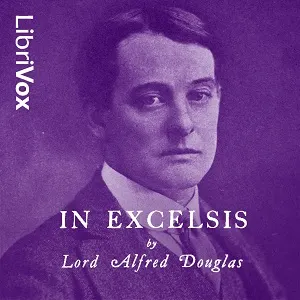
Preface of in Excelsis. In Excelsis by Lord Alfred Douglas. This sonnet sequence was written in Wormwood Scrubbs Prison, Began on February 5th, and finished on Good Friday, April 18th, 1924. To Alfred Rose. Preface. On December 13th, 1923, I was sentenced by Mr. Justice Avery at the Old Bailey to six months' imprisonment in the 2nd Division, for libeling Mr. Winston Churchill. It may be interesting to record the fact That this prosecution constituted the seventh attempt to get me locked up, which I have had to face during the last ten years. Six previous attempts to put me into the place where, according to a gentle advocate, I refer to my sweet enemy, Sir Patrick Hastings, I so properly belong, all failed in their object.
The seventh attempt succeeded. Which surely goes to show that there is nothing like perseverance. I had looked, at my trial at the Old Bailey, to my own evidence in the witness-box, and especially to my cross-examination by the Attorney-General, as the means of vindicating myself to the public. My counsel and friend, Mr. Cecil Hayes, put me to a series of questions which were designed to give me the opportunity of explaining to the jury how I came to publish the libel, and what evidence I had at the time when it was first given publicity in Plain English. All these questions were objected to by counsel for the prosecution, and disallowed by the judge. The same tactics were adopted in my cross-examination.
I had looked forward to a ding-dong fight with the Attorney General, Sir Douglas Hogg, who was the counsel I had so effectively disposed of a year before in my action against the evening news, when I got a verdict and a thousand pounds damages. And I expected my cross-examination to last several hours. Instead of this, Sir Douglas Hogg asked me exactly three questions, and then sat down. Thus I was effectually muzzled and debarred from making my case public. I said at the time what I thought about the way I had been trapped, and there is no point in saying more now. The whole question will be judged by posterity when the time comes for it to be judged. I think that it is advisable that I should take this opportunity of clearing up a misconception which is almost universal in the public mind about the second division to which I was sentenced.
Prisoners sent to the second division are treated in exactly the same way as those sent to hard labour, with this solitary difference, that they are not deprived of their mattresses for the first fortnight of their imprisonment, as is the case with those undergoing hard labour. In every other respect, their treatment is the same. They occupy the same cells, do the same labour, keep the same hours, and get the same food. The only privileges attaching to the second division are those whereby a prisoner is allowed to receive more visits, and to write and receive more letters. One a month is the allowance in each case. The worst part about prison, materially speaking, is the food. It is so disgusting that a dog would certainly not eat it unless he was starving.
I was quite unable to eat it, and for the first three weeks of my sentence I ate nothing but a few crusts of dry bread, and very nasty bread at that. As a result, of course, I lost weight with great rapidity. Curiously enough, however, I did not feel ill at first. I lived fairly comfortably on my tissues. My health remained good, and I slept nine hours every night, in spite of a plank bed, and a mattress and pillow was hard as nether millstones. It was only after a month that I began to feel weak and ill as the result of undernourishment. I went on the vegetarian diet after the first three weeks, and I was able to eat slightly more of this diet than of the other. But by the middle of the seventh week I had lost more than eighteen pounds, and was on the verge of collapse, and I was then sent to the hospital, where I got comparatively decent food, and where I remained for the remaining three months of my sentence.
Owing to the kindness of my friend, Mr. Alfred Rose, who made a special application on my behalf to the Home Office, I was allowed a school copy-book and a pencil while I was in the hospital. I wrote my poem in this book, and the Home Office, for reasons best known to itself, refused me permission to bring it out with me when I left prison. However, as I, of course, had the seventeen sonnets of which my poem consists in my head, this official outrage put me to no worse inconvenience than that of having to write them out again from memory. The poem speaks for itself, and I need only say that its theology is that of the Catholic mystics, and in particular of St. Thomas Akempis, whose Imitation of Christ I read through several times during my imprisonment.
I am so far from regretting my imprisonment, or from having any ill feelings against those who are responsible for it, that I can truly say that I regard it as the best thing that ever happened to me. This is not to say that I did not suffer a great deal. I did suffer, more especially in a spiritual way, to an extent which I would not have believed to be possible, consistently with remaining alive. But what I think about this is better expressed in the poem than I could explain it in a hundred pages of prose. I think it only right to add that I received the greatest possible kindness from everyone in prison—governor, deputy-governor, R.C., priest, doctor, Officers and, last but not least, fellow prisoners.
Alfred Bruce Douglas.
-
2 01 - Sonnet I 1:09
Torment of body, torment of the mind, Pain, hunger, insult, stark ingratitude Of those for whom we fought, Detraction rude but sanctimonious, Cruel to be kind, truly for bread a stone. All these we find in this our self-appointed Hell, whose food is our own flesh. To what imagined good have we thus panted, beaten, bound, and blind? God knows! God knows! And since he knows indeed, why, there's the answer. Who would stay outside when God's in prison? Who would rather choose to warm himself with Peter than to bleed with Dismas, penitent and crucified, facing with Christ the fury of the Jews?
-
3 02 - Sonnet II 1:15
Sonnet II of In Excelsis by Lord Alfred Douglas. This LibriVox recording is in the public domain. For honour peereth in the meanest habit. Shakespeare, The Taming of the Shrew, Act IV, Scene III.
I follow honour, brokenly content, though the sick flesh repine, though darkness creep into the soul's unfathomable deep, where fear is bred. Though from my spirit sent like poured-out water, the mind's weak consent be hardly wrung, while eyes too tired to weep dimly discern, as through a film of sleep, squalor that is my honour's ornament. Without, the fire of earth-contemning stars burns in deep blueness like an opal set in jacinth borders underneath the moon. The dappled shadow that my window-bars cast on the wall is like a silver net. My angel in my heart sings, Heaven soon.
-
4 03 - Sonnet III 1:22
Sonnet III of In Excelsis by Lord Alfred Douglas. This LibriVox recording is in the public domain.
I have within me that which still defies this generation's bloat intelligence, Which is the advocate of my defence against the indictment of the world's assies, Clutching with bleeding hands my hard-won prize, Immeasurably bought by fierce expense of blood and sweat and spirit-harnessed sense, I keep the steadfast gaze of tear-washed eyes. And this discernment, not inherited, but grimly conned in many cruel schools, unravels all allusion to my sight. In vain, for me with wings, the snare is spread. Folly imputed by the mouth of fools is wisdom's ensign to a child of light.
Note 2. The snare is spread. Proverbs, Douai, Version, Chapter One, Verse Seventeen. But a net is spread in vain before the eyes of them that have wings. Wings here means prayer.
-
5 04 - Sonnet IV 1:03
Sonnet, four of in excelsis by Lord Alfred Douglas. This LibriVox recording is in the public domain.
When death, the marshal of our settled state, shall beckon us to our appointed end, to what remembrances shall be the trend of those last thoughts that gather at the gate? What profit, then, that this was delicate, or that breathed flowers? Shall they not rather tend to recollected woe as to a friend, for pleasures are but hostages to fate? What bitterness shall then be left in these, as insult, calumny, the truth abjured, the dock, the handcuff and the prison-cell, detraction bartered for forensic fees, and else a thousand wrongs bravely endured, and sovereign against the gates of hell?
-
6 05 - Sonnet V 1:00
O non, if grace enrich the soul's release with covenanted joy's presentiment, sweet presage of fruition's deep content, which is the complement of hope's increase, the harvest of delight, sorrow's surcease. The untransmutable extreme consent of will and spirit ultimately blent in diapason of perpetual peace. But who can so set up his reason's throne above the accident of mortal hap as to embrace disparagements and mocks, encounter suffering without a groan, lie like a nursling in affliction's lap, and realize the saintly paradox?
-
7 06 - Sonnet VI 1:05
Not I, alas, at any rate, not yet, Prison'd in flesh the willing spirit wars, Glimpses a transient lustre through the bars, And beats her wings in vain against the net. In vain her evocated hosts beset the citadel That lies beyond the stars. The guarded walls stand up like beetling scours, though white desire o'erleap the parapet. Perfection's fortress is impregnable, but her saint-trodden way allures us still. She bids us cherish what our senses hate, and entertain where we would fain repel.
-
8 07 - Sonnet VII 1:03
Sonnet seven of in excelsis by Lord Alfred Douglas. This LibriVox recording is in the public domain. For such is love, a great good every way, bearing all toil, making all burdens light. To its internal vision the dark night shows clear and shining as the dawn of day. Being born of God, it still denies to stay with less than God. But evermore takes flight to the beloved on wings as swift as sight, a torch, a vivid flame, a lucent ray. Could love compel the appurtenant retinue of all our essence to some bridge of air, spanning the gulf of that estranging sea which hides the lover from the loved one's view? How happy, then, were we who loathly wear this earthy vesture of mortality!
-
9 08 - Sonnet VIII 1:06
Sonnet VIII. But so to use oneself as to entice the visit of such love, so dignified with such a sovereignty, may scarce betide us the sad, outcast heirs of Paradise. Hardly the merchant paid the exceeding price of that one pearl whose lustrous sheen outvied the zenith of his longing, else denied to any less than utter sacrifice. And how shall we, unemptied of desire of all created things, command our love, or open hopeful casements, to the dove? Nay, but the spark prevents consuming fire, The seedling predicates the harvest's hoard. From depth to height, love corresponds to love.
-
10 09 - Sonnet IX 1:06
And we, bereft, diswinged, a very clod of sense-afflicted earth, uncomforted, cheated of dreams, whose flatteries have fled long since fierce disillusion's iron rod. We whose entrammelled feet yet dully plod the bitter road that saints were wont to tread, fulfilled of joy by angel hosts bestead, or led like children by the hand of God. We have this love, and having it possess the last reversion of felicity. For what but love of God could so enforce this furious will to seize on bitterness Revoke the lease of nature, and decree with sweetness irremediable divorce.
-
11 10 - Sonnet X 1:16
Sonnet X of in excelsis by Lord Alfred Douglas. This LibriVox recording is in the public domain.
For willingly I suffer, and endure what I endure with full consenting will, though not with joy, and therefore I fulfill, by this consent to suffering, the pure condition of love's presence, Made more sure by this that nature groans and takes it ill, and is at odds with grace which stares me still, and what the world calls love I do abjure. For this miscalled of fools, this scion born of motions, carnal stings, unbitted lusts, as the Venetian demi-devil's wit reports it so, Than midnight to bright morn is not more alien to love, nor thrusts against love's breast a blade more opposite.
Note to Unbittered Lusts. Shakspeare, Iago in Othello, Act I, Scene III.
-
12 11 - Sonnet XI 1:16
Sonnet XI of in Excelsis by Lord Alfred Douglas. This LibriVox recording is in the public domain. Call it not love, for love to heaven has fled since sweating lust on earth usurped his name.
But this equivocation is a mesh to unrespective minds. As to the liar, truth is reflected like the moon in mire. and, to subserve occasion, devilish. Love is a flame whose fuel is the flesh which, burning in that unconsuming fire, distills the milky dew of chaste desire, whose secret sap wells ever sweet and fresh. For love essentially must needs be chaste, and, being contracted to unchastity, even in marriage, knows essential loss, and falls into a malady of waste, squandering the expended spirit's minted fee for that which, in the best, is worthless dross.
-
13 12 - Sonnet XII 1:26
Sonnet Twelve of In Excelsis by Lord Alfred Douglas. This LibriVox recording is in the public domain. Have at you, inky scrabblers, base and lewd, whose general pen so greasily enseems the venal page with birth-controlling schemes, free love, divorce, and devil take the prude. Thus I engorge you with chameleon's food, Promise-crammed vapour, stuff of angels' dreams, immortal madness, folly that o'erteems, and turns to star-dust all her airy brood. And if it gall you, and you needs must rail, let me not be your mark, but rail at God who made love chaste, or ever time began. I have but dreamed one rose to countervail the rank effusions of the period, The blazoned grossness of your devil's span.
Note to Chameleon's Food. Excellently well, if faith of the chameleon's dish, I eat the air promise crammed. You cannot feed capons so.
-
14 13 - Sonnet XIII 1:04
And well you know I never bowed the knee, nor paid regard to self-preserving Ruth. For even when I sucked perverted truth from that arch-prophet of perversity who led me to the serpent-cinctured tree, I bade the pack alone, my tender youth, As now my slanting years disdained the smooth, the proffered path of worldly policy. And if, disvouching then my angel's voice, I could by natural spirit so outface the frowning world and its proclaimed offence against my friend, shall I not more rejoice to hate and brave it now, bestead by grace and my long since recaptured innocence?
-
15 14 - Sonnet XIV 1:05
For I was of the world's top, Born to bask in its preferment Where the augurs sit, And where the devil's grace, to counterfeit, Is all the tribute that the augurs ask, Whose wedding garment is a hood and mask. But God be praised, who still denied me wit, to play the game, or play the hypocrite, and make a virtue of the devil's task. I left the game to others, and, behold, this same perversion's priest, this Lord of Lies, is now exalted on your altar's height. His sophist's tinsel is acclaimed pure gold, and England's course, swayed by his votaries, declines upon corruption and black night.
-
16 15 - Sonnet XV 1:24
The leprous spawn of scattered Israel spreads its contagion in your English blood. Teeming corruption rises like a flood, whose fountain swelters in the womb of Hell. Your Jew-kept politicians buy and sell in markets redolent of Jewish mud. And while the learned elders chew the cud of liquidation's fruits, they weave their spell. They weave the spell that binds the heart's desire to gold and gluttony and sweating lust. In hidden holds they stew the mandrake mess that kills the soul and turns the blood to fire. They weave the spell that turns desire to dust and postulates the abyss of nothingness.
Note to Learned Elders Jew the Cud. Reference to the Book, The Protocols of the Learned Elders of Zion, which contains the revelation of the Jewish worldwide plot to destroy Christianity and enslave all the nations of the earth.
-
17 16 - Sonnet XVI 1:18
Sonnet 16 of in excelsis by Lord Alfred Douglas. This LibriVox recording is in the public domain. Their spell binds fast. Their feet are on your necks, but not on mine. I could not choose but fight, lacking your English phlegm to take delight in a pymantous coil, serving of vex, and all the rest. I was ordained to vex this Pax Judaica, the parasite of base ascent, this oily sea whose might o'erswells the gorged lute of a million wrecks. My star shone clear, my angel smiled. I went down the white way. I could not break my tryst with Scotland's honour in an English jail. My soul fares free. My neck was never bent to any yoke except the yoke of Christ. This Douglas knee will never bow to Baal. Note to Serving of Bex.
-
18 17 - Epilogue 1:13
Follow the star. The unseen sighing wings beat in the soul's night in the forest's gloom. Follow the star. The child is in the womb that shall be born. The lamp is lit that swings over joy's cradle. Who is this that sings in the heart's garden, where red roses bloom? The moth-soft fleece is woven on God's loom. The web of peace is spun, ye holy kings. Follow the star, and enter where it rests, be it on palace, or on lowly shed. What house is this whose hideous bolt and bar groan on the opening? Who are these pale guests, these Creeping shadows. Whither am I led? What iron hold is here? Follow the star.