
Chapters 8
-
1 Casting a Spell on the Cat 5:14
The chapter of Casting a Spell on the Cat from Legends of the Gods, The Egyptian Texts, edited with translations by E. A. Wallis Budge. Read for LibriVox.org by Catherine and Peter Eastman. In loving memory of Burney Cat. Hail, Ra! Come to thy daughter! A scorpion hath stung her on a lonely road. Her cry hath penetrated the heights of heaven, and is heard along the paths. The poison hath entered into her body, and circulateth through her flesh. She hath set her mouth against it. Verily the poison is in her members. Come then with thy strength, with thy fierce attack, and with thy red powers, and force it to be hidden before thee. Behold, the poison hath entered into all the members of this cat which is under my fingers.
Be not afraid, be not afraid, my daughter, my splendor, for I have set myself near thee. I have overthrown the poison which is in all the limbs of this cat. O thou cat, thy head is the head of Ra, the lord of the two lands, the smiter of the rebellious peoples. Thy fear is in all lands, O Lord of the living, Lord of eternity. O thou cat, thy two eyes are the eye of the Lord of the Kutiureus, who illumineth the two lands with his eye, and illumineth the face on the path of darkness. O thou cat, thy nose is the nose of Thoth, the twice great, Lord of Kamenu, the chief of the two lands of Ra, who putteth breath into the nostrils of every person. O thou cat, thine ears are the ears of Neberture, who hearkeneth unto the voice of all persons when they appeal to him, and weigheth words in all the earth.
O thou cat, thy mouth is the mouth of Tem, the Lord of life, the uniter of creation, who hath caused the union of creation. He shall deliver thee from every poison. O thou cat, thy neck is the neck of Naheb-kah. President of the great house, vivifier of men and women by means of the mouth of his two arms. O thou cat, thy breast is the breast of Thoth, the Lord of truth, who hath given to thee breath to refresh thy throat, and hath given breath to that which is therein. O thou cat, thy heart is the heart of the god Ptah, who healeth thy heart of the evil poison which is in all thy limbs. O thou cat, thy hands are the hands of the great company of the gods, and the little company of the gods, and they shall deliver thy hand from the poison from the mouth of every serpent.
O thou cat, thy belly is the belly of Osiris, lord of Bucyrus. The poison shall not work any of its wishes in thy belly. O thou cat, thy thighs are the thighs of the god Menthu, who shall make thy thighs to stand up, and shall bring the poison to the ground. O thou cat, thy leg-bones are the leg-bones of Kentsu, who traveleth over all the two lands by day and by night, and shall lead the poison to the ground. O thou cat, Thy legs are the legs of Amon the Great, Horus, lord of Thebes, who shall establish thy feet on the earth and shall overthrow the poison. O thou cat, thy haunches are the haunches of Horus, the avenger of his father Osiris, and they shall place set in the evil which he hath wrought.
O thou cat, thy souls are the souls of Ra, who shall make the poison to return to the earth. O thou cat, thy bowels are the bowels of the cow-goddess Maert, who shall overthrow and cut in pieces the poison which is in thy belly, and in all the members in thee, and in all the members of the gods in heaven, and in all the members of the gods on earth, and shall overthrow every poison in thee. There is no member in thee without the goddess who shall overthrow and cut in pieces the poison of every male serpent, and every female serpent, and every scorpion and every reptile, which may be in any member of this cat which is under the knife. Verily Isis weaveth, and Nephthys spinneth against the poison.
This woven garment strengtheneth this being, who is perfect in words of power, through the speech of Ra-heru-kuti, the great god, president of the south and north. O evil poison, which is in any member of this cat which is under the knife, come, issue forth upon the earth.
-
2 The Cremation of Sam McGee 6:00
The Cremation of Sam McGee by Robert W. Servus. There are strange things done in the midnight sun by the men who moil for gold. The Arctic trails have their secret tales. That would make your blood run cold. The northern lights have seen queer sights, but the queerest they ever did see was that night on the marge of Lake LaBarge. I cremated Sam McGee. Now, Sam McGee was from Tennessee, where the cotton blooms and blows. Why he left his home in the south to roam round the pole, God only knows. He was always cold, but the land of gold seemed to hold him like a spell, though he'd often say in his homely way that he'd sooner live in hell. On a Christmas Day we were mushing our way over the Dawson Trail.
Talk of your cold, through the parka's fold it stabbed like a driven nail. If our eyes we'd close, then the lashes froze till sometimes we couldn't see. It wasn't much fun, but the only one to whimper was Sam McGee. And that very night, as we lay packed tight in our robes beneath the snow, and the dogs were fed and the stars overhead were dancing heel and toe, he turned to me, and, "'Cap,' he said, "'I'll cash in this trip, I guess. And if I do, I'm asking that you won't refuse my last request.' Well, he seemed so low that I couldn't say no. Then he said with a sort of moan, It's the curse cold, and it's got right hold, and I'm chilled clean through to the bone. Yet it ain't been dead. It's my awful dread of the icy grave that pains.
So I want you to swear that foul affair. You'll cremate my last remains. A pal's last need is a thing to heed, so I swore I would not fail. And we started on at the streak of dawn, but, God, he looked ghastly pale. He crouched on the sleigh, and he raved all day of his home in Tennessee, and before nightfall a corpse was all that was left of Sam McGee. There wasn't a breath in that land of death, and I hurried horror-driven, with a corpse half-hid that I couldn't get rid because of a promise given. It was slashed to the sleigh, and it seemed to say, you may tax your brawn and brains, but you promise true, and it's up to you to cremate those last remains. Now a promise made is a debt unpaid, and the trail has its own stern code.
In the days to come, though my lips were dumb, in my heart how I curse that load. In the long, long night, by the lone firelight, while the huskies, round in a ring, howled out their woes to the homeless snows. Oh, God, how I loathe the thing! And every day that quiet clay seemed to heavy and heavier grow, and on I went, though the dogs were spent and the grub was getting low. The trail was bad, and I felt half mad, but I swore I would not give in. And I'd often sing to the hateful thing, and it hearkened with the grin. Till I came to the marge of Lake Labarge, and a derelict there lay. It was jammed in the ice, but I saw in a trice it was called the Alice May. And I looked at it, and I thought a bit, and I looked at my frozen chum.
Then here, said I, with a sudden cry, is my crematorium. Some planks I tore from the cabin floor, and I lit the boiler fire. Some coal I found that was lying around, and I heaped the fuel higher. The flames just soared, and the furnace roared, such a blaze you seldom see. And I burrowed a hole in the glowing coal, and I stuffed in Sam McGee. Then I made a hike. For I didn't like to hear him sizzle so. And the heavens scowled, and the huskies howled, and the wind began to blow. It was icy cold, but the hot sweat rolled down my cheeks, I don't know why. And the greasy smoke in an inky cloak went streaking down the sky. I don't know how long in the snow I wrestled with grisly fear. But the stars came out, and they danced about ear again.
I ventured near. I was sick with dread, but I bravely said, I'll just take a peek inside. I guess he's cooked, and it's time I looked. Then the door I opened wide. And there sat Sam, looking cool and calm, in the heart of the furnace roar. He wore a smile. You could see a mile, and he said, Please close that door. It's fine in here, but I greatly fear you'll let in the cold and storm. Since I left Plum Tree down in Tennessee, it's the first time I've been warm. There are strange things done in the midnight sun by the men who moil for gold. The Arctic trails have their secret tales that would make your blood run cold. The northern lights have seen queer sights, but the queerest they ever did see.
It was that night on the marge of Lake LaBarge, I cremated Sam McGee.
-
3 Eloisa to Abelard 26:38
Eloisa to Abelard by Alexander Pope.
In these deep solitudes and awful cells, Where heavenly pensive contemplation dwells, And ever-musing melancholy reigns, What means this tumult in a vestal's veins? Why rove my thoughts beyond this last retreat? Why feels my heart its long-forgotten heat? Yet—yet I love—from Abelard it came, and Eloisa yet must kiss the name. Dear fatal name, rest ever unrevealed, nor pass these lips in holy silence sealed. Hide it, my heart, within that close disguise, where, mixed with God's, His loved idea lies. Oh, write it not, my hand. The name appears already written. Wash it out, my tears. In vain, lost Eloisa weeps and prays. Her heart still dictates, and her hand obeys. Relentless walls, whose darksome round contains repentant sighs and voluntary pains.
Ye rugged rocks, which holy knees have worn, Ye grots and caverns, shagged with horrid thorn, Shrines, where their vigils pale-eyed virgins keep, And pitying saints, whose statues learn to weep. Though cold like you, unmoved and silent grown, I have not yet forgot myself to stone. All is not heaven's, while Abelard has part. Still rebel nature holds out half my heart. Nor prayers nor fasts its stubborn pulse restrain, nor tears for ages taught to flow in vain. Soon as thy letters trembling I unclose, that well-known name awakens all my woes. O name for ever sad, for ever dear! Still breathed in sighs, still ushered with a tear. I tremble, too, where'er my own I find, some dire misfortune follows close behind.
Line after line my gushing eyes o'erflow, led through a sad variety of woe. Now warm in love, now withering in my bloom. Lost in a convent's solitary gloom. There, stern religion quenched the unwilling flame. There died the best of passions, love, and fame. Yet write, O write me all, that I may join griefs to thy griefs, and echo sighs to thine. Nor foes nor fortune take this power away. And is my Abelard less kind than they? Tears still are mine, and those I need not spare. Love but demands what else was shed in prayer. No happier task these faded eyes pursue. To read and weep is all they now can do.
Then share thy pain, allow that sad relief. Ah, more than share it, give me all thy grief. Heaven first taught letters for some wretch's aid, some banished lover or some captive maid. They live, they speak, they breathe what love inspires, warm from the soul and faithful to its fires. The Virgin's wish without her fears impart. Excuse the blush, and pour out all the heart.
Speed the soft intercourse from soul to soul, and waft a sigh from Indus to the Pole.
Thou know'st how guiltless first I met thy flame, when love approached me under friendship's name. My fancy formed thee of angelic kind, some emanation of the all-beauteous mind, those smiling eyes. A tempering every ray, Shone sweetly lambent with celestial day. Guiltless I gazed, Heaven listened while you sung. And truths divine came mended from that tongue. From lips like those, What precept failed to move? Too soon they taught me "'Twas no sin to love." Back through the paths of pleasing sense I ran, nor wished an angel whom I loved a man. Dim and remote the joys of saints I see, nor envy them that heaven I lose for thee.
How oft, when pressed to marriage, have I said, Curse on all the laws but those which love has made. Love free as air at sight of human ties. Spreads his light wings, and in a moment flies. Let wealth, let honor, wait the wedded dame. Auguste her deed, and sacred be her fame. Before true passions all those views remove. Fame, wealth, and honor, what are you to love? The jealous God, when we profane his fires. Those restless passions in revenge inspires, and bids them make mistaken mortals groan, who seek in love for aught but love alone. Should at my feet the world's great master fall, himself, his throne, his world, I'd scorn them all. Not Caesar's empress would I deign to prove. No. Make me mistress to the man I love.
If there be yet another name more free, more fond than mistress, make me that to thee. O happy state when souls each other draw, when love is liberty and nature law. All then is full, possessing and possessed, no craving void left aching in the breast. Even thought meets thought, Ere from the lips it part. And each warm wish springs mutual from the heart. This sure is bliss, if bliss on earth there be, And once the lot of Abelard and me.
Alas, how changed! What sudden horrors rise! A naked lover bound and bleeding lies! Where, where was Eloise? Her voice, her hand, her poniard had opposed the dire command. Barbarians stay, that bloody stroke restrain. The crime was common. Common be the pain. I can no more. By shame, by rage suppressed, let tears and burning blushes speak the rest.
Canst thou forget that sad? That solemn day, when victims at yon altar's foot we lay. Canst thou forget what tears that moment fell, when, warm in youth, I bade the world farewell? As with cold lips I kissed the sacred veil, the shrines all trembled, and the lamps grew pale. Heaven scarce believed the conquest it surveyed. And saints with wonder heard the vows I made. And then, to those dread altars as I drew, not on the cross my eyes were fixed, but you. Not grace or zeal. Love only was my call. And if I lose thy love, I lose my all. Come, with thy looks, thy words, relieve my woe. Those still at least are left thee to bestow. Still on that breast enamored let me lie, still drink delicious poison from thy eye.
Pant on thy lips, and to thy heart be pressed. Give all thou canst, and let me dream the rest. Ah, no! Instruct me other joys to prize, with other beauties charm my partial eyes. Full in my view set all the bright abode, and make my soul quit Abelard for God.
Ah, think at least thy flock deserves thy care, plants of thy hand, and children of thy prayer. From the false world in early youth they fled, by thee to mountains, wilds, and deserts led. You raised these hallowed walls, the desert smiled, and paradise was opened in the wild. No weeping orphan saw his father's stores our shrines irradiate, or emblazon the floors. No silver saints, by dying misers given, here bribed the rage of ill-requited heaven. But such plain roofs as piety could raise, And only vocal with the Maker's praise. In these lone walls, their days eternal bound, these moss-grown domes with spiry turrets crowned, where awful arches make a noonday night, and the dim windows shed a solemn light, thy eyes diffused a reconciling ray, and gleams of glory brightened all the day.
But now no face divine contentment wears. Tis all blank sadness or continual tears.
See how the force of others' prayers I try, O pious fraud of amorous charity! But why should I on others' prayers depend? Come thou, my father, brother, husband, friend, and let thy handmaid, sister, daughter move, and all those tender names in one. Thy love.
The darksome pines that o'er yon rocks reclined wave high and murmur to the hollow wind. The wandering streams that shrine between the hills, the grots that echo to the tinkling rills, the dying gales that pant upon the trees, the lakes that quiver to the curling breeze. No more these scenes my meditation aid. Or lull to rest the visionary maid. But o'er the twilight groves and dusky caves, long-sounding aisles and intermingled graves, Black Melancholia sits, and round her throws a deathlike silence and a dread repose. Her gloomy presence saddens all the scene, shades every flower, and darkens every green. Deepens the murmur of the falling floods, and breathes a browner horror on the woods.
Yet here for ever, ever must I stay. Sad proof how well a lover can obey. Death, only death can break the lasting chain, and here, even then, shall my cold dust remain. Here all its frailties. All its flames resign, and wait till tis no sin to mix with thine. Ah, wretch! Believe the spouse of God in vain, confessed within the slave of love and man. Assist me, heaven, but whence arose that prayer, sprung it from piety or from despair? Even here, where frozen chastity retires, Love finds an altar for forbidden fires. I ought to grieve, but I cannot what I ought. I mourn the lover, not lament the fault. I view my crime, but kindle at the view, repent old pleasures, and solicit new. Now turn to heaven.
I weep my past offence. Now think of thee, and curse my innocence. Of all affliction taught a lover yet, Tis sure the hardest science to forget. How shall I lose the sin, yet keep the sense, And love the offender, yet detest the offense? How the dear object from the crime remove, Or how distinguish penitence from love? Unequal task, a passion to resign, For heart so touched, so pierced, so lost is mine. Ere such a soul regains its peaceful state. How often must it love, how often hate? How often hope, despair, resent, regret, conceal, disdain? Do all things but forget. But let heaven seize it. All at once tis fired, not touched. But rapt, not wakened, but inspired. O come, O teach me nature to subdue.
Renounce my love, my life, myself, and you. Fill my fond heart with God alone, for he alone can rival, can succeed to thee.
How happy is the blameless Vestal's lot, the world forgetting by the world forgot. Eternal sunshine of the spotless mind, each prayer accepted and each wish resigned, labor and rest that equal periods keep, obedient slumbers that can wake and weep, desires composed, affections ever even, tears that delight and sighs that waft to heaven, Grace shines around her with serenest beams, and whispering angels prompt her golden dreams. For her the unfading rose of Eden blooms, and wings of seraph shed divine perfumes. For her the spouse prepares the bridal ring. For her white virgins hymennials sing. To sounds of heavenly harps she dies away. And melts in visions of eternal day. Far are the dreams my erring soul employ, far are the raptures of unholy joy, when at the close of each sad, sorrowing day, fancy restores what vengeance snatched away.
Then conscience sleeps, and leaving nature free, all my loose soul unbounded springs to thee. O cursed dear horrors of all-conscious night! How glowing guilt exalts the keen delight! Provoking demons all restraint remove, and stir within me every source of love! I hear thee, view thee, gaze o'er all thy charms, and round thy phantom glue my clasping arms. I wake. No more I hear. No more I view. The phantom flies me, as unkind as you. I call aloud. It hears not what I say. I stretch my empty arms. It glides away. To dream once more I close my willing eyes. Ye soft delusions, dear deceits, arise. Alas! No more. Methinks we wandering go through dreary wastes, and weep each other's woe, where round some moldering tower pale ivy creeps, and low-browed rocks hang nodding o'er the deeps.
Sudden you mount, you beckon from the skies. Clouds interpose, waves roar, and winds arise. I shriek, start up, the same sad prospect find. And wake to all the griefs I left behind.
For thee, the fates, severely kind, ordain a cool suspense from pleasure and from pain. Thy life, a long dead calm of fixed repose, no pulse that riots and no blood that glows. Still is the sea, ere winds were taught to blow. O moving spirit, bade the waters flow, Soft as the slumbers of a saint forgiven, And mild as the opening gleams of promised heaven. Come, Abelard, for what hast thou to dread? The torch of Venus burns not for the dead. Nature stands checked. Religion disapproves. Even thou art cold. Yet Eloisa loves. Ah, hopeless, lasting flames, like those that burn to light the dead and warm the unfruitful urn.
What scenes appear where I turn my view? The dear ideas, where I fly, pursue, rise in the grove before the altar rise, stain all my soul. And wanton in my eyes. I waste the matine lamp and sighs for thee. Thy image steals between God and me. Thy voice I seem in every hymn to hear. With every bead I drop too soft a tear. When from the censor clouds of fragrance roll. And swelling organs lift the rising soul. One thought of Thee puts all the pomp to flight. Priests, tapers, temples, swim before my sight. In seas of flame my plunging soul is drowned, while altars blaze and angels tremble round. While prostrate here in humble grief I lie, kind virtuous drops just gathering in my eye. While praying, trembling, in the dust I roll, And dawning grace is opening on my soul.
Come, if thou darest, all charming as thou art, Oppose thyself to heaven, dispute my heart. Come with one glance of those deluding eyes, Blot out each bright idea of the skies. Take back that grace, those sorrows and those tears. Take back my fruitless penitence and prayers. Snatch me, just mounting from the blest abode. Assist the fiends, and tear me from my God. No, fly me, fly me far as pole from pole. Rise Alps between us, and whole oceans roll. Ah, come not, write not, think not once of me, nor share one pang of all I felt for thee. Thy oaths I quit, thy memory resign. Forget me, forget, renounce me, hate, whate'er was mine. Fair eyes and tempting looks, which yet I view, long loved, adored ideas, all adieu.
O grace serene, O virtue heavenly fair, divine oblivion of low-thoughted care. Fresh, blooming hope, gay daughter of the sky, and faith, our early immortality. Enter each mild, each amicable guest. Receive and wrap me in eternal rest. See in her cell, sad Aloysia spread, propped on some tomb, a neighbor of the dead. In each low wind, methinks a spirit calls. And more than echoes talk along the walls. Here, as I watched the dying lamps around, from yonder shrine I heard a hollow sound. Come, sister, come, it said, or seemed to say. Thy place is here, sad sister, come away. Once, like thyself, I trembled, wept, and prayed. Love's victim then. Though now a sainted maid. But all is calm in this eternal sleep.
Here grief forgets to groan and love to weep. Even superstition loses every fear. For God, not man, absolves our frailties here. I come, I come, prepare your roseate bowers, celestial palms and ever-blooming flowers. Thither where sinners may have rest I go, where flames refined in breasts serific glow.
Thou Abelard, the last sad office pay, and smooth my passage to the realms of day. See my lips tremble and my eyeballs roll, suck my last breath and catch my flying soul. Ah, no. In sacred vestments mayst thou stand, the hollow taper trembling in thy hand. Present the cross before my lifted eye. Teach me at once, and learn of me to die.
Ah, then thy once loved Eloisa see. It will be then no crime to gaze on me. See from my cheek the transient roses fly. See the last sparkle languish in my eye, till every motion, pulse, and breath be o'er, and even my abelard be loved no more. O death, all eloquent! You only prove what dust we dote on when tis man we love.
Then, too, when fate shall thy fair frame destroy, That cause of all my guilt and all my joy. In trance ecstatic may thy pangs be drowned. Bright clouds descend, and angels watch thee round. From opening skies may streaming glories shine, and saints embrace thee with a love like mine.
May one kind grave unite each hapless name. And graft my love immortal on thy fame. Then ages hence when all my woes are o'er, when this rebellious heart shall beat no more. If ever chance two wandering lovers brings to Pericleets' white walls and silver springs, o'er the pale marble shall they join their heads, and drink the falling tears each other sheds. Then sadly say, with mutual pity moved, O may we never love as these have loved. From the full choir when loud hosannas rise, and swell the pomp of dreadful sacrifice, Amid that scene, if some relenting eye glance on the stone where our cold relics lie, Devotion's self shall steal a thought from heaven. One human tear shall drop, and be forgiven.
And sure, if fate some future bard shall join in sad similitude of griefs to mine, Condemn'd whole years in absence to deplore, And image charms he must behold no more. Such if there be, who love so strong, so well, Let him are sad. Our tender story tell. The well-sung woes will soothe my pensive ghost. He best can paint them, who shall feel them most.
-
4 Hertha 11:12
I am that which began. Out of me the years roll. Out of me, God and man, I am equal and whole. God changes, and man, and the form of them bodily. I am the soul. Before ever land was, Before ever the sea, or soft hair of the grass, or fair limbs of the tree, or the flesh-colored fruit of my branches, I was, and thy soul was in me. First life on my sources, first drifted and swam. Out of me are the forces that save it or damn. Out of me man and woman, and wild beast and bird, before God was. I am.
Beside or above me naught is there to go. Love or unlove me, unknow me or no. I am that which unloves me and loves. I am stricken, and I am the blow. I the mark that is missed, and the arrows that miss. I the mouth that is kissed, and the breath in the kiss. The search and the sought and the seeker. The soul and the body that is. I am that thing which blesses my spirit elate, that which caresses with hands uncreate, my limbs unbegotten that measure the length of the measure of fate.
But what thing dost thou now, looking Godward, to cry, I am I, thou art thou, I am low, thou art I? I am thou, whom thou seekest to find him. Find thou but thyself, thou art I. I the grain and the furrow, the plough cloven clod, and the ploughshare drawn thorough, the germ and the sod, the deed and the doer, the seed and the sower, the dust which is God.
Hast thou known how I fashioned thee, child underground? Fire that impassioned thee, iron that bound. Dim changes of water, what thing of all these hast thou known of or found? Canst thou say in thine heart, Thou hast seen with thine eyes? With what cunning of art thou wast wrought in what wise? By what force of what stuff thou wast shapen and shown on my breast to the skies? Who hath given, who hath sold it thee, knowledge of me? Hath the wilderness told it thee? Hast thou learnt of the sea? Hast thou communed in spirit with night? Have the winds taken counsel with thee? Have I set such a star to show light on thy brow, that thou sawest from afar what I show to thee now? Have ye spoken as brethren together, the sun and the mountains and thou?
What is here, dost thou know it? What was hast thou known? Prophet nor poet nor tripod nor throne, nor spirit nor flesh can make answer, but only thy mother alone. Mother, not maker, born and not made, though her children forsake her. Allured or afraid, praying prayers to the God of their fashion, she stirs not for all that have prayed.
A creed is a rot, and a crown is of night, but this thing is God, to be man with thy might, to grow straight in the strength of thy spirit, and live out thy life as the light. I am in thee to save thee. As my soul in thee saith, Give thou, as I gave thee, Thy life, blood, and breath, Green leaves of thy labor, White flowers of thy thought, And red fruit of thy death.
Be the ways of thy giving as mine were to thee, The free life of thy living, Be the gift of it free, Not as servant to lord, nor as master to slave, Shalt thou give thee to me? O children of banishment, souls overcast, Were the lights ye see vanish meant always to last, Ye would know not the sun O'ershining the shadows and stars overpassed. I that saw where ye trod, The dim paths of the night set the shadows called guard In your skies to give light. But the morning of manhood is risen, And the shadowless soul is in sight. The tree many-rooted that swells to the sky, with frondage red-fruited, the life-tree am I. In the buds of your lives is the sap of my leaves. Ye shall live and not die.
But the gods of your fashion that take and that give, in their pity and passion that scourge and forgive, They are worms that are bred in the bark that falls off. They shall die and not live. My own blood is what stanches the wounds in my bark. Stars caught in my branches make day of the dark, and are worshipped as suns till the sunrise shall tread out their fires as a spark.
Where dead ages hide under the live roots of the tree, In my darkness the thunder makes utterance of me. In the clash of my boughs with each other ye hear the wave sound of the sea.
That noise is of time, as his feathers are spread, and his feet set to climb through the boughs overhead, and my foliage rings round him in rustles, and branches are bent with his tread. The storm-winds of ages blow through me and cease, the war-wind that rages, the spring-wind of peace. E'er the breath of them roughens my tresses, ere one of my blossoms increase. All sounds of all changes, all shadows and lights on the world's mountain ranges and stream-riven heights, whose tongue is the wind's tongue, And language of storm-clouds on earth-shaking nights. All forms of all faces, all works of all hands in unsearchable places of time-stricken lands. All death and all life and all rains and all ruins drop through me as sands.
Though sore be my burden and more than ye know, and my growth have no guerdon, But only to grow. Yet I fail not of growing for lightings above me or death-worms below. These, too, have their part in me, as I, too, in these. Such fire is at heart in me, such sap is this tree's, which hath in it all sounds and all secrets of infinite lands and of seas.
In the spring-colored hours when my mind was as maize, there break forth of me flowers by centuries of days. Strong blossoms with perfume of manhood shot out from my spirit as rays. And the sound of them springing and the smell of their shoots were as warmth and sweet singing and strength to my roots. And the lives of my children, made perfect with freedom of soul, were my fruits.
I bid you but be. I have need not of prayer. I have need of you free as your mouths of mine air. That my heart may be greater within me, beholding the fruits of me fair.
More fair than strange fruit is of faith ye espouse. In me only the root is that blooms in your boughs. Behold now your God that ye made you to feed him with faith of your vows. In the darkening and whitening abysses adored, with day-spring and lightning, for lamp and for sword, God thunders in heaven. And his angels are red with the wrath of the Lord. O my sons, O too dutiful toward gods not of me! Was not I enough beautiful? Was it hard to be free? For behold, I am with you, am in you and of you. Look forth now and see.
Low winged with world's wonders, with miracles shod, With the fires of his thunders for raiment and rod. God trembles in heaven, and his angels are white with the terror of God. For his twilight is come on him, his anguish is here, and his spirits gaze dumb on him, grown gray from his fear, and his hour taketh hold on him stricken, the last of his infinite year. Thought made him and breaks him, Truth slays and forgives, but to you, as time takes him, this new thing it gives. Even love, the beloved Republic, that feeds upon freedom and lives. For truth only is living, truth only is whole, and the love of his giving man's pole-star and pole. Man, pulse of my center, and fruit of my body. And seed of my soul.
One birth of my bosom, one beam of mine eye, one topmost blossom that scales the sky. Man equal and one with me, man that is made of me, man that is I.
-
5 Ode to a Nightingale 5:29
Ode to a Nightingale My heart aches, and a drowsy numbness pains my sense, As though of hemlock I had drunk, or emptied some dull opiate to the drains. One minute passed, and lethe words had sunk.
"'Tis not through envy of thy happy lot, but being too happy in thine happiness, that thou, light-winged dryad of the trees, in some melodious plot of beech and green and shadows numberless, singest of summer in full-throated ease.
Oh, for a draught of vintage, that hath been cooled a long age in the deep-delved earth! Tasting of flora in the country green, dance and provincial song and sunburnt mirth. Oh, for a beaker full of the warm South, full of the true, the blushed Hippocrine, with beaded bubbles winking at the brim and purple-stained mouth, that I might drink and leave the world unseen. And with thee fade away into the forest dim. Fade far away, dissolve, and quite forget what thou among the leaves has never known. The weariness, the fever, and the fret. Here where men sit and hear each other groan. Where palsy shakes a few sad last gray hairs. Where youth grows pale and spectre thin and dies, Where but to think is to be full of sorrow and leaden-dyed despairs, Where beauty cannot keep her lustrous eyes, Or new love pine at them beyond to-morrow.
Away, away, for I will fly to thee, Not charioted by Bacchus and his pards, But on the viewless wings of Posie, Though the dull brain perplexes and retards, Already with thee, tender is the night, And haply the queen moon is on her throne, Clustered around by all her starry fays. But here there is no light, Save what from heaven is with the breezes blown, Through verdurous glooms and winding mossy ways.
I cannot see what flowers are at my feet, nor what soft incense hangs upon the boughs. But in embalmed darkness, guess each sweet, wherewith this seasonable month endows the grass, the thicket, and the fruit-tree wild, white hawthorn, and the pastoral eglantine, fast-fading violets covered up in leaves, And mid-May's eldest child, the coming musk-rose full of dewy wine, the murmurous haunts of flies on summer eves.
Darkling, I listen, and for many a time I have been half in love with easeful death, called him soft names in many amused rhyme, to take into the air my quiet breath, Now more than ever seems it rich to die, to cease upon the midnight with no pain, while thou art pouring forth thy soul abroad in such an ecstasy. Still wouldst thou sing, and I have ears in vain, to thy high requiem become a sod.
Thou wast not born for death, immortal bird. No hungry generations tread thee down. The voice I hear this passing night was heard in ancient days by Emperor and Clown. Perhaps the selfsame song that found a path through the sad heart of Ruth. When sick for home, she stood in tears amid the alien corn. The same that of times hath charmed magic casements, opening on the foam of perilous seas in fairy lands forlorn. Forlorn, the very word is like a bell to toil me back from thee to my sole self. Adieu, the fancy cannot cheat so well as she is famed to do. Deceiving Elf. Adieu, adieu, thy plaintive anthem fades past the near meadows, over the still stream, up the hillside. And now, tis buried deep in the next valley glades.
Was it a vision, or a waking dream? Fled is that music. Do I wake or sleep?
-
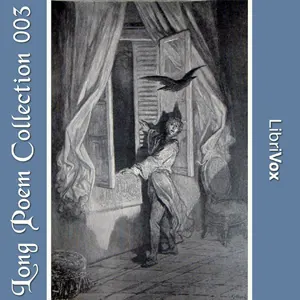
6 The Raven 9:01
The Raven by Edgar Allan Poe.
Once upon a midnight dreary, while I pondered, weak and weary, over many a quaint and curious volume of forgotten lore, while I nodded, nearly napping, suddenly there came a tapping, as of some one gently rapping, rapping at my chamber door. "'Tis some visitor," I muttered, tapping at my chamber door. "'Only this and nothing more.' Ah, distinctly I remember, it was the bleak December, and each separate dying ember wrought its ghost upon the floor. Eagerly I wished the morrow. Vainly I had sought to borrow from my book's surcease of sorrow. Sorrow for the lost Lenore, for the rare and radiant maiden, Whom the angels name Lenore, nameless here for evermore. And the silken, sad, uncertain rustling of each purple curtain thrilled me, filled me with fantastic terrors never felt before.
So that now, to still the beating of my heart, I stood repeating, to some visitor entreating entrance at my chamber door, Some late visitor entreating entrance at my chamber door. This it is, and nothing more. Presently my soul grew stronger, hesitating then no longer. Sir, said I, or, madam, truly your forgiveness I implore, but the fact is I was napping, and so gently you came rapping, and so faintly you came tapping, tapping at my chamber door, that I scarce was sure I heard you. Here I opened wide the door. Darkness there, and nothing more. Deep into that darkness peering, long I stood there, wondering, fearing, doubting, dreaming dreams no mortals ever dared to dream before. But the silence was unbroken, and the stillness gave no token, and the only word there spoken was the whispered word.
Lenore? This I whispered, and an echo murmured back the word, Lenore. Merely this, and nothing more. Back into the chamber turning, all my soul within me burning, soon again I heard a tapping, somewhat louder than before. Surely, said I, surely that is something at my window-lattice. Let me see, then, what thereat is, and this mystery explore. Let my heart be still a moment, and this mystery explore. Tis the wind, and nothing more. Open here I flung the shutter when, with many a flirt and flutter, in there stepped a stately raven of the saintly days of yore. Not the least obeisance made he, not a minute stopped or stayed he, but with mien of lord or lady perched above my chamber door. Perched upon a bust of palace just above my chamber door.
Perched and sat, and nothing more. Then this ebony bird, beguiling my sad fancy into smiling by the grave and stern decorum of the countenance it wore. Though thy crest be shorn and shaven thou, I said, art sure no craven, ghastly grim and ancient raven wandering from the nightly shore. Tell me what thy lordly name is on the night's plutonian shore. Quoth the Raven, Nevermore. Much I marveled this ungainly fowl to hear discourse so plainly, though its answer little meaning, little relevancy bore. For we cannot help agreeing that no living human being ever yet was blessed with seeing bird above his chamber door, bird or beast, upon the sculptured bust above his chamber door, with such name as Nevermore.
But the raven, sitting lonely on the placid bust, spoke only that one word, as if his soul in that one word he did outpour. Nothing further then, he uttered, not a feather then he fluttered, till I scarcely more then muttered, Other friends have flown before. On the morrow he will leave me, as my hopes have flown before. Then the bird said, Nevermore. Startled at the stillness broken by reply so aptly spoken, Doubtless, said I, what it utters is its only stock in store. Caught from some unhappy master, whom unmerciful disaster Followed fast and followed faster till his songs one burden bore, Till the dirges of his hope that melancholy burden bore Of never, nevermore. But the raven, still beguiling all my fancy into smiling, Straight I wheeled a cushioned seat in front of bird and bust and o'er.
Then, upon the velvet sinking, I betook myself to linking, fancy unto fancy, thinking what this ominous bird of yore, what this grim, ungainly ghastly gaunt and ominous bird of yore, meant in croaking, nevermore. This I sat engaged in guessing, but no syllable expressing, to the fowl whose fiery eyes now burned into my bosom's core. This and more I sat divining, with my head at ease reclining, On the cushion's velvet lining that the lamplight gloated o'er. But whose velvet violet lining with the lamplight gloating o'er She shall press, ah, nevermore. Then methought the air grew denser, perfumed from an unseen censer, Swung by seraphim, whose footfalls tinkled on the tufted floor.
I cried, Thy God hath lent thee, By these angels he hath sent thee. Respite, respite, and Nepenthe From thy memories of Lenore. Quaff, O quaff this kind Nepenthe, And forget this lost Lenore. Quoth the raven, Nevermore.
Prophet, said I, Thing of evil, Prophet still, If bird or devil. Whether tempter sent, or whether tempest tossed thee here ashore, desolate, yet all undaunted, on this desert land enchanted, on this home by horror haunted, tell me truly, I implore. Is there, is there balm in Gilead? Tell me, tell me, I implore, quoth the raven, nevermore. Prophet, said I, Thing of evil, prophet still, if bird or devil, by that heaven that bends above us, by that God we both adore, tell this soul with sorrow laden if, within the distance Aden, it shall clasp a sainted maiden whom the angels name Lenore, clasp a rare and radiant maiden whom the angels name Lenore. Quoth the Raven, Nevermore.
Be that word, our sign of parting, bird or fiend, I shrieked, upstarting. Get thee back into the tempest and the night's plutonian shore. Leave no black plume as a token of that lie thy soul hath spoken. Leave my loneliness unbroken. Quit the bust above my door. Take thy beak from out my heart, and take thy form from off my door. Quoth the raven, Nevermore.
And the raven, never flitting, Still is sitting, still is sitting, on the pallid bust of Pallas just above my chamber door. And his eyes have all the seeming of a demon's that is dreaming, and the lamplight o'er him streaming throws his shadow on the floor. And my soul, from out that shadow that lies floating on the floor, shall be lifted nevermore.
End of poem. This recording is in the public domain. Recorded by Annie Coleman in St. Louis, Missouri, on November 12, 2006. W.W.W. Dot. Annie Coleman. Dot. Com.
-
7 The Song of The Shirt 4:30
The Song of the Shirt, by Thomas Hood.
With fingers weary and worn, with eyelids heavy and red, a woman sat in unwomanly rags, plying her needle and thread. Stitch, stitch, stitch, in poverty, hunger and dirt, and still with a voice of dolorous pitch, she sang the Song of the Shirt. Work, work, work, while the cock is crowing aloof, and work, work, work, till the stars shine through the roof. It's oh to be a slave, along with the barbarous Turk, where woman has never a soul to save, if this is Christian work. Work, work, work, till the brain begins to swim. Work, work, work, till the eyes are heavy and dim. Seam and gusset and band, band and gusset and seam, till over the buttons I fall asleep and sew them on in a dream. O men with sisters, dear, O men with mothers and wives, it's not linen you're wearing out, but human creatures' lives.
Stitch, stitch, stitch, in poverty, hunger and dirt, sewing at once with a double thread, A shroud as well as a shirt. But why do I talk of death, that phantom of grisly bone? I hardly fear his terrible shape. It seems so like my own. It seems so like my own, because of the fasts I keep. O God, that bread should be so dear, and flesh and blood so cheap! Work, work, work, my labour never flags. And what are its wages? A bed of straw, a crust of bread, and rags. That shattered roof, and this naked floor, a table, a broken chair. And a wall so blank, my shadow, I thank, for sometimes falling there. Work, work, work, from weary chime to chime. Work, work, work, as prisoners work for crime. Band and gusset and seam, seam and gusset and band, till the heart is sick and the brain benumbed as well as the weary hand.
Work, work, work, in the dull December light, and work, work, work, when the weather is warm and bright, while underneath the eaves the brooding swallows cling, as if to show me their sunny backs and twit me with the spring. Oh, but to feel the breath of the cowslip and primrose sweet, with the sky above my head and the grass beneath my feet, for only one short hour, to feel as I used to feel before I knew the woes of want and the walk that costs a meal. Oh, but for one short hour, a respite however brief, no blessed leisure for love or hope But only time for grief. A little weeping would ease my heart, but in their briny bed my tears must stop, for every drop hinders needle and thread. Seam and gusset and band, band and gusset and seam, work, work, work, like the engine that works by steam, a mere machine of iron and wood that toils for mammon's sake.
Without a brain to ponder and craze, or a heart to feel and break. With fingers weary and worn, with eyelids heavy and red, a woman sat in unwomanly rags, plying her needle and thread. Stitch, stitch, stitch, in poverty, hunger and dirt, and still with a voice of dolorous pitch, would that its tone could reach the rich. She sang this song of the shirt.
-
8 A Stocking in Rhyme 5:40
A Stocking in Rhyme by Jenny June Crawley. Read for LibriVox.org by Patricia Oakley.
To knit a stocking, needles four, cast on three needles and no more. Each needle stitches eight and twenty, then one foreseam stitch will be plenty. For twenty rounds your stitch must be too plain, too purl, Alternately. Except the seam stitch, which you do once purl, once plain, the whole way through. A finger plain you next must knit, ere you begin to narrow it. But if you like the stocking long, two fingers length will not be wrong. And then the narrowings to make. Two stitches you together take each side the seam, then eight rounds plain. Before you narrow it again. Ten narrowings, you'll surely find, will shape the stocking to your mind. Then twenty rounds knit plain must be, and stitches sixty-five you'll see.
These just in half you must divide, with thirty-two on either side. But on one needle there must be seam stitch in middle. Thirty-three.
One half on needles to you place, and leave alone a little space. The other, with the seam in middle, to manage right, is now my riddle. Backward and forward you must knit, and always purl the backward bit. But seam stitch, purl and plain, you know, and slip the first stitch every row. When thirty rows you thus have done, Each side the seam knit two in one each third row, until sure you feel that forty rows are in your heel. You then begin the heel to close. For this, choose one of the plain rows, knit plain to seam, then two in one. One plain stitch more must still be done. Then turn your work, purl as before the seam stitch two in one, one more, Then turn again, knit till you see where first you turned a gap will be.
Across it, knit together two, and don't forget one plane to do. Then turn again, purl as before, and sew till there's a gap no more. The seam stitch you no longer mind, that with the heel is left behind.
When all the heel is quite closed in, to knit a plain row you begin, and at the end you turn no more, but round and round knit as before. For this, on a side needle take the loops the first slip stitches make. With your heel needle, knit them plain, to meet the old front half again. This On one needle knit should be, and then you'll have a needle free to take up loops the other side, and knit round plain, and to divide the back parts evenly in two. Off the heel-needle some are due. Be careful that you count the same on each back needle, knit round plain, but, as the foot is much too wide, take two together at each side. On the back needle, where they meet, the front to make a seam quite neat.
Each time between, knit one plain round, till stitches sixty-four are found, and the front needle does not lack as many as on both the back. You next knit fifty-six rounds plain, but do not narrow it again. Twill then be long enough And so begin to narrow for the toe. Your long front row knit plainly through. But at its end knit stitches two together, and together catch two first in the next row to match. Then to the other side knit plain, half round, and do the same again. That is, two last together catch. Two first in the front row to match. At first, knit four plain rounds between, then two, then one, until, tis seen, you've knit enough to close the toe. And then decrease in every row, until to stitches eight you've brought, then break the thread off, not too short, and, as these stitches eight you do, Each time your end of thread pull through, then draw up all to close it tight, and with a darning needle bright your end of thread securely run, and then—hurrah!—the stocking's done.