
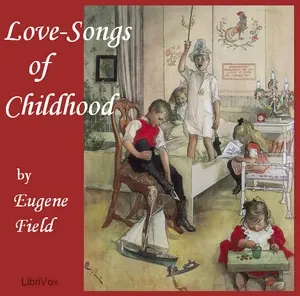
Chapters 43
-
1 00 - Introduction 1:39
I. B. R. I. V. O. X. O. R. G. Recording by Squidvarzhalakova.
Love Songs of Childhood by Eugene Field Introduction To Mrs. Belle Angler Dearest aunt, Many years ago you used to rock me to sleep, cradling me in your arms and singing me pretty songs. Surely you have not forgotten that time, and I recall it with tenderness. You were very beautiful then, but you are more beautiful now, for, in the years that have come and gone since then, the joys and the sorrows of maternity have impressed their saintly grace upon the dear face I used to kiss. And have made your gentle heart gentler still. Beloved lady, in memory of years to be recalled only in thought, and in token of my gratitude and affection, I bring you these little love songs, and reverently I lay them at your feet.
Eugene Field, Chicago, November 1, 1894.
End of introduction.
-
2 01 - The Rock-A-By Lady 1:58
The Rockabye Lady. Love Songs of Childhood The Rock-a-bye Lady The rockabye lady from Hushabye Street comes stealing, comes creeping. The poppies they hang from her head to her feet, and each hath a dream that is tiny and fleet. She bringeth her poppies to you, my sweet, when she findeth you sleeping. There is one little dream of a beautiful drum. Rub-a-dub it goeth. There is one little dream of a big sugar plum, and lo, thick and fast, the other dreams come, of pop-guns that bang, and tiny tops that hum, and a trumpet that bloweth. And dollies peep out of these wee little dreams with laughter and singing. And boats go afloating on silvery streams, and the stars peek-a-boo with their own misty gleams, and up, up, and up where the mother-moon beams, the fairies go winging.
Will you dream all these dreams that are tiny and fleet? They'll come to you, sleeping. So shut the two eyes that are weary, my sweet, for the rock-a-bye lady from Hushabye Street, with poppies that hang from her head to her feet, Come stealing. Come creeping.
-
3 02 - BOOH! 2:02
Boo! Love Songs of Childhood, Eugene Field.
On afternoons, when baby boy has had a splendid nap, and sits, like any monarch on his throne, in nurse's lap, in some such wise my handkerchief I hold before my face, and cautiously and quietly I move about the place. Then, with a cry, I suddenly expose my face to view, and you should hear him laugh and crow when I say, Boo! Sometimes the rascal tries to make believe that he is scared, and really, when I first began, he stared and stared and stared, and then his under lip came out, and farther out it came, till Mama and the nurse agreed. It was a cruel shame. But now what does that same wee toddling, lisping baby do, but laugh and kick his little heels when I say, Boo! He laughs and kicks his little heels in rapturous glee, and then, in shrill despotic trouble bids me, do it all, aden!
And I, of course, I do it, for as his progenitor, it is such pretty pleasant play as this that I am for. And it is, oh, such fun! I ensure that we shall rue, the time when we are both too old to play the game. Boo!
End of Boo.
-
4 03 - Garden and Cradle 1:30
Garden and Cradle.
Love songs of childhood by Eugene Field Garden and Cradle When our babe he goeth walking in his garden, Round his tinkling feet the sunbeams play. The posies, they are good to him, and bow them as they should to him, as fareth he upon his kingly way. And birdlings of the wood to him make music, gentle music, all the day, when our babe he goeth walking in his garden. When our babe he goeth swinging in his cradle, then the night it looketh ever sweetly down. The little stars are kind to him, the moon she hath a mind to him, and layeth on his head a golden crown. And singeth then the wind to him a song, the gentle song of Bethlehem town, when our babe he goeth swinging in his cradle.
-
5 04 - The Night Wind 2:30
The Night Wind.
Love Songs of Childhood by Eugene Field. The Night Wind.
Have you ever heard the wind go, You—tis a pitiful sound to hear. It seems to chill you through and through, with a strange and speechless fear. Tis the voice of the night that broods outside, when folk should be asleep. And many and many's the time I've cried to the darkness, brooding far and wide over the land and the deep. Whom do you want? O lonely night, that you wailed the long hours through, and the night would say in its ghostly way, You, you, you.
My mother told me long ago, when I was a little tad, that when the night went wailing so, somebody had been bad, and then, when I was snug in bed, whither I had been sent, With the blankets pulled up round my head, I'd think of what my mother'd said, and wonder what boy she meant. And who's been bad today, I'd ask, of the wind that hoarsely blew, and the voice would say in its meaningful way, You, you, you.
And this was true, I must allow. You'll not believe it, though. Yes, though I'm quite a model now. I was not always so. And if you doubt what things I say, suppose you make the test. Suppose when you've been bad some day, and up to bed are sent away from mother and the rest, suppose you ask, Who has been bad? And then you'll hear what's true, for the wind will moan in its ruefulest tone, You, you, you.
End of the Night Wind
-
6 05 - Kissing Time 1:50
Kissing Time. Love Songs of Childhood Kissing Time "'Tis when the lark goes soaring, and the bee is at the bud, when lightly dancing zephyrs sing over field and flood, when all sweet things in nature seem joyfully a chime, "'Tis then I wake my darling, for it is kissing-time. Go, pretty lark, a-soaring, and suck your sweets, O bee! Sing, O ye winds of summer, your songs to mine and me, for with your song at rapture Cometh the moment when, it's half past kissing time, and time to kiss again. So-so the days go fleeting, like golden fancies free, and every day that cometh is full of sweets for me, and sweetest are those moments my darling comes to climb, into my lap to mind me that it is kissing time.
Sometimes maybe he wanders, a heedless aimless way, sometimes maybe he loiters in pretty prattling play, but presently bethinks him and hastens to me then, for it's half-past kissing-time, and time to kiss again.
-
7 06 - Jest 'fore Christmas 3:20
Just for Christmas. Love Songs of Childhood, by Eugene Field. Just for Christmas.
Father calls me William. Sister calls me Will. Mother calls me Willie, but the fellas call me Bill. Mighty glad I ain't a girl. Rather be a boy. Without them sashes, curls and things that's worn by Fauntleroy. Love to chalk green apples and go swimming in the lake. Hate to take the castor oil. They give for bellyache. Most all the time, the whole year round, there ain't no flies on me. But just for Christmas, I'm as good as I can be. Got a yellow dog named Sport. Sick him on the cat. First thing she knows, she don't know where she is at. Got a clipper sled, and when us kids go out to slide, long comes the grocery cart, and we all hook a ride. But sometimes when the grocery man is warranted and cross, he reaches at us with his whip, and rips up his hoss.
And then I laugh and holler, Oh, you never touch at me, but just for Christmas. I'm as good as I can be. Grandma says she hopes that when I get to be a man, I'll be a missioner, like her oldest brother, Dan, as was at up by the cannibals that lives on Ceylon's Isle, where every prospect pleases, and only man is vile. But Grandma, she has never been to see a Wild West show, nor read the life of Daniel Boone, or else I guess she'd know that Buffalo Bill and Cobors is good enough for me. "'Cept jest before Christmas, when I'm good as I can be.' And then old Sporty hangs around, so solemn-like and still. His eyes, they seem, a-saying, "'What's the matter, little Bill?' The old cat sneaks down off a perch and wonders what's become, and them two enemies of hern that used to make things hum.
But I am so polite and tend so earnestly to biz. That mother says to father, How improved our willy is! But father, having been a boy hisself, suspicions me when, just for Christmas, I'm as good as I can be. For Christmas, with its lots and lots of candies, cakes, and toys, was made, they say, for proper kids, and not for naughty boys. So wash your face, and brush your hair, and mind your P's and Q's, and don't bust out your pantaloons, and don't wear out your shoes. Say yes, um, to the ladies, and yes, sir, to the men, and when there's company, don't pass your plate for pie again. But thinkin' of the things you'd like to see upon that tree. Just for Christmas. Be as good as you can be.
End of Just for Christmas.
-
8 07 - Beard and Baby 1:50
Beard and Baby. Love Songs of Childhood, Beard and Baby I say— As one who never feared the wrath of a subscriber's bullet, I pity him who has a beard but has no little girl to pull it. When wife and I have finished tea, our baby woos me with her prattle, and, perched proudly on my knee, she gives my petted whiskers battle. With both her hands she tugs away, while scolding at me kind of spiteful. You'll not believe me when I say I find the torture quite delightful. No other would presume, I ween, to trifle with this her suit wonder, else would I rise a vengeful mien and rent his vandal frame asunder. But when her baby fingers pull this glossy sleek and silky treasure, my cup of happiness is full, and I fairly glow with pride and pleasure.
And, sweeter still, through all the day I seem to hear her winsome prattle, I seem to feel her hands at play, as though she gave me sportive battle. Yes, heavenly music seems to steal where thought of her forever lingers, and round my heart I always feel the twining of her dimpled fingers.
End of Beard and Baby
-
9 08 - The Dinkey Bird 2:23
The Dinky Bird. Love Songs of Childhood by Eugene Field. The Dinky Bird. In an ocean way out yonder, As all sapient people know. It's the land of wonder, wonder, whither children love to go. It's their playing, romping, swinging that give great joy to me, while the dinky bird goes singing in the Amphalula tree. There the gumdrops grow like cherries, and taffies thick as peas. Caramels you pick like berries, when and where and how you please. Big red sugarplums are clinging to the cliffs beside that sea, where the dinky bird is singing in the amphiloula tree. So when children shout and scamper and make merry all the day, when there's naught to put a damper to the ardor of their play, when I hear the laughter ringing, then I'm sure as sure can be that the dinky bird is singing in the amphiloula tree.
For the dinky bird's bravuras and staccatoes are so sweet. His roulades are pagiaturas, and robustos so complete, that the youth of every nation, be they near or far away, have a special delectation in that gladsome roundelay. Their eyes grow bright and brighter, their lungs begin to crow, their hearts get light and lighter, and their cheeks are all aglow, for an echo cometh bringing the news to all and me that the dinky bird is singing in the amphiloula tree. I'm sure you like to go there, to see your feathered friend, and so many goodies grow there you would like to comprehend. Speed, little dreams, you're winging to that land across the sea, where the dinky bird is singing in the amphilola tree.
End of The Dinky Bird
-
10 09 - The Drum 2:04
The Drum. Love Songs of Childhood by Eugene Field. The Drum.
I'm a beautiful red-red drum, and I train with the soldier boys. As up the street we come, wonderful is our noise. There's Tom and Jim and Phil and Dick and Nat and Fred, while Widow Cutler's Bill and I march on ahead. Wrrrrrrat, tat-tat, and a tum-titty-um, tum-tum. Oh, there's bushels of fun in that, for boys with a little red drum. The Injins came last night while the soldiers were abed. They gobbled a Chinese kite, and off to the woods they fled. The woods are the cherry trees down in the orchard lot, and the soldiers are marching to seize the booty the Injins got, with tum-tiddyum tum-tum and rlat-tat-tat, when soldiers marching come, Injins had better scat. Step up there, little Fred, and Charlie, have a mind.
Jim is as far ahead as you two are behind. Ready with gun and sword your valorous work to do. Yonder the Injins horde are lying in wait for you. And the hearts go pit-a-pat when they hear the soldiers come, with a rat-tat-tat and a tum-titty-um-tum-tum. Course it's all in play, the skulking engine crew that hustled the kite away, a little white boy is like you. But honest or just and fun, it is all the same to me. And when the battle is won, home once again march we, with a rat-tat-tat and a tum-titty-um-tum-tum. And there's glory enough in that, for the boys with a little red drum.
End of the Drum
-
11 10 - The Dead Babe 1:42
The dead babe. Love Songs of Childhood The Dead Babe Last night, as my dear babe lay dead, In agony I knelt and said, O God, what have I done, or in what wise offended thee, that thou shouldst take away from me my little son? Upon the thousand useless lives, upon the guilt that vaunting thrives, thy wrath were better spent. Why shouldst thou take my little son? Why shouldst thou vent thy wrath upon this innocent? Last night, as my dear babe lay dead, before mine eyes the vision spread. Of things that might have been, licentious riot, cruel strife, forgotten prayers, a wasted life, dark red with sin. Then with sweet music in the air I saw another vision there, a shepherd in whose keep, a little lamb, my little child, of worldly wisdom undefiled lay fast asleep.
Last night, as my dear babe lay dead, in those two messages I read, a wisdom manifest, And though my arms be childless now, I am content. To him I bow who knoweth best.
End of The Dead Babe
-
12 11 - The Happy Household 2:20
The Happy Household. Love Songs of Childhood by Eugene Field. The Happy Household.
It's when the birds go piping and the daylight slowly breaks, that, clamoring for his dinner, our precious baby wakes. For it's sleep no more for baby, and it's sleep no more for me. For when he wants his dinner, why, it's dinner it must be, and of the lacteal fluid he partakes with great ado, while grandma laughs, and grandpa laughs, and wife she laughs, and I—well, I laugh too. You'd think to see us carrying on about the little tad. That like is not. That baby was a first we'd ever had. But six alive he isn't, yet we people make a fuss, as if the only baby in the world had come to us. And morning, noon, and night-time, whatever he may do, Grandma, she laughs, Grandpa, he laughs, wife, she laughs, and I, of course, laugh too.
But once, a likely spell ago, when that poor little chick, from teething or from some such ill of infancy, fell sick. You wouldn't know us people as the same that went about a-feeling good all over, just to hear him crow and shout. And though the doctor pooed our fears and said he'd pull him through, Old Grandma cried, and Grandpa cried, and wife she cried, and I—yes, I cried too. It makes us all feel good to have a baby on the place, with his everlasting crow and his dimpling-dumpling face. The patter of his pinky feet makes music everywhere, and when he shakes those fists of his, good-bye to every care. No matter what our trouble is, when he begins to coo, old grandma laughs, and grandpa laughs, wife she laughs, and I—you bet I laugh too.
End of the Happy Household
-
13 12 - So, So, Rock-A-By So 1:57
So, so, rock-a-bye, so.
So, so, rock-a-bye, so, off to the garden where dreamykins grow. And here is a kiss on your winky-blink eyes. And here is a kiss on your dimpledown cheek. And here is a kiss for the treasure that lies in the beautiful garden way up in the skies which you seek. Now mind these three kisses wherever you go. So, so, rock-a-bye, so. There's one little Fumfe who lives there, I know, for he dances all night when the dreamykins grow. I sent him this kiss on your droopy-drop eyes. I sent him this kiss on your rosy-red cheek. And here is a kiss for the dream that shall rise when the Fumfe shall dance in those far-away skies which you seek. Be sure that you pay those three kisses you owe. So, so, Rock-a-bye, so.
And by low as you Rock-a-bye go. Don't forget mother, who loveth you so. And here is her kiss on your weepy, deep eyes. And here is her kiss on your peachy-pink cheek. And here is her kiss for the dreamland that lies like a babe on the breast of those far-away skies which you seek. The blinking-wit garden where dream-weekens grow. So, so, rock-a-bye, so.
-
14 13 - The Song of Luddy-Dud 1:47
The Song of Lully Dud.
A sunbeam comes a-creeping into my dear one's nest, and sings to our babe a-sleeping the song that I love the best. Tis little Luddy-Dud in the morning, tis little Luddy-Dud at night, and all day long tis the same sweet song of that waddling, toddling, coddling little night Luddy-Dud. The bird to the tossing clover, the bee to the swaying bud, Keep singing that sweet song over of wee little Luddy Dud. Tis little Luddy Dud in the morning, tis little Luddy Dud at night, and all day long tis the same dear song of that growing, crowing, knowing little sprite Luddy Dud. Luddy Dud's cradle is swinging where softly the night winds blow, and Luddy Dud's mother is singing a song that is sweet and low.
Tis little Luddy Dud in the morning, Tis little Luddy-Dud at night, and all day long tis the same sweet song of my nearest and my dearest heart's delight. Luddy-Dud. The song of Luddy-Dud.
-
15 14 - The Duel 2:06
The Duel. Love Songs of Childhood The Duel The gingham dog and the calico cat Side by side on the table sat. "'Twas half-past twelve, and what do you think?' "'Nor one, nor t'other had slept a wink. "'The old Dutch clock in the Chinese plate appeared to know, as sure as fate, there was going to be a terrible spat. "'I wasn't there. I simply stayed what was told to me by the Chinese plate.' "'The gingham dog went bow-wow-wow, and the calico cat replied, "'Me-ow!' The air was littered an hour or so with bits of gingham and calico. While the old Dutch clock in the chimney-place, up with its hands before its face, for it always dreaded a family row. Now mind, I'm only telling you what the old Dutch clock declares is true.
The Chinese plate looked very blue, and wailed, Oh, dear, what shall we do? But the gingham dog and the calico cat wallowed this way and tumbled that, employing every tooth and claw in the awfullest way you ever saw. And oh, how the gingham and calico flew! Don't fancy I exaggerate. I got my news from the Chinese plate. Next morning, where the two had sat, they found no trace of dog or cat. And some folks think unto this day that burglars stole that pair away. But the truth about the cat and pup is this. They ate each other up. Now what do you really think of that? The old Dutch clock had told me so, and that is how I come to know.
End of The Duel
-
16 15 - Good-Children Street 2:33
Good Children's Street. Love songs of childhood by Eugene Field. Good Children's Street. There's a dear little home in Good Children's Street, My heart turneth fondly to-day, Where tinkle of tongues and patter of feet Make sweetest of music at play, Where the sunshine of love illumines each face And warms every heart in that old-fashioned place. For dear little children go romping about With dollies and tin-tops and drums, And, my, how they frolic and scamper and shout Till bedtime too speedily comes. O days they are golden, and days they are fleet, With little folk living in good children's street. See, here comes an army with guns painted red, And swords caps and plumes of all sorts. The captain rides gaily and proudly ahead On a stick-horse that prances and snorts.
O legions of soldiers you're certain to meet, Nice make-believe soldiers, in good children's street. And yonder Odette wheels her dolly about, Poor dolly, I'm sure she is ill. For one of her blue-china eyes has dropped out, and her voice is as thematically shrill. Then, too, I observe, she is minus her feet, which causes much sorrow in Good Children's Street. "'Tis so dear the children go romping about with dollies and banners and drums, and I venture to say they are sadly put out when an end to their jubilee comes. Oh, days they are golden, and days they are fleet, with little folk living in Good Children's Street. But when father the knight over river and town— Those little folk vanish from sight, and an angel all white from the sky cometh down, and guardeth their babes through the night, and singeth her lullabies tender and sweet to the dear little people in Good Children's Street.
Though elsewhere the world be o'er burdened with care, if though poverty fall to my lot, though toil and vexation be always my share, what care I, they trouble me not? This thought maketh life ever joyous and sweet, as a dear little home in Good Children's Street.
And of Good Children's Street.
-
17 16 - The Delectable Ballad of the Waller Lot 5:14
The delectable ballad of the Waller lot. Love Songs of Childhood by Eugene Field. The Delectable Ballad of the Waller Lot.
Up yonder in Buena Park there is a famous spot In legend and in history it collect the Waller lot. Their children play in daytime and lovers stroll by dark, For tis the goodliest trysting-place in all Buena Park. Once on a time that beauteous maid, sweet little Sissy Nott, Took out her pretty doll to walk within the Waller lot. While thus she fared from Ravenswood came Injins o'er the plain, and seized upon that beauteous maid, and rent her doll in twain. Oh, twas a piteous thing to hear, her lamentations wild. She tore her golden curls, and cried, My child, my child, my child! Alas! what cared those Injun chiefs? How bitterly wailed she! They never had been mothers, and they could not hope to be.
Have done with tears, they rudely quoth. Then they bound her hands, for they proposed to take her off to distant border lands. But joy, from Mr. Eddy's barn doth Willie Clough behold, the sight that makes his hair rise up, and all his blood run cold. He put his fingers in his mouth, and whistled long and clear, and presently a goodly horde of cowboys did appear. Cried Willie Clough, My comrades bold, haste to the waller lot, and rescue from that injun band our charming sissy knot. Spare neither injun buck nor squaw, but smite them hide and hair. Spurn neither sex nor age nor size, and no condition spare. Then sped that cowboy band away, full of vengeful wrath, and Kendall Evans rode ahead upon a hickory lath.
And next came gallant Daddy Field, and Willie's brother Kent, Daddy Boys and Robbie James on murderous purpose bent. For they were much beholden to that maid. In sooth the lot were very, very much in love with charming Sissy Knot. What wonder! She was beauty's queen, and good beyond compare. Moreover, it was known she was her wealthy father's heir. Now when the Indians saw that band, they trembled with affright, and yet they thought the cheapest thing to do was stay and fight. So sturdily they stood their ground, nor would their prisoner yield. Despite the wrath of Willie Clough and gallant Daddy Field. Oh, never fiercer battle raged upon the waller lot, and never blood more freely flowed than flowed for Sissy Knot.
An Injun chief of monstrous eyes got Kendall Evans down, and Robbie James was soon o'erthrown by one of great renown. And Daddy Field was sorely done, and Willie Clough was hurt, and all that gallant cowboy band lay wallowing in the dirt. But still they strove with might and main till all the waller lot was strewn with hair and guts of gore all all for Sissy Nott. Then cried the maiden in despair, Alas, I sadly fear, that battle and my hopes are lost unless some help appear. Loew as she spoke she saw far, the rescuer looming up, the pride of all Buenapark, Clough's famous yellow pup. "'Now sic'em, Don!' the maiden cried. "'Now sic'em, Don!' she cried. Obedient Don at once complied, as ordered so did he.
He sic'd em all so passing well that, overcome by fright, the Indian horde gave up the fray and safely sought in flight. They ran and ran and ran and ran o'er valley, plain and hill. And if they are not walking now, by then they're running still. The cowboys rose up from the dust, with faces black and blue. "'Remember, beauteous maid,' said they, "'we've bled and died for you. And though we suffer grievously, we gladly hail the lot that brings us toils and pains and wounds. For charming Sissy Knot.' But Sissy Knot still wailed and wept, and still her fate reviled. For who could patch her dolly up? Who, who could mentor her child?' Then out her doting mother came and soothed her daughter then.
Grieve not, my darling, I will sew your dolly up again. Joy soon succeeded into grief, and tears were soon dried up. A dignities were heaped upon Clough's noble yellow pup. Him all that goodly company did as deliverer hail. They tied a ribbon round his neck, another round his tail. And every anniversary day upon the waller lot, they celebrate the victory won for charming Sissy not. And I, the poet of these folk, am ordered to compile this truly famous history in good old ballad style, which, having done as to have earned the sweet rewards of fame, in what same style I did begin, I now shall end the same. So let us sing, long live the king, long live the queen and jack, long live the ten spot and the ace, and also all the pack.
End of the Delectable Ballad of the Waller Lot
-
18 17 - The Stork 2:00
The Stork. Love Songs of Childhood by Eugene Field. The Stork.
Last night the stork came stalking. And, Stork, beneath your wing lay, lapped in dreamless slumber, the tiniest little thing. From baby-land out yonder beside the silver sea, you brought a priceless treasure as gift to mine and me. Last night my dear one listened. And, wife, you knew the cry. The dear old Stork has sought our home a many times gone by. And in your gentle bosom I found the pretty thing, That from the realm out yonder our friend the stork did bring. Last night a babe awakened, and, babe, how strange and new must seem the home and people the stork has brought you to! And yet methinks you like them. You neither stare nor weep, but closer to my dear one you cuddle, and you sleep.
Last night my heart grew fonder. O happy heart of mine, sing of the inspirations that round my pathway shine, and sing your sweetest love-song to this dear nestling wee the stork from way out wander hath brought to mine and me.
End of the Stork
-
19 18 - The Bottle Tree 1:44
The Bottle Tree. Love Songs of Childhood by Eugene Field. The Bottle-Tree.
A bottle-tree bloometh in Winky Way land. Heigh-ho, for a bottle, I say. A snug little berth in that ship. I demand, that rocketh the bottletree babies away, where the bottletree bloometh by night and by day, and reacheth its fruit to each wee-dimpled hand. You take of that fruit as much as you list, for colic's a nuisance that doesn't exist. So cuddle me, and cuddle me fast, and cuddle me snug in my cradle away, for I hunger and thirst for that precious repast. Heigh-ho, for a bottle, I say.
The bottletree bloometh by night and by day. Heigh-ho, for Winky Way land. And bottle-tree fruit, as I've heard people say, makes bellies of bottle-tree babies expand. And that is a trick I would fain understand. Heigh-ho for a bottle to-day, and heigh-ho for a bottle to-night, a bottle of milk that is creamy and white. So cuddle me close, and cuddle me fast, and cuddle me snug in my cradle away, for I hunger and thirst for that precious repast. Heigh-ho for a bottle, I say.
End of The Bottle-tree
-
20 19 - Googly-Goo 2:16
GOOGLE-GOO. Love Songs of Childhood, by Eugene Field.
Googly Goo. Of mornings, bright and early, When the lark is on the wing, and the robin in the maple hops from her nest to sing, From yonder cheery chamber cometh a mellow coo. Tis the sweet persuasive treble of my little googly goo. The sunbeams hear his music, and they seek his little bed, And they dance their prettiest dances round his golden curly head. Gallops, minuets, gavots, and waltzes, too, dance they unto the music of my googling, googly-goo. My heart, my heart it leapeth to hear that treble tone, but music like thy music, my darling and mine own. And patiently, yes, cheerfully I toil the long day through, my labor seemeth lightened by the song of googly-goo. I may not see his antics, nor kiss his dimpled cheek.
I may not smooth the tresses the sunbeams love to seek. It mattereth not. The echo of his sweet persuasive coo recurreth to remind me of my little googly goo. And when I come at evening, I stand without the door, and patiently I listen for that dear sound once more. And oftentimes I wonder, O God, what should I do, if any ill should happen to my little googly-goo? Then in a fright I call him, I hear his gleeful shouts, Begone, ye dread forebodings, begone, ye killing doubts, for with my arms about him my heart warms through and through with the oogling and the googly-gling of my little googly-goo.
End of Googly-goo.
-
21 20 - The Bench-Legged Fyce 3:11
The Bench-Legged Vice. Love Songs of Childhood, by Eugene Field. The Bench-Leg advice.
Speaking of dogs. My bench-like advice had most of the virtues, and nary advice. Some folks called him sooner, a name that arose from his predisposition to chronic repose. For Rouse's ambition, he couldn't be beat. You bet yer he got thar on all his forefeet. Most dogs has some forte, like hunting and such, but the sports of the field didn't bother him much. Was just a plain dog, and contented to be on peaceable terms with the neighbors and me. Used to fiddle and squirm and grunt, Oh, how nice, when I tickled the back of that bench-legged fice.
He was long in the borrow, like a fice-otter bee. His color was yaller, as ever you see. His tail curling upward was long, loose and slim. When he didn't wag it, why, the tail it wagged him. His legs were so crooked. My bench-legged pup was as tall setting down as he was standing up. He'd lie by the stove of a night, and regret the various fiddles and things he had ate. When a stranger, most likely a tramp, came along, he'd lift up his voice in significant song. You wondered, by gum, how there ever was space in that bosom of his'n to hold so much bass. Of daytimes he'd sneak to the road and lie down, and tackle the country dogs coming to town. By common consent, he was boss in St. Joe. For what he took hold of he never let go, and a dude that came courtin' our girl left a slice of his white flannel suit with our bench-legged vise.
He was good to us kids when we pulled at his fur, or twisted his tail he would never demur. He seemed to enjoy all our playin' our chaff, for his tongue'd hang out, and he'd laugh, and he'd laugh, and once when the Hobart boy fell through the ice, he was drug clean ashore by that bench-legged vise. We all have our choice, and you, like the rest, allow that the dog which you've got is the best. I wouldn't give much for the boy that grows up with no friendship subsisting between him and a pup. When a fellow gets old, I'd tell you it's nice to think of his youth and his bench-legged vise. To think of the springtime way back in St. Joe, of the peach-trees a-bloomin' and the daisies a-blow, to think of the play in the metter and grove, When little legs wrastled and the little hands strove, to think of the loyalty, valour, and truth, of the friendships that hallow the season of youth.
The Bench-Legged Fice
-
22 21 - Little Miss Brag 2:14
Little Miss Bragg. All LibriVox recordings are in the public domain. For more information or to volunteer, please visit LibriVox.org.
Love Songs of Childhood Little Miss Bragg Little Miss Bragg has much to say to the rich little lady from over the way, and the rich little lady puts out a lip as she looks at her own white dainty slip, and wishes that she could wear a gown as pretty as gingham of faded brown, for little Miss Bragg she lays much stress on the privileges of a gingham dress. Aha! Oho! The rich little lady from over the way has beautiful dolls in vast array, Yet she envies the raggedy, homemade doll she hears her little Miss Bragg extol. For the raggedy doll can fear no hurt from wet, or heat, or tumble, or dirt. Her nose is inked, and her mouth is too, and one eye's black and the other's blue. Aha! Oho! The rich little lady goes out to ride with footmen standing up outside, yet wishes that, sometimes, after dark, her father would trundle her in the park.
That sometimes her mother would sing the things little Miss Bragg says her mother sings, when through the attic window streams the moonlight full of golden dreams. Aha! Oho!
Yes, little Miss Bragg has much to say to the rich little lady from over the way, and yet, who knows, but from her heart often the bitter sighs abstart, uprise to lose their burn, And Sting and the grace of the tongue that loves to sing praise are the treasures all its own. So I've come to love that treble tone. Aha!
Oho!
-
23 22 - The Humming Top 1:41
The Humming Tap.
The top it hummeth a sweet, sweet song to my dear little boy at play, merrily singeth all day long, as it spinneth and spinneth away, and my dear little boy he laugheth with joy when he heareth a monotone of that busy thing that loveth to sing the song that is all its own. Hold fast the string and wind it tight, that the song be loud and clear. Now hurl the top with all your might upon the bank yet here, and straight from the string the joyous thing boundeth and spinneth along, and it whirs and it chirs and it burrs and it purrs ever its pretty song. Will ever my dear little boy grow old, as some have grown before? Will ever his heart feel faint and cold when he heareth the songs of yore? Will ever this toy of my dear little boy, when the years have worn away, Sing sudden low of the long ago, as it singeth to me to-day.
End of the Humming Top
-
24 23 - Lady Button-Eyes 2:48
Lady Button Eyes.
Love Songs of Childhood by Eugene Field. Lady Button Eyes.
When the busy day is done, and my weary little one rocketh gently to and fro, when the night winds softly blow, and the crickets in the glen chirp and chirp and chirp again, when upon the haunted green fairies dance around their queen, then from yonder misty skies cometh Lady Button Eyes. Through the murk and mist and gloam to our quiet, cozy home. Where tis singing, sweet and low, Rocks a cradle to and fro, Where the clock's dull monotone Telleth of the day that's done, Where the moonbeams hover O'er the playthings sleeping on the floor, Where my weary wee one lies, Cometh, lady button eyes, Cometh like a fleeting ghost From some distant deary coast, Never footfall can you hear, As that spirit fareth near, never whisper, never word from that shadow queen is heard, in ethereal raiment dight, from the realm of fay and sprite, in the depth of yonder skies cometh Lady Batonise.
Layeth she her hands upon my dear weary little one, and those white hands, overspread, like a veil, the curly head, Seem to fondle and caress every little silken tress. Then she smooths the eyelids down over those two eyes of brown, in such soothing, tender wise, cometh Lady Button Eyes. Dearest, feel upon your brow that caressing magic now, for the crickets in the glen chirp and chirp and chirp again. While upon the haunted green, fairies dance around their queen, and the moonbeams hover o'er playthings sleeping on the floor. Hush, my sweet! From yonder skies cometh Lady Button Eyes.
-
25 24 - The Road To Bumpville 2:14
The Ride to Bumpville.
Love Songs of Childhood by Eugene Field. The Ride to Bumpville.
Play that my knee was a calico mare saddled and bridled for Bumpville. Leap to the back of this steed, if you dare, and gallop away to Bumpville. I hope you'll be sure to sit fast in your seat for this calico mare is prodigiously fleet, and to many adventures you're likely to meet as you journey along to Bumpville. This calico mare both gallops and trots while whisking you off to Bumpville. She paces, she shies, and she stumbles and spots. in that torturous road to Bumpville. And sometimes the strangely mercurial steed will suddenly stop and refuse to proceed, which, I will admit, is vexatious indeed, when one is en route to Bumpville. She's scared of the cars when the engine goes toot down by the crossing at Bumpville.
You'd better look out for that treacherous brute bearing you off to Bumpville. With a snort she rears up her hindermost heels and executes jigs and Virginia reels. Words fail to explain how embarrassed one feels, dancing so wildly to Bumpville. It's Bumpdy Bump and its Jiggity Jog, journeying on to Bumpville. It's over the hilltop and down through the bog, you'll ride on your way to Bumpville. It's Rattledy Bang over Boulder and Stump. There are rivers to for, there are fences to jump, and the corduroy road goes Bumpdy Bump, mile after mile to Bumpville. Perhaps you'll observe it's no easy thing, making the journey to Bumpville. So I think I'll On the whole, it were prudent to bring an end to this ride to Bumpville, for though she has uttered no protest or plaint, the calcomare must be blowing and faint.
What's more to the point I'm blowed if I ain't, so play we have got to Bumpville.
End of the Ride to Bumpville
-
26 25 - The Brook 1:46
The Brook. Love songs of childhood by Eugene Field. The brook.
I looked in the brook and saw a face. Heigho! But a child was I. There were rushes and willows in that place, and they clutched at the brook as the brook ran by, and the brook it ran its own sweet way, as a child doth run in heedless play, and as it ran I heard it say, Hasten with me to the roistering sea that is wroth with the flame of the morning sky.
I look in the brook and see a face. Heigh-ho, but the years go by. The rushes are dead in the old-time place, and the willows I knew when a child was I, and the brook it seemeth to me to say, as ever it stealeth on its way. Solemnly now, and not in play. Oh, come with me to the slumberous sea, let us gray with the peace of the evening sky. Heigh-ho, but the years go by. I would to God that a child were I.
End of the Brook
-
27 26 - Picnic-Time 2:15
Picnic Time. It's June again. And in my soul I feel the fillin' joy that's sure to come this time o'year to every little boy. For every June the Sunday schools at picnics may be seen, where fields beyond the swellin' flood stand dressed in livin' green, where little girls are skeered to death with spiders, bugs, and ants, and little boys get grass stains on their golden meetin' pants. It's June again, and with it all what happeness is mine. There's goin' to be a picnic, and I'm goin' to jine. One year I joined the Baptists, and goodness how it rained, but Grandpa says that that's the way Baptizo is explained. And once I joined the Piscopils, and had a heap of fun, but the boss of all the picnics was a Presbyterian.
They had so many puddings, salads, sandwiches, and pies, that a fellow wished his stomach was as hungry as his eyes. Oh, yes. Thee'en Presbyterians give yer is so fine, though when they have a picnic, you bet I'm goin to jine. But at this time the Methodists have special claims on me, for they're goin to have a picnic on the 21st D. V. Why should a liberal universalist, like me, object to share the joys of fellowship with every friendly sect, howe'er heterodox their articles of faith Elsewise may be, the doctrine of fried chicken is a saving grace to me. So on the 21st of June, the weather being fine, they're going to give a picnic, and I'm going to jine.
End of Picnic Time.
-
28 27 - Shuffle-Shoon and Amber-Locks 2:07
Shuffle Shoon and Amber Locks. Love Songs of Childhood by Eugene Field Shuffle Shoon and Ember Locks Shuffle Shun and Amber Locks sit together, building blocks. Shuffle Shun is old and gray, Amber Locks a little child. But together at their play age and youth are reconciled, and with sympathetic glee build their castles fair to see. When I grow to be a man, so the wee one's prattle ran, I shall build a castle so. With a gateway broad and grand, here a pretty vine shall grow, there a soldier guard shall stand, and the towers shall be so high, folks will wonder by and by.
Shuffle Shunquoth, yes, I know, thus I builded long ago. Here a gate, and there a wall, here a window, there a door, here a steeple wondrous tall riseth evermore and more. But the years have leveled low, what I builded long ago.
So they gossip at their play, heedless of the fleeting day. One speaks of the long ago where his dead hopes buried lie. One with chubby cheeks aglow, prateleth of the by-and-by. Side by side, they build their blocks, shuffle shoon, and amber locks.
End of Shuffle Shoon and Emberlocks.
-
29 28 - The Shut-Eye Train 2:51
The Shaddai Train. Love Songs of Childhood by Eugene Field. The Shed-Eye Train.
Come, my little one, with me. There are wondrous sights to see as the evening shadows fall. In your pretty cap and gown, don't detain the shut-eye train. Ting-a-ling, the bellet goeth. Toot-toot, the whistle bloweth, and we hear the warning call. All aboard for shut-eye town.
Over hill and over plain soon will speed the shut-eye train. Through the blue where bloom the stars, and the mother moon looks down. Wheel away to the land of Fae. Oh, the sights that we shall see there. Come, my little one, with me there. Tis a goodly train of cars. All aboard for Shudai town. Swifter than a wild bird's flight, through the realms of fleecy light we shall speed and speed away. Let the night in envy frown. What care we how wroth she be? To the bellow land above us, to the bellow folk who love us, let us hasten while we may, all aboard for Shuteye Town.
Shuteye Town is passing fair, golden dreams await us there. We shall dream those dreams, my dear, till the mother moon goes down. See unfold the lights untold, and in those mysterious places we shall see beloved faces, and beloved voices hear in the grace of shut-eye town.
Heavy are your eyes, my sweet. Weary are your little feet. Nestle closer up to me and your pretty cap and gown. Don't detain the shut-eye train. Ting-a-ling, the bell it goeth. Toot-toot, the whistle bloweth. Oh, the sights that we shall see. All aboard for Shuteye Town.
The Shuteye Train.
-
30 29 - Little-Oh Dear 2:00
Little, O Dear. Love Songs of Childhood by Eugene Field Little, O Dear.
See what a wonderful garden is here, planted and trimmed for my little, oh dear. Posies so gaudy and grass of such brown, search ye the country and hunt ye the town, and never you'll meet with a garden so queer as this one I've made for my little, oh dear. Marigolds white and buttercups blue, lilies all dabbled with honey and dew, the cactus that trails over trellis and wall, Roses and pansies and violets, all make proper obeisance and reverent cheer. When into her garden steps little O dear, and up at the top of that lavender tree, a silver bird singeth as only can she. For ever and only she singeth the song, I love you, I love you, the happy day long. Then the echo, the echo that smiteth me here, I love you, I love you, my little O dear.
The garden may wither, the silver-bird fly, but what careth my little precious or I? From her pathway of flowers that in springtime upstart, she walketh a tenderer way to my heart. And, oh, it is always the summertime here, with that song of I love you, my little O dear.
End of Little O Dear
-
31 30 - The Fly-Away Horse 2:52
The Flyaway Horse. Love Songs of Childhood by Eugene Field. The Flyaway Horse.
Oh, what a wondrous horse is the flyaway horse. Perhaps you have seen him before. Perhaps while you slept his shadow has swept through the moonlight that floats on the floor. For it's only at night, when the stars twinkle bright, that the flyaway horse, with an egg and a pull at the rein and a toss of his mane, is up on his heels. The moon in the sky, as he gallopeth by, cries, Oh, what a marvelous sight! And the stars in dismay hide their faces away in the lap of old Grandmother Knight. It is yonder, out yonder, the fly-away horse speedeth ever and ever away, over meadows and lanes, over mountains and plains, over streamlets that sing at their play, and over the sea like a ghost sweepeth he, while the ships they go sailing below.
And he speedeth so fast, That the men at the mast adjudge him some portent of woe. "'What ho there!' they cry, as he flourishes by with a whisk of his beautiful tail, and the fish in the sea are as scared as can be, from the Nautilus up to the whale. And the flyaway horse seeks those faraway lands you little folk dream of at night, where candy-trees grow, and honey-brooks flow, and cornfields with popcorn are white. And the beasts in the wood are ever so good to children who visit them there, What glorious stride of a lion to ride, or to wrestle around with a bear. The monkeys, they say, come on, let us play, and they frisk in the coconut trees, while the parrots, that cling to the peanut vines, sing or converse with comparative ease.
Off! scamper to bed! You shall ride him tonight, for as soon as you've fallen asleep, with a jubilant neigh he shall bear you away over forest and hillside and deep. But tell us, my dear, All you see and you hear on those beautiful lands over there, where the flyaway horse winks his faraway course with a wee one consigned to his care. Then Grandma will cry in amazement, Oh, my! And she'll think it could never be so. And only we two shall know it is true. You and I, little precious, shall know.
End of The Flyaway Horse
-
32 31 - Swing High And Swing Low 1:48
Swing high and swing low. From Love Songs of Childhood.
Love Songs of Childhood by Eugene Field. Swing high and swing low. Swing high and swing low, while the breezes they blow. It's off for a sailor thy father would go, and it's here in the harbor, in sight of the sea. He hath left his wee babe with my song and with me. Swing high and swing low, while the breezes they blow.
Swing high and swing low while the breezes they blow. It's oh for the waiting as weary days go, and it's oh for the heartache that smiteth me when I sing my song over and over again. Swing high and swing low while the breezes they blow. Swing high and swing low, the sea singeth so, and it waileth anon its ebb and its flow. And a sleeper sleeps on to that song of the sea, nor recketh he ever of mine or of me. Swing high and swing low, while the breezes they blow. T'was all for a sailor their father would go.
-
33 32 - When I Was A Boy 2:04
When I was a boy. From Love Songs of Childhood. All LibriVox recordings are in the public domain. For more information or to volunteer, please visit LibriVox.org.
S.
Love-Songs of Childhood, E. Gene Field, When I was a boy Up in the attic, where I slept when I was a boy, a little boy, in through the lattice the moonlight crept, bringing a tide of dreams that swept over the low red trundle bed, bathing the tangled curly head, while moonbeams played at hide-and-seek, with the dimples on the sun-brown cheek, when I was a boy, a little boy. And, oh, the dreams, the dreams I dreamed, When I was a boy, a little boy. For the grace that through the lattice streamed over my folded eyelids seemed to have the gift of prophecy, and to bring me glimpses of times to be when manhood's clarions seemed to call. Ah, that was the sweetest dream of all, when I was a boy, a little boy.
I'd like to sleep where I used to sleep when I was a boy. A little boy. For in the lattice the moon would peep, bringing her tide of dreams, to sweep the crosses and griefs of the years away from the heart that is weary and faint to-day. And those dreams should give me back again a peace I have never known since then, when I was a boy, a little boy.
End of When I Was a Boy
-
34 33 - At Play 2:05
At play. Love Songs of Childhood by Eugene Field. At Play.
Play that you are mother, dear, and play that papa is your beau. Play that we sit in the corner here, just as we used to, long ago. Playing so, we lovers, too, are just as happy as we can be. And I'll say I love you to you, and you say I love you to me. I love you, we both shall say, all in earnest, and all in play.
Or, Play that you are that other one that some time came and went away, and play that the light of years agone stole into my heart again to-day. Playing that you are the one I knew in the days that never again may be, I'll say I love you to you, and you say I love you to me. I love you, my heart shall say, till the ghosts of the past come back to-day. Play that you sought this nestling place for your own sweet self, with that dual guise of your pretty mother in your face, and the look of that other in your eyes. So the dear old loves shall live anew as I hold my darling on my knee, and I'll say, I love you, to you, and you say, I love you, to me. Oh, many a strange true thing we say and do when we pretend to play.
End of At Play
-
35 34 - A Valentine 1:21
A valentine. Love songs of childhood by Eugene Field. A valentine. Go, Cupid, and my sweetheart tell I love her well. Yes, though she tramples on my heart and rends that bleeding thing apart, and though she rolls a scornful eye on doting men when I go by, and though she scouts at everything, as tribute unto her I bring, apple-banana caramel, haste, Cupid, to my love and tell in spite of all I love her well, and further say I have a sled cushioned in blue and painted red. Groceryman has promised I can hitch whenever he goes by. Go tell her that, and furthermore, apprise, my sweetheart, that a score of other little girls implore the boon of riding on that sled, painted and hitched, as aforesaid.
And tell her, Cupid, only she shall ride upon that sled with me. Tell her all this, and further tell I love her well.
End of A Valentine
-
36 35 - Little All-Aloney 2:14
Little Alaloni's feet pitter-patter in the hall, and his mother runs to meet and to kiss her toddling sweet, ere perchance he fall. He is, oh, so weak and small. Yet what danger shall he fear when his mother hovereth near, and he hears her cheering call, Alaloni! Little Alaloni's face is all aglow with glee, as around that romping place at a terrifying pace lungeth. Plungeth he. And that hero seems to be all unconscious of our cheers. Only one dear voice he hears calling reassuringly. All Aloni.
Though his legs bend with their load, though his feet seem so small, that you cannot help forebode some disastrous episode in that noisy hall. Neither threatening bump nor fall little Aloni fears. But with sweet bravado steers whither comes that cheery call, All alony!
Ah, that in the years to come, When he shares of sorrow's store, When his feet are chill and numb, When his cross is burdensome, And his heart is sore! Would that he could hear once more the gentle voice he used to hear, Divined his mother in love and cheer, Calling from yonder spirit shore, All.
All alone.
-
37 36 - Seein' Things 2:44
See in Things. Love Songs of Childhood by Eugene Field. Seeing Things.
I ain't afeared as snakes, or toads, or bugs, or worms, or mice, and things that girls are skeered of I think are awful nice. I'm pretty brave, I guess, and yet I hate to go to bed, for when I'm tucked up warm and snug, and when my prayers are said, mother tells me happy dreams and takes away the light, and leaves me lying all alone, and seeing things at night. Sometimes they're in the corner. Sometimes they're by the door. Sometimes they're all a-standin' in the middle of the floor. Sometimes they are a-sittin' down. Sometimes they're walkin' round so softly and so creepy-like they never make a sound. Sometimes they are as black as ink, and other times they're white. But the color ain't no difference when you see things at night.
Once, when I looked a feller at had just moved on our street, and father sent me up to bed without a bite to eat, I woke up in the dark, and saw things standing in a row, a-looking at me cross-eyed, and pitting at me so. Oh, my! I was so scared that time I never slept a mite. It's almost all as when I'm bad I see things at night. Lucky thing I ain't a girl, or I'd be scared to death. Being a boy, I duck my head and hold my breath. And I am, oh, so sorry I'm a naughty boy, and then I promised me better. And I say my prayers again. Grandma tells me that's the only way to make it right when a feller has been wicked and sees things at night. And so, when other naughty boys would coax me into sin, I try to squash the tempter's voice that urges me within.
And when there's pie for supper, or cakes that's big and nice, I want to, but I do not pass my plate for them things twice. No, rather let starvation wipe me slowly out of sight. Then I should keep a living on and seeing things at night.
End of seeing things.
-
38 37 - The Cunnin' Little Thing 1:36
The cunnin, little thing. From Love Songs of Childhood. All LibriVox recordings are in the public domain. For more information or to volunteer, please visit libravox.org.
Love Songs of Childhood by Eugene Field. The Cunnin' Little Thing. When Baby wakes of mornings, then it's wake ye people all, for another day of song and play has come at our darling's call, and, till she gets her dinner, she makes the welkin ring, and she won't keep still till she's had her fill, the cunning little thing. When Baby goes a-walking, oh, how her patties fly, for that's the way the babies say to other folk, bye-bye. The trees bend down to kiss her, and the birds in rapture sing, as there she stands and waves her hands, the cunning little thing. When baby goes a-rockin' in her bed at close of day, at hide-and-seek on her dainty cheek the dreams and the dimples play, then at sleep, in the tender kisses the guardian angels bring from the far above to my sweetest love, you cunning little thing.
End of The Cunnin' Little Thing
-
39 38 - The Doll's Wooing 2:15
The Doll's Wooing.
The Doll's Wooing The little French doll was a dear little doll tricked out in the sweetest of dresses. Her eyes were a hue, a most delicate blue, and dark as the night were her tresses. Her dear little mouth was fluted and red, and this little French doll was so very well-bred that whenever accosted, her little mouth said, Mama! Mama! The stockinette doll, with one arm and one leg, had once been a handsome young fellow, But now he appeared rather frowsy and bleared in his torn regimentals of yellow. Yet his heart gave a curious thump as he lay in the little toy cart near the window one day, and heard the sweet voice of that French dolly say, Mama, Mama.
He listened so long, and he listened so hard, that anon he grew ever so tender, for it's everywhere known that the feminine tone gets away with all masculine gender. He up and he wooed her with soldierly zest, but all she replied to the love he professed were the plaintive words, which perhaps you have guessed. Mama! Mama! Her mother, a sweet little lady of five, vouchsafed her parental protection, and although stocking it wasn't blue-blooded, yet she really could make no objection. So Soldier and Dolly were wedded one day, and a moment ago, As I journeyed that way, I'm sure that I heard a wee baby voice say, Mama, Mama.
End of The Doll's Wooing
-
40 39 - Inscription For My Little Son's Silver Plate 1:14
inscription for my little son's silver plate. This is a LibriVox recording. All LibriVox recordings are in the public domain. For more information or to volunteer, please visit LibriVox.org.
Sons of childhood by Eugene Field. Inscription for my little son's silver plate.
When thou dost eat from off this plate, I charge thee, be thou temperate. Unto thine elders at the board do thou sweet reverence accord, and, though to dignity inclined, unto the serving folk be kind. Be ever mindful of the poor, nor turn them hungry from the door, and unto God, for health and food and all that in thy life is good, give thou thy heart in gratitude.
End of inscription for my little son's silver plate.
-
41 40 - Fisherman Jim's Kids 3:08
Fisherman Jim's Kids.
Love Songs of Childhood Fisherman Jim's Kids Fisherman Jim lived on the hill with his bonnie wife and his little boys. Twas, Blow ye winds as blow ye will, not we wreck of your cold and noise. For happy and warm were he and his, and he dandled his kids upon his knee to the song of the sea.
Fisherman Jim would sail all day, but, when come night, upon the sands his little kids ran from their play. Calling to him and waving their hands. Though the wind was fresh and the sea was high, he'd hear him, you bet, above the roar of the waves on the shore. Once Fisherman Jim sailed into the bay as the sun went down in a cloudy sky, and never a kid saw he at play, and he listened in vain for the welcoming cry. In his little house he learned it all, and he clenched his hands and he bowed his head. The fever, they said. "'Twas a pitiful time for Fisherman Jim, with them darlings a-dyin' afore his eyes, a-stretchin' their wee hands out to him, and a-breakin' his heart, with the old-time cries he had heard so often upon the sands.
Though they thought they was helpin' his boat ashore, till they spoke no more. But Fisherman Jim lived on and on, castin' his nets and sailin' the sea, As a man will live when his heart is gone. Fisherman Jim lived hopelessly. Till once in those years they come and said, Old Fisherman Jim is powerful sick. Go to him quick. Then Fisherman Jim says he to me, It's a long, long cruise, you understand. But over beyond the rage and sea, I can see my boys on the shining sand, waiting to help this old hulk ashore. Just as they used to. Ah, mate, you know, in the long ago.
No, sir, he wasn't afeared to die, for all night long he seemed to see his little boys if the day's gone by, and to hear sweet voices forgot by me. And just as the morning sun come up, they're holding me by the hands, he cried, and so he died.
And our Fisherman Jim's kids.
-
42 41 - Fiddle-Dee-Dee 2:13
Viddle-dee-dee. Love songs of childhood by Eugene Field. Fiddle-dee-dee.
There once was a bird that lived up in a tree, and all he could whistle was fiddle-dee-dee, a very provoking, unmusical song for one to be whistling this summer day long. Yet always contented and busy was he with that vocal recurrence of fiddle-dee-dee. Hard by lived a brave little soldier of four. That weird iteration repented him sore. I pray thee, dear mother mine, fetch me my gun, for by our St. Diddy the deed must be done that shall presently rid all creation in me of that ominous bird and his fiddle-dee-dee. Then out came dear mother mine, bringing her son his awfully truculent little red gun. The stock was of pine and the barrel of tin. The bang came out where the bullet went in. The right kind of weapon, I think you'll agree, for slaying all fowl that go fiddle-dee-dee.
The brave little soldier quoth never a word, and the upenie drew a straight bead on that bird, and, while that vain creature provokingly sang, the gunnet went off with a terrible bang. Then loud laughed the youth. "'By my bottle!' cried he. "'I've put a quietus on fiddle-de-dee.' Out came then dear mother mine, saying, "'My son, right well have you wrought with your little red gun.' Hereafter, no evil at all, need I fear, with such a brave soldier as you, my love, here. She kissed the dear boy, the bird in the tree. He continued to whistle, his fiddle-dee-dee.
End of Fiddle-dee-dee.
-
43 42 - Over The Hills And Far Away 2:15
Over the hills and far away.
Over the hills and far away, a little boy steals from his morning play, and under the blossoming apple-tree he lies and he dreams of the things to be, of battles fought and of victories won, of wrongs o'erthrown and of great deeds done, of the valour that he shall prove some day, over the hills and far away, over the hills and far away.
Over the hills and far away, yet O for the toil, the livelong day, but it mattereth not, the soul aflame with a love for riches and power and fame. On, O man, while the sun is high, on to the certain joys that lie yonder where blazeth the noon of day. Over the hills and far away. Over the hills and far away.
Over the hills and far away an old man lingers at close of day. Now that his journey is almost done, his battles fought and his victories won, the old-time honesty and truth, the trustfulness and the friends of youth, home and mother, where are they? Over the hills and far away. Over the years and far away.
End of Over the Hills and Far Away. End of Love Songs of Childhood by Eugene Field. Recordings by Squid Vashilakova. Found at Frisco-Squid.blogspot.com.