
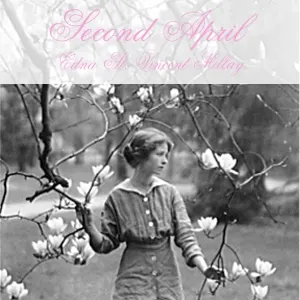
Chapters 49
-
1 01 - Spring 1:07
To what purpose, April, do you return again? Beauty is not enough. You can no longer quiet me with the redness of little leaves opening stickily. I know what I know. The sun is hot on my neck as I observe the spikes of the crocus. The smell of the earth is good. It is apparent that there is no death. But what does that signify? Not only underground are the brains of men eaten by maggots. Life, in itself, is nothing. An empty cup, a flight of uncarpeted stairs. It is not enough that yearly down this hill April comes like an idiot, babbling and strewing flowers.
-
2 02 - City Trees 0:48
City Trees The trees along this city street, save for the traffic and the trains, would make a sound as thin and sweet as trees in country lanes, and people standing in their shade out of a shower undoubtedly would hear such music as is made upon a country tree. O little leaves that are so dumb against the shrieking city air! I watch you when the wind has come. I know what sound is there.
-
3 03 - The Blue-Flag in the Bog 7:22
The Blue Flag in the Bog God had called us, and we came. Our loved earth to ashes left. Heaven was a neighbor's house, open to us bereft. Gay the lights of heaven showed, and was God who walked ahead. Yet I wept along the road, wanting my own house instead. Wept unseen, unheeded cried. All you things my eyes have kissed. Fare you well, we meet no more lovely, lovely, tattered mist. Weary wings that rise and fall, all day long above the fire. Red with heat was every wall, rough with heat was every wire. Fare you well, you little winds, that the flying embers chase. Fare you well, you shuddering day, with your hands before your face. And ah, blackened by strange blight, or to a false sun unfurled, now forevermore good-bye, all the gardens and the world.
On the windless hills of heaven, that I have no wish to see, white eternal lilies stand by a lake of ebony. But the earth forevermore is a place where nothing grows. Dawn will come and no bud break, evening and no blossom close. Spring will come and wander slow over an indifferent land, stand beside an empty creek, hold a dead seed in her hand. God had called us, and we came, but the blessed road I trod was a bitter road to me. And at heart I questioned God. Though in heaven, I said, be all that the heart would most desire, held earth naught save souls of sinners worth the saving from a fire? Withered grass, the wasted growing, aimless ache of laden boughs, little things God had forgotten called me from my burning house.
Though in heaven, I said, Be all that the eye could ask to see. All the things I ever knew are this blazing back of me. Though in heaven, I said, be all that the ear could think to lack. All the things I ever knew are this roaring at my back. It was God who walked ahead, like a shepherd to the fold. In his footsteps fared the weak, and the weary and the old. Glad enough of gladness over. Ready for the peace to be. But a thing God had forgotten was the growing bones of me. And I drew a bit apart, and I lagged a bit behind, and I thought on peace eternal, lest he look into my mind. And I gazed upon the sky, and I thought of heavenly rest, and I slipped away like water through the fingers of the blest.
All their eyes were fixed on glory, Not a glance brushed over me. Alleluia, alleluia, up the road, and I was free. And my heart rose like a freshet, and it swept me on before, giddy as a whirling stick, till I felt the earth once more. All the earth was charred and black, fire had swept from pole to pole, and the bottom of the sea was as brittle as a bowl. And the timbered mountain-top was as naked as a skull. Nothing left—nothing left—of the earth so beautiful. Earth, I said. How can I leave you? You are all I have, I said. What is left to take my mind up, living always, and you dead? Speak, I said. Oh, tell me something. Make a sign that I can see. For a keepsake— To keep always, quick, before God misses me.
And I listened for a voice, but my heart was all I heard. Not a screech-owl, not a loon, not a tree-toad said a word. And I waited for a sign, coals and cinders, nothing more, and a little cloud of smoke floating on a valley floor. And I peered into the smoke, till it rotted like a fog. There. Encompassed round by fire, stood a blue flag in a bog. Little flames came wading out, straining, straining towards its stem. But it was so blue and tall that it scorned to think of them. Red and thirsty were their tongues, as the tongues of wolves must be. But it was so blue and tall. Oh, I laughed, I cried to see. All my heart became a tear, All my soul became a tower. Never loved I anything as I loved that tall blue flower.
It was all the little boats that had ever sailed the sea. It was all the little books that had gone to school with me. On its roots, like iron claws, rearing up so blue and tall, it was all the gallant earth, with its back against a wall. In a breath, ere I had breathed, oh, I laughed, I cried to see. I was kneeling at its side, and it leaned its head on me. Crumbling stones and sliding sand is the road to heaven now. Icy at my straining knees drags the awful undertow. Soon but stepping stones of dust will the road to heaven be. Father, Son, and Holy Ghost, reach a hand and rescue me. There, there, my blue-flagged flower. Hush, hush, go to sleep. That is only God you hear, counting up his folded sheep.
Lullaby, lullaby, that is only God that calls, Missing me, seeking me, Ere the road to nothing falls. He will set his mighty feet firmly on the sliding sand. Like a little frightened bird, I will creep into his hand. I will tell him all my grief, I will tell him all my sin. He will give me half his robe for a cloak to wrap you in. Lullaby, lullaby, rocks the burnt-out planet free. Father, Son, and Holy Ghost, reach a hand and rescue me. Ah, the voice of love at last, lo, at last, the face of light, and the whole of his white robe for a cloak against the night. And upon my heart asleep all the things I ever knew. Holt heaven not some cranny, Lord, for a flower so tall and blue? All's well and all's well, gay the lights of heaven show.
In some moist and heavenly place we will set it out to grow.
-
4 04 - Journey 2:19
Vincent Millet. Read for LibriVox.org by Christian Hughes.
Ah, could I lay me down in this long grass and close my eyes, and let the quiet wind blow over me! I am so tired, so tired of passing pleasant places. All my life, following care along the dusty road, Have I looked back at loveliness inside. Yet at my hand an unrelenting hand tugged ever, and I passed. All my life long over my shoulder I have looked at peace. And now I fain would lie in this long grass and close my eyes. Yet onward. The catbirds call through the long afternoon, and creaks at dusk are guttural. Whippoorwills wake and cry. Drawing the twilight close about their throats. Only my heart makes answer. Eager vines go up the rocks and wait. Flushed apple trees pause in their dance and break the ring for me.
Dim, shady wood-roads redolent of fern and bayberry that through sweet bevy's thread, of round-faced roses pink and petulant, look back and beckon ere they disappear. Only my heart— Only my heart responds. Yet, ah, my path is sweet on either side. All through the dragging day, sharp under foot and heart, and like dead mist the dry dust hangs. But far, oh, far as passionate I can reach, and long, ah, long as rapturous I can cling, the world is mine. Blue Hill. Still silver lake, broad field, bright flower, and the long white road a gateless garden and an open path, my feet to follow and my heart to hold.
-
5 05 - Eel-Grass 0:36
No matter what I say, all that I really love is the rain that flattens on the bay, and the eelgrass in the cove, the jingle shells that lie in bleach at the tide-line, and the trace of higher tides along the beach. Nothing in this place.
-
6 06 - Elegy Before Death 1:20
Elegy before Death.
There will be rose and rhododendron when you are dead and underground. Still will be heard from white syringas heavy with bees, a sunny sound. Still will the tamaracks be raining after the rain has ceased, and still will there be robins in the stubble. Brown sheep upon the warm green hill. Spring will not ale, nor autumn falter. Nothing will know that you are gone, saving alone some sullen plough-land none but yourself sets foot upon. Saving the mayweed and the pigweed, nothing will know that you are dead. These, and perhaps a useless wagon standing beside some tumbled shed. Oh, there will pass, with your great passing, little of beauty not your own. Only the light from common water, only the grace from simple stone.
-
7 07 - The Beanstalk 2:04
The Beanstalk, O Giant, this is I. I have built me a beanstalk into your sky. La, but it's lovely up so high. This is how I came. I put here my knee, there my foot, up and up from shoot to shoot, and the blessed beanstalk thinning like the mischief all the time. Till it took me rocking, spinning in a dizzy, sunny circle, making angles with the route, far and out above the cackle of the city I was born in. Till the little dirty city in the lights so sheer and sunny, shone as dazzling bright and pretty as the money that you find in a dream of finding money. What a wind, what a morning! Till the tiny, shiny city when I shot a glance below, shaken with a giddy laughter, Sick and blissfully afraid, was a dewdrop on a blade, and a pair of moments after was the whirling guess I made, and the wind was like a whip cracking past my icy ears, and my hair stood out behind, and my eyes were full of tears, wide open and cold, more tears than they could hold.
The wind was blowing so, and my teeth were in a row dry and grinning, and I felt my foot slip, And I scratched the wind and whined, and I clutched the stock and jabbered, with my eyes shut blind. What a wind! What a wind! Your broad sky, Giant, is the shelf of a cupboard. I make beanstalks. I'm a builder, like yourself. But beanstalks is my trade. I couldn't make a shelf. Don't know how they're made. Now, a beanstalk is more pliant. La, what a climb!
-
8 08 - Weeds 1:10
White with daisies, and red with sorrel, and empty, empty under the sky. Life is a quest, and love a quarrel. Here is a place for me to lie. Daisies spring from damned seeds. And this red fire that here I see is a worthless crop of crimson weeds, cursed by farmers thriftily. But here, unhated for an hour, the sorrel runs in ragged flame, the daisy stands, a bastard flower, like flowers that bear an honest name. And here, a while, where no wind brings the baying of a pack athirst, May sleep the sleep of blessed things, the blood too bright, the brow accursed.
-
9 09 - Passer Mortuus Est 0:50
Passer Mortuus Est.
Death devours all lovely things. Lesbia with her sparrow shares the darkness. Presently every bed is narrow. Unremembered is old rain dries the sheer libation, and the little petulant hand is an annotation. After all, my erstwhile dear, my no longer cherished, Need we say it was not love, now that love is perished?
-
10 10 - Pastoral 0:53
If it were only still, with far away the shrill crying of a cock, or the shaken bell from a cow's throat moving through the bushes, or the soft shock of wizened apples falling from an old tree in a forgotten orchard upon the hilly rock, O gray hill, where the grazing herd licks the purple blossom, crops the spiky weed. O stony pasture, where the tall mullion stands up so sturdy on its little seed.
-
11 11 - Assault 0:48
I. I had forgotten how the frogs must sound after a year of silence, else I think I should not have so ventured forth alone at dusk upon this unfrequented road. Two. I am waylaid by beauty. Who will walk between me and the crying of the frogs? O savage beauty, suffer me to pass, That am a timid woman, on her way from one house to another.
-
12 12 - Travel 0:56
The railroad track is miles away, and the day is loud with voices speaking. Yet there isn't a train goes by all day, but I hear its whistle shrieking. All night there isn't a train goes by, though the night is still for sleep and dreaming. But I see its cinders red on the sky, and hear its engines steaming. My heart is warm with the friends I make, and better friends I'll not be knowing. Yet there isn't a train I wouldn't take, no matter where it's going.
-
13 13 - Low-Tide 0:54
These wet rocks where the tide has been, Barnacled white and weeded brown, and slimed beneath to a beautiful green. These wet rocks where the tide went down, Will show again when the tide is high, faint and perilous, Far from shore, no place to dream. But a place to die, the bottom of the sea once more. There was a child that wandered through a giant's empty house all day, House full of wonderful things and new, but no fit place for a child to play.
-
14 14 - Song of a Second April 1:10
Song of a Second April April this year, not otherwise than April of a year ago, is full of whispers, full of sighs, of dazzling mud and dingy snow. Hepatocas that pleased you so are here again, and butterflies. There rings a-hammering all day, And shingles lie about the doors. In orchards near and far away the gray woodpecker taps and bores. The men are merry at their chores, and children earnest at their play. The larger streams run still and deep. Noisy and swift the small brooks run. Among the mullioned stalks the sheep go up the hillside in the sun, pensively. Only you are gone. You, that alone I cared to keep.
-
15 15 - Rosemary 0:54
For the sake of some things that be now no more, I will strew rushes on my chamber floor. I will plant bergamot at my kitchen door. For the sake of dim things that were once so plain, I will set a barrel out to catch the rain. I will hang an iron pot on an iron crane. Many things be dead and gone, that were brave and gay. For the sake of these things I will learn to say, An it please you, gentle sirs, Alack, and well-a-day.
-
16 16 - The Poet and His Book 4:43
The poet and his book. Down, you mongrel death, back into your kennel. I have stolen breath in a stalk of fennel. You shall scratch, and you shall whine many a night, and you shall worry many a bone before you bury one sweet bone of mine. When shall I be dead? When my flesh is withered, and above my head yellow pollen gathered all the empty afternoon? When sweet lovers pause and wonder, Who am I that lie thereunder, hidden from the moon? This, my personal death, that lungs be failing to inhale the breath others are exhaling? This, my subtle spirit's end? Ah, when the thawed winter splashes over these dust and ashes, weep not, my friend.
Me by no means dead in that hour, but surely when this book, unread, rots to earth obscurely, and no more to any breast, close against the clamorous swelling of the thing there is no telling, are these pages pressed. When this book is mold, And a book of many waiting to be sold for a casual penny. In a little open case, in a street, unclean and cluttered, where a heavy mud is splattered from the passing drays. Stranger, pause and look. From the dust of ages lift this little book. Turn the tattered pages. Read me. Do not let me die. Search the fading letters. Finding steadfast in the broken binding all that once was I. When these veins are weeds, when these hollowed sockets watch the rooty seeds bursting down like rockets, and surmise the spring again, or remote in that black cupboard watch the pink worms writhing upward at the smell of rain.
Boys and girls that lie whispering in the hedges, do not let me die. Mix me with your pledges. Boys and girls that slowly walk in the woods, and weep and quarrel, staring past the pink wild laurel, mix me with your talk. Do not let me die. Farmers at your raking when the sun is high, while the hay is making. When along the stubble strewn, withering on their stalks uneaten, strawberries turn dark and sweeten in the lapse of noon. Shepherds on the hills, in the pastures, drowsing to the tinkling bells of the brown sheep browsing. Sailors crying through the storm. Scholars at your study. Hunters lost amid the whirling winter's whiteness uniform. Men that long for sleep. Men that wake and revel. If an old song leap to your senses level at such moments.
May it be sometimes, though a moment only. Some forgotten, quaint and homely vehicle of me. Women at your toil, women at your leisure, till the kettle boil, snatch of me your pleasure, where the broom straw marks the leaf. Women quiet with your weeping, lest you wake a workman sleeping. Mix me with your grief. Boys and girls that steal from the shocking laughter of the old. To kneel by a dripping rafter under the discolored eaves. Out of trunks with hingeless covers lifting tales of saints and lovers, travelers, goblins, thieves. Suns that shine by night, mountains made from valleys. Bear me to the light. Flat upon your bellies by the webby window lie. Where the little flies are crawling, read me, margin me with scrawling.
Do not let me die. Sexton, ply your trade, In a shower of gravel, stamp upon your spade. Many a rose shall ravel, Many a metal wreath shall rust in the rain, And I go singing through the lots Where you are flinging yellow clay on dust.
-
17 17 - Alms 1:40
My heart is what it was before, A house where people come and go. But it is winter with your love, The sashes are beset with snow. I light the lamp and lay the cloth, I blow the coals to blaze again. But it is winter with your love. The frost is thick upon the pane. I know a winter when it comes. The leaves are listless on the boughs. I watched your love a little while, and brought my plants into the house. I water them and turn them south. I snap the dead brown from the stem. But it is winter with your love. I only tend and water them. There was a time I stood and watched the small, ill-natured sparrow's fray. I loved the beggar that I fed. I cared for what he had to say. I stood and watched him out of sight.
Today I reach around the door and set a bowl upon the step. My heart is what it was before. But it is winter with your love. I scatter crumbs upon the sill and close the window. And the birds may take or leave them as they will.
-
18 18 - Inland 1:07
Inland, people that build their houses inland, people that buy a plot of ground shaped like a house, and build a house there, far from the seaboard, far from the sound of water sucking the hollow ledges, tons of water striking the shore. What do they long for, as I long for one salt smell of the sea once more? People the waves have not awakened, spanking the boats at the harbor's head. What do they long for, as I long for? Starting up in my inland bed, beating the narrow walls, and finding neither a window nor a door, screaming to God for death by drowning, one salt taste of the sea once more.
-
19 19 - To a Poet That Died Young 1:38
Minstrel. What have you to do with this man that after you, sharing not your happy fate, sat as England's laureate? Vainly in these iron days strives the poet in your praise. Minstrel. By whose singing side beauty walked Until you died. Still, though none should hark again, Drones the blue fly in the pane, Thickly crusts the blackest moss, Blows the rose its musk across, Floats the boat that is forgot None the less to Camelot. Many a bard's untimely death Lends unto his verse's breath. Here's a song was never sung. Growing old is dying young. Minstrel, what is this to you, that a man you never knew, when your grave was far and green, sat and gossiped with a queen? Thalia knows how rare a thing it is to grow old and sing, when a brown and tepid tide closes in on every side.
Who shall say if Shelley's gold had withstood it? To grow old.
-
20 20 - Wraith 1:36
Thin rain, whom are you haunting that you haunt my door? Surely it is not I she is wanting—some one living here before. Nobody's in the house but me. You may come in, if you like, and see. Thin as thread with exquisite fingers. Have you seen her, any of you? Gray shawl, and leaning on the wind, and the garden showing through. Glimmering eyes, and silent, mostly sort of a whisper, sort of a purr. Asking something, asking it over, if you get a sound from her. Ever see her, any of you? Strangest thing I've ever known. Every night since I moved in, and I came to be alone. Thin rain, hush with your knocking. You may not come in. This is I that you hear rocking. Nobody's with me, nor has been. Curious how she tried the window.
Odd the way she tries the door. Wonder just what sort of people could have had this house before.
-
21 21 - Ebb 0:39
I know what my heart is like since your love died. It is like a hollow ledge holding a little pool left there by the tide, a little tepid pool drying inward from the edge.
-
22 22 - Elaine 1:11
Vincent.
O come again to Astolot, I will not ask you to be kind, and you may go when you will go, and I will stay behind. I will not say how dear you are, or ask if you hold me dear, or trouble you with things for you the way I did last year. So still the orchard, Lancelot, so very still the lake shall be. You could not guess, though you should guess, what is become of me. So wide shall be the garden-walk, the garden-seat so very wide. You needs must think, if you should think. The lily-maid had died. Save that, a little way away, I'd watch you for a little while, to see you speak. The way you speak, and smile, if you should smile.
-
23 23 - Burial 0:44
Vincent Millay.
Mine is a body that should die at sea, and have for a grave, instead of a grave six feet deep in the length of me, all the water that is under the wave, and terrible fishes to seize my flesh, such as a living man might fear. And eat me while I am firm and fresh, Not wait till I've been dead for a year.
-
24 24 - Meriposa 0:52
Mariposa.
Butterflies are white and blue in this field we wander through. Suffer me to take your hand. Death comes in a day or two. All the things we ever knew will be like ashes in that hour. Mark the transient butterfly, how he hangs upon the flower. Suffer me to take your hand, Suffer me to cherish you till the dawn is in the sky, Whether I be false or true, Death comes in a day or two.
-
25 25 - The Little Hill 1:13
The Little Hill by Edna St. Vincent Millay.
Oh, here the air is sweet and still, and soft's the grass to lie on, and far away's the little hill they took for Christ to die on. And there's a hill across the brook, and down the brook's another. But, oh, the little hill they took! I think I am its mother. The moon that saw Gethsemane, I watch it rise and set. It has so many things to see, they help it to forget. But little hills that sit at home so many hundred years remember Greece, remember Rome, remember Mary's tears. And far away in Palestine, sadder than any other, Grieves still the hill that I call mine. I think I am its mother.
-
26 26 - Doubt No More That Oberon 1:03
Doubt no more that Oberon, never doubt that Pan lived, and played a reed, and ran after nymphs in a dark forest, in the merry credulous days, lived and led a fairy band over the indulgent land. Ah! For in this dourest, sorest age Man's eye has looked upon Death to fauns and death to fays Still the dogwood dares to raise Healthy trees with trunk and root Ivory boughs that bear no fruit And the starlings and the jays Birds that cannot even sing Dare to come again in spring.
-
27 27 - Lament 1:01
Vincent Millay.
Listen, children. Your father is dead. From his old coats I'll make you little jackets. I'll make you little trousers from his old pants. There'll be in his pockets things he used to put there, keys, and pennies covered with tobacco. Dan shall have the pennies to save in his bank. Anne shall have the keys to make a pretty noise with. Life must go on, and the dead be forgotten. Life must go on, though good men die. Anne, eat your breakfast. Dan, take your medicine. Life must go on. I forget just why.
-
28 28 - Exiled 2:12
Exiled by Edna St. Vincent Millay.
Searching my heart for its true sorrow, this is the thing I find to be, that I am weary of words and people, sick of the city, wanting the sea, wanting the sticky, salty sweetness of the strong wind and shattered spray. Wanting the loud sound and the soft sound of the big surf that breaks all day. Always before about my dooryard, marking the reach of the winter sea, rooted in sand and dragging driftwood, straggled the purple wild sweet pea. Always I climbed the wave at morning, shook the sand from my shoes at night, that now am caught beneath great buildings, Stricken with noise, confused with light. If I could hear the green piles groaning under the windy wooden piers, see once again the bobbing barrels and the black sticks that fence the weirs.
If I could see the weedy mussels crusting the wrecked and rotting hulls, hear once again the hungry crying overhead of the wheeling gulls. Feel once again the shanties straining under the turning of the tide. Fear once again the rising freshet. Dread the bell in the fog outside. I should be happy. That was happy all day long on the coast of Maine. I have a need to hold and handle shells and anchors and ships again. I should be happy. That am happy never at all since I came here. I am too long away from water. I have a need of water near.
-
29 29 - The Death of Autumn 1:05
The Death of Autumn, from 2nd April, by Ednison Vincent Millay. Read for LibriVox.org, by Christian Hughes.
When reeds are dead and a straw to thatch the marshes, and feathered pampas-grass rides into the wind, like aged warriors westward, tragic, thinned of half their tribe, and over the flattened rushes, stripped of its secret, open, stark and bleak, Blackens afar the half-forgotten creek, then leans on me the weight of the year and crushes my heart. I know that beauty must ail and die, and will be born again, but ah, to see beauty stiffened, staring up at the sky. Oh, autumn, autumn, what is the spring to me?
-
30 30 - Ode to Silence 10:45
Ode to Silence, by Edna St. Vincent Millay.
I, but she, your other sister, and my other soul. Grave silence, lovelier than the three loveliest maidens. What of her? Clio, not you, not you, Calliope, nor all your wanton line. Not beauty's perfect self shall comfort me, for silence once departed. For her the cool-tongued, her the tranquil-hearted, whom evermore I follow wistfully. Wandering heaven and earth and hell, and the four seasons through, Thalia, not you, not you, Melpomene, not your incomparable feet, O thin terpsichore, I seek in this great hall. But one more pale, more pensive, most beloved of you all. I seek her from afar. I come from temples where her altars are, from groves that bear her name, noisy with stricken victims now and sacrificial flame.
In symbols struck on high and strident faces, obstreperous in her praise, they neither love nor know a goddess of gone days. departed long ago, abandoning the invaded shrines and fanes of her old sanctuary, a deity obscure and legendary, of whom there now remains for sages to decipher and priests to garble, only, and for a little while, her letters wedged in marble, which even now behold the friendly mumbling rain erases, and the unarticulate snow. Leaving at last of her least signs and traces, none whatsoever, nor whither she has vanished from these places. She will love well, I said. If love be of that heart-inhabiter, the flowers of the dead, the red anemone that with no sound moves in the wind, and from another wound that sprang, the heavily sweet blue hyacinth, That blossoms underground, and sallow poppies will be dear to her, and will not silence know in the black shade of what obsidian steep stiffens the white narcissus numbed with sleep?
Seed which Demeter's daughter bore from home, uptorn by desperate fingers long ago, reluctant even as she, undone Persephone. And even as she set out again to grow in twilight, in perdition's lean and inauspicious loam, she will love well, I said. The flowers of the dead, where dark Persephone the winter round, uncomforted for home, uncomforted, lacking a sunny southern slope in northern Sicily, with sullen pupils focused on a dream, stairs on the stagnant stream, That motes the unequivocal battlements of hell. There, there will she be found, she that is beauty veiled from men and music in a swound.
I long for silence, as they long for breath, whose helpless nostrils drink the bitter sea. What thing can be so stout, what so redoubtable, in death, what fury, what considerable rage? If only she, upon whose icy breast, unquestioned, uncaressed, one time I lay, and whom always I lack even to this day, being by no means from that frigid bosom weaned away, if only she therewith begin me back, I sought her down that dolorous labyrinth, wherein no shaft of sunlight ever fell. And in among the bloodless everywhere I sought her, but the air, breathed many times and spent, was fretful with a whispering discontent, and questioning me, importuning me to tell some slightest tidings of the light of day they know no more.
Plucking my sleeve, the eager shades were with me where I went. I paused at every grievous door, and hearkened a moment, holding up my hand, And for a space a hush was on them while they watched my face. And then they fell a-whispering as before, so that I smiled at them and left them, seeing she was not there. I sought her, too, among the upper guards, although I knew she was not like to be where feasting is, nor near to heaven's Lord, being a thing abhorred and shunned of him, although a child of his, not yours. Not yours. To you she owes not breath, mother of song, being sown of Zeus upon a dream of death. Fearing to pass on visited some place, and later learned too late, how all the while, with her still face, she had been standing there and seen me pass without a smile.
I sought her even to the sagging board whereat the stouter mortal sat. But such a laughter shook the mighty hall no one could hear me say, had she been seen upon the hill that day? And no one knew at all how long I stood, or when at last I sighed and went away. There is a garden lying in a lull between the mountains and the mountainous sea. I know not where, but which a dream diurnal paints on my lids a moment, till the hull be lifted from the kernel and slumber fed to me. Your footprint is not there, Mnemosyne. Though it would seem a ruined place, and after your lichenous heart being full of broken columns, Caryatides thrown to the earth and fallen forward on their jointless knees, and Urn's funereal altered into dust, minuter than the ashes of the dead, and Psyche's lamp out of the earth upthrust, dripping itself in marble wax, On what was once the bed of love, and his young body asleep, but now is dust instead.
There twists the bittersweet, the white wisteria fastens its fingers in the strangling wall, and the white crannies quicken with bright weeds. There, dumbly, like a worm all day, the still white orchid feeds. But never an echo of your daughter's laughter is there. Nor any sign of you at all, swells fungus from the rotten bough, gray mother of Pyuria. Only her shadow, once upon a stone, I saw. And lo, the shadow and the garden, too, were gone. I tell you, you have done her body an ill, you chatterers, you noisy crew. She is not anywhere. I sought her in deep hell, and through the world as well. I thought of heaven, and I sought her there. Above nor underground, in silence, to be found. That was the very warp and woof of you, lovely before your songs began, and after they were through.
Oh, say, if on this hill somewhere your sister's body lies in death, so I may follow there, and make a wreath of my locked hands, that on her quiet breast shall lie till age has withered them. Ah, sweetly from the rest I see, turn and consider me, compassionate Euterpe. There is a gate beyond the gate of death, beyond the gate of everlasting life, beyond the gates of heaven and hell, she saith, whereon but to believe is horror, whereon to meditate engendereth even the deathless spirits such as I, a tumult in the breath. A chilling of the inexhaustible blood, even in my veins, that never will be dry, and in the austere divine monotony that is my being, the madness of an uncustomed mood. This is her province whom you lack and seek, and seek her not elsewhere.
Hell is a thoroughfare for pilgrims, Heracles, and he that loved Eurydice too well have walked therein. And many more than these, and witness the desire and the despair of souls that passed reluctantly and sicken for the air. You, too, have entered Hell and issued thence, but thence whereof I speak none has returned, for thither fury brings only the driven ghosts of them that flee before all things. Oblivion is the name of this abode, and she is there. O radiant song, O gracious memory, Be long upon this height I shall not climb again. I know the way you mean, The little night, and the long, empty day, Never to see again the angry light, Or hear the hungry noises cry my brain. Ah, but she, your other sister, and my other soul, She shall again be mine, And I shall drink her from a silver bowl, A chilly, thin, green wine, not bitter to the taste, not sweet, not of your press, O restless, clamorous nine.
To foam beneath the frantic hooves of mirth, but savoring faintly of the acid earth, and trod by pensive feet, from the perfect clusters ripened without haste, out of the urgent heat. In some clear glimmering vaulted twilight Under the odorous vine. Lift up your lyres, sing on. But as for me, I seek your sister Whither she is gone.
-
31 31 - Memorial To D. C. 0:34
Memorial to D.C., Vassar College, 1918. O loveliest throat of all sweet throats, Where now no more the music is, With hands that wrote you little notes, I write you little elegies.
-
32 32 - Epitaph 0:32
Vincent Millay.
Heap not on this mound roses that she loved so well. Why bewilder her with roses that she cannot see or smell? She is happy where she lies, with the dust upon her eyes.
-
33 33 - Prayer to Persephone 0:50
Prayer to Persephone. Be to her, Persephone, all the things I might not be. Take her head upon your knee. She that was so proud and wild, flippant, arrogant, and free. She that had no need of me, is a little lonely child lost in hell. Persephone, take her hand upon your knee. Say to her, My dear, my dear, it is not so dreadful here.
-
34 34 - Chorus 0:39
Give away her gowns, give away her shoes. She has no more use for her fragrant gowns. Take them all down, blue, green, blue, lilac, pink, blue, from their padded hangers. She will dance no more in her narrow shoes. Sweep her narrow shoes from the closet floor.
-
35 35 - Elegy 1:56
Let them bury your big eyes in the secret earth securely, your thin fingers, and your fair, soft, indefinite colored hair. All of these in some way, surely, from the secret earth shall rise. Not for these I sit and stare. Broken and bereft completely. Your young flesh that sat so neatly on your little bones will sweetly blossom in the air. But your voice, never the rushing of a river underground, not the rising of the wind in the trees before the rain, not the woodcock's watery call, not the note the white throat utters. Not the feet of children pushing yellow leaves along the gutters in the blue and bitter fall, shall content my musing mind for the beauty of that sound, that in no new way at all will ever be heard again.
Sweetly through the sappy stalk of the vigorous weed, holding all it held before, cherished by the faithful sun, on and on eternally shall your altered fluid run. Bud and bloom, and go to seed. But your singing days are done. But the music of your talk never shall the chemistry of all the secret earth restore. All your lovely words are spoken. Once the ivory box is broken, beats the golden bird no more.
-
36 36 - Dirge 0:52
Boys and girls that held her dear, do your weeping now. All you loved of her lies here. Brought to earth the arrogant brow, and the withering tongue chastened, do your weeping now. Sing whatever songs are sung. Wind whatever wreath, for a playmate perished young, for a spirit spent in death, boys and girls that held her dear, all you loved of her lies here.
-
37 37 - Sonnet I 1:07
Vincent Millay. Read for LibriVox.org by Christian Hughes.
We talk of taxes, and I call you friend. Well, such you are, but well enough we know how thick about us root, how rankly grow those subtle weeds no man has need to tend, that flourish through neglect. And soon must send perfume too sweet upon us, and overthrow our steady senses. How such matters go, we are aware, and how such matters end. Yet shall be told no meagre passion here. With lovers such as we, for evermore, Isolde drinks the draught, and Guinevere receives the tables ruined through her door. Francesca, with a loud surf at her ear, Let's fall the colored book upon the floor.
-
38 38 - Sonnet II 1:12
Into the golden vessel of great song Let us pour all our passions, Breast to breast Let other lovers lie In love and rest. Not we, articulate so, But with the tongue of all the world, The churning blood, The long, shuddering quiet, the desperate, hot palms pressed sharply together upon the escaping guest, the common soul unguarded and grown strong. Longing alone is singer to the lute. Let still on nettles in the open sigh the minstrel that in slumber is as mute as any man. And love, be far and high. That else forsakes the topmost branch Of fruit found on the ground by every passer-by.
-
39 39 - Sonnet III 1:08
Vincent Millay.
Not with libations, but with shouts and laughter, we drenched the altars of love's sacred grove, Shaking to earth green fruits, impatient after the launching of the colored moths of love. Love's proper myrtle and his mother's zone, we bound about our irreligious brows, and fettered him with garlands of our own, and spread a banquet in his frugal house. Not yet the god has spoken, but I fear, though we should break our bodies in his flame, and pour our blood upon his altar, here, henceforward, is a grove without a name, a pasture to the shaggy goats of Pan, Whence flee forever a woman and man.
-
40 40 - Sonnet IV 1:15
Only until this cigarette is ended, a little moment at the end of all, while on the floor the quiet ashes fall, and in the firelight to a lance extended, bizarrely with the jazzing music blended. The broken shadow dances on the wall. I will permit my memory to recall the vision of you, by all my dreams attended. And then adieu, farewell, the dream is done. Yours is a face of which I can forget the color and the features, every one. The words not ever, and the smiles not yet. But in your day, this moment, is the sun upon a hill, after the sun has set.
-
41 41 - Sonnet V 1:12
Sonnet V.
Once more into my arid days, like dew, like wind from an oasis, or the sound of cold sweet water bubbling underground, a treacherous messenger, the thought of you comes to destroy me. Once more I renew firm faith in your abundance, whom I found long since to be but just one other mound of sand, whereon no green thing ever grew. And once again, and wiser in no wise, I chase your colored phantom on the air, and sob and curse and fall and weep and rise and stumble pitifully, Unto where, miserable and lost, with stinging eyes, Once more I clasp, and there is nothing there.
-
42 42 - Sonnet VI 1:10
Vincent Millay. Read for LibriVox.org by Kristen Hughes.
No rose that in a garden ever grew, in Homer's or in Omar's or in mine, though buried under centuries of fine dead dust of roses, shut from sun and dew forever, and forever lost from view, but must again in fragrance rich as wine, The gray isles of the air in Carnadine, when the old summers surge into a new. Thus, when I swear, I love with all my heart, tis with the heart of Lilith that I swear, tis with the love of Lesbia and Lucrece, and thus, as well my love must lose some part of what it is, had Helen been less fair, or perished young. or stayed at home in Greece.
-
43 43 - Sonnet VII 1:11
When I too long have looked upon your face, wherein for me a brightness unobscured save by the mists of brightness has its place, and terrible beauty not to be endured, I turn away reluctant from your light, And stand, irresolute, a mind undone, a silly, dazzled thing deprived of sight from having looked too long upon the sun. Then is my daily life a narrow room, in which a little while uncertainty, surrounded by impenetrable gloom, among familiar things grown strange to me, making my way I pause. And feel, and hark, Till I become accustomed to the dark.
-
44 44 - Sonnet VIII 1:13
And you as well must die, beloved dust, and all your beauty stand you in no stead. This flawless, vital hand, this perfect head, this body of flame and steel, before the gust of death. Or under his autumnal frost, shall be as any leaf, be no less dead than the first leaf that fell. This wonder fled, altered, estranged, disintegrated, lost. Nor shall my love avail you in your hour. In spite of all my love, you will rise upon that day and wander down the air, obscurely as the unattended flower. It mattering not how beautiful you were, or how beloved above all else that dies.
-
45 45 - Sonnet IX 1:10
Vincent. Mollet. Read for LibriVox.org by Kristen Hughes. Let you not say of me when I am old, in pretty worship of my withered hands, forgetting who I am, and how the sands of such a life as mine run red and gold, even to the ultimate sifting dust. Behold, here walketh passionless age. For there expands a curious superstition in these lands, and by its leaves some weightless tales are told. In me no lenten wicks watch out the night. I am the booth where folly holds her fair, impious, no less in ruin than in strength. When I lie crumbled to the earth at length, let you not say, Upon this reverend sight the righteous groaned. And beat their breasts in prayer.
-
46 46 - Sonnet X 1:12
Sonnet 10 from 2nd April by Edna and Vincent Millay. Read for LibriVox.org by Christian Hughes.
O, my beloved, have you thought of this? How in the years to come, unscrupulous time, more cruel than death, will tear you from my kiss, and make you old, and leave me in my prime? How you and I, who scale together yet a little while the sweet immortal height no pilgrim may remember or forget, as sure as the world turns, some granite knight shall lie awake and know the gracious flame gone out forever on the mutual stone. And call to mind that on the day you came I was a child, and you a hero grown. And the night pass, and the strange morning break, upon our anguish for each other's sake.
-
47 47 - Sonnet XI 1:14
Vincent.
As to some lovely temple, tenantless long since, that once was sweet with shivering brass, knowing well its altars ruined and the grass grown up between the stones, yet from excess of grief hard driven or great loneliness, The worshipper returns, and those who pass marvel him crying on a name that was. So is it now with me in my distress. Your body was a temple to delight. Cold are its ashes whence the breath is fled. Yet here, one time, your spirit was wont to move. Here might I hope to find you day or night. And here I come to look for you, my love, Even now, foolishly knowing you are dead.
-
48 48 - Sonnet XII 1:10
Vincent Millay.
Cherish you then the hope I shall forget at length, my lord Pairia? Put away for your so passing sake, this mouth of clay, these mortal bones against my body set, for all the puny fever and frail sweat of human love. Renounce for these, I say. The singing mountain's memory, and betray the silent lyre that hangs upon me yet. Ah, but indeed, some day you shall awake, rather from dreams of me, that at your side so many a knight, a lover and a bride, but stern in my soul's chastity have lain, to walk the world forever for my sake, and in each chamber Find me gone again.
-
49 49 - Wild Swans 0:53
Vincent Millay.
I looked in my heart while the wild swans went over. And what did I see I had not seen before? Only a question less, or a question more. Nothing to match the flight of wild birds flying. Tiresome heart! Forever living and dying, house without air, I leave you and lock your door. Wild swans, come over the town. Come over the town again, trailing your legs and crying.