
Chapters 1
-
1 The Romance of Rubber 42:11
The Romance of Rubber, editor of John Martin's book, The Child's Magazine, published by United States Rubber Company. An introductory note. We have undertaken to print this booklet Telling you how rubber is grown, gathered, and then made useful for this reason. The United States Rubber Company, as the largest rubber manufacturer in the world, wants the coming generation of our country to have some understanding of the importance of rubber in our everyday life. We hope to interest and inform you. We believe the rubber industry will be better off if the future citizens of our country know more about it. Chapter One. The Discovery. If you were asked, what did Columbus discover in 1492, you would have but one answer.
But what he discovered on his second voyage is not quite so easy to say. He was looking for gold when he landed on the island of Haiti on that second trip. So his eyes were blind to the importance of a simple game which he saw being played with a ball that bounced by some half-naked Indian boys on the sand between the palm trees and the sea. Instead of the coveted gold, he took back to Europe, just as curiosities, some of the strange black balls given him by these Indian boys. He learned that the balls were made from the hardened juice of a tree. The little boys and girls of Spain were used to playing with balls made of rags or wool. So you may imagine how these bouncing balls of the Indians must have pleased them.
But the men who sent out this second expedition gave the balls little thought and certainly no value. Since Columbus brought back no gold, he was thrown into prison for debt, and he never imagined that, four hundred years later, men would turn that strange gummy tree juice into more gold than King Ferdinand and Queen Isabella and all the princes of Europe ever dreamed of. In the next century after Columbus's travels, the Portuguese founded the colony of Brazil, on the continent of South America. Their settlements were near the coast, and they did not begin to explore the great Amazon region for a hundred years or so. The journey down this great river, which Theodore Roosevelt took so many years later, was first made by a Portuguese missionary, who found the same kind of gummy tree juice as that of the West Indies.
But the natives along the Amazon had discovered that, besides being elastic, it was waterproof, and they were making shoes that would keep out water. You can picture a native boy spilling some of this liquid on his foot, then covering it, as he might, with a mud-pie, and when it dried, Wiggling his toes to find that he had made the first and perhaps the best-fitting gum-shoe that ever was made. Little by little, samples of this new substance found their way to Europe. It was another hundred years before thoughtful men believed it worthwhile to investigate this gum. In 1731, the Paris Academy of Science sent some explorers to learn about it. One of these Frenchmen, La Condamine, wrote of a tree called Hivie.
There flows from this tree a liquor, which hardens gradually and blackens in the air. He found the people of Quito waterproofing cloth with it, and the Amazon Indians were making boots, which, when blackened in smoke, looked like leather. Most interesting of all, they coated bottle-shaped molds, and when the gum had hardened, they would break the mold, shaking the pieces out of the neck, leaving an unbreakable bottle that would hold liquids. It was not long afterwards that Lisbon began to import some of these crudely-fashioned articles, and it is said that in 1755 the king of Portugal sent to Brazil several pairs of his boots to be waterproofed. A few years later, the government of Pará, Brazil, sent him a full suit of rubber clothes.
For all that, this elastic gum was for the most part only a curiosity, and few people knew there was such a thing. About the year 1770, a black bouncing ball of kuchuk, as the Indians called the gum, after many travels, found its way to England, and Priestley, the man who gave us oxygen, learned that it would rub out pencil marks. Then and there he named it what you have probably guessed long before this, rubber. Nearly every language except English uses in place of the word rubber some form of the native word kuchuk, which means, Weeping Tree. After Priestley's discovery, a one-inch rubber sold for three shillings, or about seventy-five cents, but artists were glad to pay even that price because their work was made so much easier.
Chapter Two. Charles Goodyear. In 18, 100, Brazil was the only country manufacturing rubber articles, and her best market soon proved to be North America. Probably the first rubber this country saw was brought to New England in clipper ships as ballast in the form of crude lumps and balls. Rubber shoes, water bottles, powder flasks, and tobacco pouches found buyers in the American ports, but rubber shoes were most in demand. Soon some Americans began to import raw rubber, and to manufacture rubber goods of their own, and in the old world a Scotchman named Mackintosh found a way of waterproofing cloth by spreading on it a thin coating of rubber dissolved in coal naphtha. Many people still refer to raincoats as mackintoshes.
Rubber clothing shared favor with rubber shoes, but its popularity was short-lived, for it did not wear well, and was almost as sensitive to temperature as molasses and butter. The rubber shoes and coats got hard and stiff in winter, and soft and sticky in summer. A man wearing a pair of rubber overalls who sat down too near a warm stove soon found that his overalls, his chair, and himself were stuck fast together. The first rubber coats became so stiff in cold weather that when you took one off you could stand it up in the middle of the floor and leave it, for it would stand like a tent. Until the rubber thawed out, and when thawed, it was almost as uncomfortable as his flypaper to the fly. One day, Charles Goodyear, a Connecticut hardware merchant of an inventive turn of mind, went to a store to buy a life-preserver.
He could find only imperfect ones, but they drew his attention to the study of rubber, and presently he was thinking of it by day and dreaming of it by night. Rubber became a passion with him. He felt sure some way could be found to make it firm yet flexible, regardless of temperature, and for ten years he experimented with different mixtures and processes, hoping to find the right one. So intent was he on his search that he found time for nothing else. Due to neglect, his business went to pieces, and he became very poor. Finally, in 1839, when he was on the point of giving up in despair, he accidentally came upon the solution. He was experimenting in his kitchen, a place which, through lack of funds, he was often forced to use as a laboratory.
Part of the mixture of rubber, sulphur, and other chemicals, with which he was working, happened to drop on the top of the stove. It lay there sizzling and charring until the odor of the burning rubber called his attention to it. As he stooped to scrape it off the stove, he gave a start of wonder, as he noted that a change had come over the rubber during its brief contact with the stove. To his surprise, the mixture had not melted, but had flattened out in the shape of a silver dollar. When it had cooled enough to be handled, he found that it bent and stretched easily, without cracking or breaking, and that it always snapped back to its original shape. Strangest of all, it was no longer sticky.
Apparently half the problem was solved. Whether his new mixture would stand the cold, he had yet to find out, so he nailed it to the outside of the door, and went to bed. Probably he slept but little, and was up early. At any rate, he found the rubber unaffected by the cold. Then he knew that he had made a real discovery, and he named the process Vulcanizing, after Vulcan, the Roman god of fire. Vulcanizing means mixing pure rubber with certain chemicals, and then applying heat. On this process, which is by no means simple, the great rubber business of the world has been established. Practically everything made of rubber, or of which rubber is a part, has to go through the vulcanizing process, whether it is a pair of Keds, a tire, a fruit-jar ring, or a doormat.
So many people had been deceived by previous rubber ventures that Goodyear had great trouble in finding anyone with enough faith to invest money in his discovery. It was some time before he was able to take out the first of the more than sixty patents which he was granted during his lifetime, for applying his process to various uses. Under these patents, he licensed several factories to use the process in the manufacture of rubber goods, but required them to stamp all goods with the words, Goodyear Patent. Scores of companies have since used the name Goodyear, But the only factories that he licensed which are now in existence are parts of the United States Rubber Company. Goodyear often had to defend his patents in court.
In the most famous of these suits, he was defended by Daniel Webster, and opposed by Rufus Choate, so that we see, interwoven in the story of rubber, the names of two of the greatest statesmen this country has produced. Chapter III. The Hevea Tree. For the very first of the rubber story, we may thank a little wood-boring beetle, and the way nature has of helping her children to protect themselves. The thistle of the meadow is as safe from hungry cattle as though fenced in by barbed wire. A cow must be starving, that would care to flavor her luncheon with the needles that the thistle bears. The common skunk cabbage would make a tempting meal for her after a winter of dry feeding, Had not nature given it an odor that disgusts even a springtime appetite?
The milkweed welcomes the bees and flies that help to distribute her pollen where she wants it spread, but she has her own way of punishing the useless thieves that trespass up her stalk. Wherever the hooks of an insect's feet pierce her tender skin, she pours out a milky juice to entangle its feet and body, And it is a lucky bug that succeeds in escaping before this juice hardens, and holds him a prisoner condemned to die. All over the world there are plants with the same ability that the milkweed has, but it is especially true of certain trees and vines of the tropics. As soon as the little beetle begins to bore into the bark of one of these trees, there pours out a sticky milky fluid that kills the insect at once.
If this were all, The wound would remain open, ready for the next robber who came along. In order that the break may be healed, a cement is necessary, but not a hard, unyielding one, for that would crumble away with the motion of the tree in the wind. So with Mother Nature's perfection in doing things, the very plant juice that has done duty as a poison is hardened into an elastic stopper, with the result that, No matter how far the tree may sway and tug at the wound, the filling gives and stretches, true to the task it has to perform. This was the juice the crafty savage induced the tree to give up. Wherever the bark was cut, the fluid poured forth to heal the break, and hardened like blood on a cut finger.
The native caught it while it was still soft, and applied it to his simple needs. This juice is not the sap of the rubber tree. Sap, which is the life-blood of the tree, flows through the wood, but the juice we are describing is contained in the inner bark, a thin layer directly below the outer bark. Scientific men call this juice latex. It is like milk in three ways. It is white, it contains tiny particles that rise to the top like cream, and it spoils quickly. The particles in cow's milk are full of fats which make it good for us to drink. But a rubber-tree's milk has tiny atoms of rubber and resin and other things, and it took time to discover which of the vines and trees was the prize milker of the tropics, and gave the largest amount of pure rubber.
Finally, the Hevea, the very tree the Frenchman wrote about, proved to be the best, and although by no means the only rubber-tree of commercial value, it is acknowledged the greatest of rubber-trees. The Hevea tree grows sixty feet tall, and when full grown is eight or ten feet around. It rises as straight as an elm, with high branching limbs and long, smooth oval leaves. Sprays of pale flowers blossom upon it in August, followed in a few months by pods containing three speckled seeds, which look like smooth, slightly flattened nutmegs. When the seeds are ready to drop, The outer covering of the pod bursts with a loud report, the seeds shooting in all directions. This is nature's clever scheme to spread the Hevea family.
The tree grows wild in the hot, damp forests of the Amazon Valley and in other parts of South America that have a similar climate. The ideal climate for the rubber tree is one which is uniform all year round, from 89 to 94 degrees at noon, and not lower than seventy degrees at night. The Amazon country has a rainy season which lasts half the year, though the other season is by no means a dry one, and so for half the time the jungles are flooded. These rubber storehouses had been growing for thousands of years in the Amazon jungle, with their wealth securely sealed up in their bark, the peck of a bird, the boring of a beetle, or the scratch of a climbing animal, Being the only draft upon their treasure.
The trees around the mouth of the river supplied whatever was needed for the little manufacturing that was at first done. But the discovery that made a universal use for rubber changed all this. Brazil was surprised to find what great treasure her forests contained. Large rubber areas were found a thousand miles up the river, And she began, in a serious way, to develop a large, crude rubber business. Less than 20 years ago, Brazil produced practically all the rubber used in the world. But today she furnishes less than one-tenth of the world's supply. How Brazil, possessing in her vast forests millions of rubber trees of the finest quality, has been forced by unfavorable conditions to permit the Far East to sweep from her in this short time the crude-rubber supremacy of the world is one of the most unusual chapters in modern industrial history.
Chapter Four Wickham's Idea. The story of the success of the East Indies in wresting the crude-rubber supremacy from Brazil begins with an Englishman named Wickham, who might be called the father of plantation rubber. Wickham, who had spent some years in South America, understood the difficulties of gathering rubber in the jungles. He believed that if rubber could be cultivated, it might prove a good crop on the coffee plantations in India, which a blight had recently rendered valueless for coffee. What a strange fact it is that this blight gave Brazil a chance to go into coffee growing, and that while Brazil was losing the rubber supremacy to the Far East, the Far East, at about the same time, was surrendering the leadership in coffee to Brazil.
The latter now holds first place in coffee growing as firmly as does the Far East in rubber growing. Wickham saw that there were difficulties that would prevent the gathering of wild rubber from keeping pace with the growing demand. Although millions of rubber trees still stood untouched in the Brazilian forests, only those trees near the river banks could be tapped, because of the impossibility of getting the rubber out of the dense vegetation. Life in the jungle was dangerous and lonely, and therefore rubber-gatherers were not easy to find. They were compelled to work far from their families and friends, and in constant danger from wild beasts, reptiles, and death-bearing fevers. It is no wonder that rubber obtained in this way came to be known as wild rubber.
Moreover, transporting the crude product through the jungles was hard and expensive, and the rubber obtained under these conditions was not always so clean or high in quality as might be wished. If rubber-trees grow from the seeds which nature scatters in the jungle, said Wickham to himself, why should they not grow from seeds put into the ground by hand? If rubber-trees could be raised from seed, they could be planted in the open in rows where they could easily be tended and tapped, and the rubber gathered quickly and safely. Instead of having to brave the dangerous jungles, men could plant and cultivate rubber in spots of their own choosing, so long as they chose places where the climate was right.
For many years, people only laughed at Wickham's great idea, but like Goodyear, he had faith enough to persevere. While in Brazil he planted some rubber seeds to see what would happen. The seeds did grow, and the book which Wickham wrote about his idea and his experiments finally came into the hands of Sir Joseph Hooker, the director of the Botanical Gardens in Kew, near London. So interested did he become that he called Wickham's plan to the attention of the government of India, And finally Wickham was commissioned to take a cargo of rubber seeds to England, so that his idea might be tried out. This commission was more difficult than one might think, and all of Wickham's faith and perseverance were needed to carry it out.
Indeed, for a time it seemed hopeless, principally because the seeds so quickly dry up and lose their vitality that they must be planted very soon after being gathered. But Wickham watched his opportunity, and finally he was able to charter a ship in the name of the Indian government. About a third of the way up the Amazon River, he placed in her hold several thousand carefully packed seeds of the Hivea brasiliensis, or rubber tree. Let Wickham himself tell how he surmounted the next difficulty. We were bound to call in at the city of Paras as the port of entry, in order to obtain clearance papers for the ship before we could go to sea. Any delay would have rendered my precious freight quite valueless and useless, but again fortune favored.
I had a friend at court, in the person of Consul Green, who went himself with me to call on the proper official, and supported me as I presented to His Excellency my difficulty and anxiety Being in charge of, and having on board a ship anchored out in the stream, exceedingly delicate botanical specimens, especially designated for delivery to Her Britannic Majesty's own royal garden of Kew. Even while doing myself the honor of thus calling on His Excellency, I had given orders to the captain of the ship to keep up steam. Having ventured to trust His Excellency would see his way clear to furnishing me with immediate dispatch. An interview most polite, full of mutual compliments in the best portuguese manner, enabled us to get under way as soon as the captain had got the dinghy hauled aboard.
Can you imagine Wickham's sigh of relief as his vessel, with its freight of perishable treasure, steamed out of port and began the long journey to England. Chapter Five, Plantation Development The transporting of the rubber seeds from the Brazilian forests to England was only the first step in Wickham's project. The real test was still to come. The seeds were planted in the famous Botanical Gardens of Kew, and on August 12, 1876, the several thousand seedlings which had been raised from them were packed in special cases and shipped to Ceylon on the other side of the globe, for the final and most important stage of the experiment. How long the next five years must have seemed to the anxious Wickham, for it was that long before the first rubber tree flowered in the gardens of Heneratgada, sixteen miles from Columbo, where the trees had finally been planted.
In this year, 1881, experiments in tapping began, and it was plain that Wickham's dream was to be realized. From these few trees, so carefully tended in their youth, has sprung the whole rubber industry of Ceylon and the Far East. Wickham must indeed have been proud to see the plantations spreading from Ceylon to Malaya, where rubber was eagerly taken up by planters who were despairing of ever making a living out of coffee, and later to Sumatra and Java and Borneo. Today, rubber plantations cover an area of over three million acres. with a yearly output of almost three hundred and sixty thousand tons, or about ten times the average yearly output of wild rubber. There is a curious coincidence in the fact that Wickham got his idea about planting rubber trees in India at about the same time that men in America began to experiment with the horseless carriage.
You may never have stopped to think of it, But mechanical experts say that without rubber pneumatic tires, automobiles could never have become the fine, swift vehicles they are. It was a wonderful thing that when, in the early part of this century, the automobile industry suddenly burst forth with a demand for rubber, so great that Brazil could never have hoped to supply it. There was found ready in the Far East, as a result of the planting that had been done there, a supply that took care of the sudden emergency. A little more than ten years ago, American business men began to take an interest in the rubber plantations. They have shown characteristic energy in the field, and the greatest single rubber plantation in the world is owned by an American company, the United States Rubber Company.
This plantation is on the island of Sumatra, in the Dutch East Indies, one of the best-governed colonies in the East. On this island is an orchard of rubber-trees, as beautifully laid out and as well cared for as any orchard of fruit-trees in our own country. For seventy square miles, an area as large as the District of Columbia, the orderly ranks of trees fill the gently rolling landscape, every inch of which is weeded as carefully as a garden, It takes 20,000 employees to care for the trees, which number more than five million. On this plantation, the science of growing rubber trees has been brought to a perfection known nowhere else in the world. Groups of botanists, chemists, and arboaculturists study constantly tree diseases, methods of increasing the yield, and the other problems of growing fine trees that will produce high-grade rubber.
Here, by experiment and inspection, the secrets of the rubber tree are being brought to light, so much so that growers look to this plantation for leadership in methods of rubber culture. This great project so far from American soil, and in a field so new, gives a thrill of pride to the Americans visiting Sumatra on their way around the world. Chapter Six, Plantation Life. The moist but very hot climate which rubber-trees require is found only in a zone around the world between the parallels of latitude, thirty degrees north to thirty degrees south of the equator. Within this zone there have been found more than three hundred and fifty rubber-bearing trees, shrubs, and vines. For this reason this zone is called the rubber-belt.
As most of the rubber used commercially is gathered from trees growing within a zone extending from 10 degrees north to 10 degrees south of the equator, this latter zone is sometimes called the inner rubber belt. If you will trace this belt on a map of the world, you will see that it includes the Amazon region, which produces more than three quarters of the wild rubber used in manufacturing. Most of South America's wild rubber is obtained from Brazil, The remainder from Bolivia, Peru, and Venezuela. Now continue the belt around the Atlantic Ocean to Africa, where you will strike the Belgian Congo, which produces a small quantity of wild rubber. Partly owing to the careless manner of gathering, and partly to the fact that it is not originally of as good quality as Brazilian rubber, Congo rubber is not as valuable for manufacturing as Brazilian.
Then complete the circle by following the belt across the Indian Ocean to Ceylon and the East Indies, which contain the great rubber plantations where most of the rubber used to-day comes from. To establish a rubber plantation requires very careful planning. The choice of a site is of first importance, for the planter must find a locality having a moist climate with an evenly distributed rainfall, where the temperature throughout the year does not fall below 70 degrees Fahrenheit, and where there is protection from the wind. There must also be, of course, access to a steady labor supply and a convenient shipping port. As the proper climate is a tropical one, there is usually dense jungle to be cleared away.
Immense trees and thick bushes, rank straggling weeds and vines form an almost impenetrable jungle. To turn such a place into a garden spot means a genuine battle against jungle conditions. But gradually trees, shrubs, and undergrowth are torn out and burned, laying bare the rich soil ready for the plow of the planter. Meantime, the rubber seedlings have been sprouted in nurseries. When the ground is ready, they are carefully taken up and transplanted to the holes which have been made for them in the field, where they are to be permanently planted. Though the growth of the trees is very rapid, sometimes as much as twenty feet in the first year, there are five years of anxious waiting and guarding against winds and disease before they are ready to be tapped, and so begin to reward the planters.
At first, the yield of a tree is only about one-half pound of rubber a year, and this increases so slowly that it is many years before it amounts to as much as ten pounds a year. The highest yield ever recorded was given by one of the original trees set out in the gardens at Henaratgoda, which gave ninety-six and one-half pounds in one year. How different is life on the rubber plantations of today from the life of the gatherer of wild rubber in the jungle? In Brazil, the solitary workers have to plunge at dawn into the perilous forest with its lurking wildcats and jaguars, its coiled and creeping serpents. The dwellings are flimsy huts, food is scarce and expensive, and disease and fever cause many deaths.
On the other hand, Workers on a well-managed plantation live in comfortable houses, in healthy surroundings, and are supplied with plenty of good food. In fact, the conditions are so much better, that generally prevail among natives in the Orient, that work on a plantation is considered more desirable than most other forms of labor. The unmarried men live in barracks, but the men with families have individual houses with garden plots adjoining. Big kitchens prepare and cook the food in the best native style. Schools for the children, recreation centers for old and young, and hospitals to care for the sick are all parts of the plantation organization. In erecting hospitals and caring for the health of its plantation workers, as in other branches of the rubber industry, America has taken the lead.
So well is this recognized that the Dutch government has awarded a medal to the United States Rubber Company for the efficiency and completeness of its plantation hospital, which happens to be the largest private hospital in the East Indies, having accommodations for nearly a thousand patients. Chapter Seven Harvesting the Rubber. It is a cheerful sight to see the workers, men and women, dressed in all the colors of the rainbow, Trooping out from their quarters to begin the day's work. The tapping must be done early in the day, for the latex or rubber juice stops flowing a few hours after sunrise. When the trees reach 18 inches in girth, at a point 18 inches from the ground, they are ready for tapping.
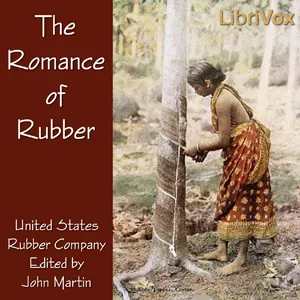
This growth is usually attained when the trees are about five years old. In tapping, a narrow strip of bark is cut away with a knife. The cut extending diagonally one quarter of the way around the tree. At each succeeding day's tapping, the tapper widens the cut by stripping off a sliver of bark one-twentieth of an inch in width. He must be careful not to cut into the wood of the tree, as such cuts not only injure the tree, but permit the sap to run into the latex and spoil the rubber. When the tapper has made the proper gash in the bark, he inserts a little spout to carry the dripping latex to a glass cup beneath. Later in the morning, the workers make the rounds of the trees with large milk cans, gathering the latex from the cups.
When the cans are full, they are carried to a collecting station, called a coagulation shed. It is as clean and well-kept as a dairy. Here the latex is weighed And when each collector has been credited with the amount he has brought, it is dumped into huge vats. The next step is to extract the particles of rubber from the latex and to harden them. The jungle method of hardening rubber is to dip a wooden paddle in the latex and smoke it over a fire of wood and palm nuts. It is a back-breaking process to cover the paddle with layer after layer until a good-sized lump, usually called a biscuit, is formed. The plantation method is a quicker and cleaner one. Into the vats is poured a small quantity of acid, which causes the rubber cream to coagulate and come to the surface.
The coagulum, as it is called, is like snow-white dough. It is removed from the vats and run in sheets through machines which squeeze out the moisture and imprint on them a criss-cross pattern to expose as large a surface as possible to the air. These sheets of rubber are then hung in smoke-houses, and smoked from eight to fourteen days, in much the same way that we smoke hams and bacon. After being dried in this way, they are pressed into bales, or packed in boxes, ready for shipment. Chapter Eight. A Last Word. It would be an adventure to follow a bale of plantation rubber, as carefully boxed or wrapped in burlap, It starts on its long and picturesque journey. Bullock carts, railroads, boats, and steamers bring it at last to one of the world markets, Singapore, Colombo, London, Amsterdam, or New York, where it is bought by dealers and then sold to factories which make rubber goods.
An equally fascinating story might be told of its progress through the factory, how it is kneaded and rolled, mixed with chemicals, Rubbed into fabrics, baked in ovens, and finally emerges as any one of the tens of thousands of articles that are made wholly or partly from rubber. Rubber manufacturing is peculiarly an American industry. South America gave us the original rubber trees, and the one man who, more than any other, was responsible for making rubber useful was the American, Charles Goodyear. to-day, two-thirds of the entire output of rubber is sold to the United States, whose manufactured rubber goods set the standard for the whole world. In spite of the wonders which rubber has already accomplished, and the adventures which have colored its history, only the beginning of the romance of rubber has been told.
The plantation industry is still in its infancy, and experiments are constantly being made to determine the best methods of planting, the most fruitful number of trees to the acre, the most advantageous way of tapping. In the laboratories of the great rubber manufacturers, scientists are at work improving old methods of using rubber and devising new ones. Rubber is a substance of so many important characteristics that its uses are countless. It is used for certain purposes because it stretches, for others because it is air-tight and water-tight, for others because it is a non-conductor of electricity, for others because it is shock-absorbing, and for others because it is adhesive. It is on rubber that infants cut their teeth.
After all the teeth are gone, Old age makes use of rubber in plates for false teeth. Ten million motorists and other millions of cyclists in the United States ride on rubber tires that are durable, noiseless, and airtight. Balloons of rubber float aloft, and huge submarines plow their roots beneath the ocean's surface, propelled by electricity stored in great rubber cells. Sheathed in rubber, the lighting makes a peaceful way through our homes, offices, and factories, furnishing light and telephone service. Divers sink out of sight beneath the waves in rubber suits. Rubber air-brake hose on railroad trains makes safe the travel of a nation. Air-drill hose rivets our ships. Fire hose protects the property in city and town.
And garden hose brings nourishment to our growing plants. Rubber clothing protects against storm, and rubber footwear guards us against cold and wet. Tennis balls and golf balls and rubber-cored baseballs give healthful sport to the millions. In hospitals and medical work, the uses of rubber are without number. To select the most important use to which rubber is put would be difficult. One student of the subject says, Of all the applications of rubber, That of packing for the steam engine and connecting machinery appears to have been the most important, as it has been an essential condition of the development and extended use of steam as a motive power. Even as you read this, rubber may be in the act of performing some new magic, some fresh service to mankind, and who knows which one of us will, in the years to come, write a chapter in the story of rubber more thrilling than we are able to imagine today.
A review and questions. Number one, who was the first white man to see rubber? Number two, what use were the natives making of it? Number three, who was the first white man to go up the Amazon? Number four, of what nationality were the explorers who were sent to find out about rubber? Number five, who was the first European monarch to use rubber? Number six, How did rubber get its name? 7. How did rubber first come to the United States? 8. Why are some raincoats called Macintoshes? 9. Why is Charles Goodyear called the father of the rubber industry? 10. What is vulcanizing? 11. What famous man fought in court over the patents? 12. What has a beetle to do with rubber? Number thirteen. Name and describe the liquid in which rubber is found.
Number fourteen. In what part of the tree is this liquid found? Number fifteen. What is the difference between this liquid and the sap of a tree? Number sixteen. Name and describe the best rubber tree. Number seventeen. How are the seeds spread? Number eighteen. What climate is needed for rubber trees? Number nineteen. Which country formerly supplied all the rubber used in the world? Number 20. Who first thought of growing rubber trees on plantations? Number 21. Why did he think it was better to grow them on plantations? Number 22. How were the rubber seeds taken from Brazil? Number 23. On what tropical island was the first plantation started? Number 24. Where are rubber plantations found today?
Number twenty-five, what is the yearly output of the plantations? Number twenty-six, what was the curious coincidence in the growth of the plantation industry? Number twenty-seven, what is meant by the rubber belt around the world? Number twenty-eight, what countries are the principal producers of rubber? Number twenty-nine, why is the worker on a plantation better off than one who lives in the jungle? Number thirty, When are trees ready to be tapped? Number 31. How are trees tapped? Number 32. How is rubber cured in the jungle? Number 33. How is it cured on the plantation? Number 34. Why is rubber manufacturing peculiarly in American industry? Rubber products. There are so many different articles made in whole or part of rubber that it would not be possible to list them all on this page.
The following list is just a few of the thousands of rubber products made by the United States Rubber Company, the oldest and largest rubber organization in the world. We'll help you to think of many other articles made of rubber. Tires. U.S. Royal Chord Automobile Tires. U.S. Mono Twin Truck Tires. U.S. Traction Tread Motorcycle Tires. U.S. Bicycle Tires. U.S. Royal Tubes for Automobile Tires. Clothing. Rainster Raincoats. Naugahyde Belts for Men, Women, and Children. Bathing Caps and Suits. Footwear. Keds, the standard canvas rubber-soled shoes. U.S. Boots. U.S. Arctics and Gaiters. U.S. rubbers, hard rubber goods, battery jars, radio parts, die sticks, household, hot water bags, rubber gloves, ice caps, tubing and sheeting, nursing bottle nipples, toys, fruit jar rubbers, mechanical goods, U.S.
rainbow packing, U.S. rainbow transmission belting, U.S. elevator and conveyor belts, U.S. hose for all purposes, including garden, steam, suction, water, fire, oil, irrigation, etc. Paracore insulated wire and cable. Molded goods in thousands of varieties, as, for example, washers, gaskets, plumbers rubber goods, drainboard mats, bath mats, etc. U.S. tile and sheet flooring, sundries, naugahyde traveling bags, U.S. royal golf balls, Balloons and balloon fabrics. Notice to teachers. These booklets are intended for presentation to your pupils. A full supply will be sent to you free of charge if you will indicate the number of students in your class. Please address, Educational Department, United States Rubber Company, 1790 Broadway, New York City.
End of The Romance of Rubber, edited by John Martin. Read by Judy Bieber, Albuquerque, New Mexico. Mexico, June 2006.