
Chapters 21
-
1 Introductory Note 3:43
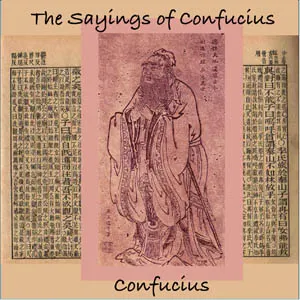
The Sayings of Confucius, from the Harvard Classics, 1909, 1914, edited by Charles W. Eliot. Introductory Note.
The name Confucius is the latinized form of the Chinese characters Kung Fu Tzi meaning the master Kung. The bearer of this name was born of an ancient and distinguished family in the district of Tso, in the current province of Shandong, China, B.C. Five Five One. His father was a soldier of reputation and governor of Tso, but not a man of wealth. Confucius married at nineteen, and in his early manhood held a minor office, but within a few years he became a public teacher, and soon attracted numerous disciples. Rising in reputation, he was invited to the court of Chou, where he investigated the traditional ceremonies and maxims of the ruling dynasty. and in the following year visited another state where he studied the ancient music.
When he was nearly fifty, in the year 500 B.C., he again took office, becoming in turn Chief Magistrate of the Town of Chung To, Assistant Superintendent of Works to the Ruler of Law, and finally Minister of Crime. In spite of almost miraculous efficiency, he lost the support of his ruler in Four Nine Six B.C., and until his death in Four Seven Eight B.C., he wandered from state to state, sometimes well treated, sometimes enduring severe hardships, always saddened by the refusal of the turbulent potentates to be guided by his beneficent counsels. No sooner was he dead, however, than his wisdom was recognized by peasant and emperor alike. Admiration rose to veneration, veneration to worship. Sacrifices were offered to him, temples built in his honor, and a cult established which has lasted almost two thousand years.
Confucius did not regard himself as an innovator. but as the conservator of ancient truth and ceremonial propriety. He dealt with neither theology nor metaphysics, but with moral and political conduct. The lune, Analects, or sayings of Confucius, were probably compiled, says Legge, By the disciples of the disciples of the sage, making free use of the written memorials concerning him which they had received, and the oral statements which they had heard from their several masters. And we shall not be far wrong if we determine its date as about the beginning of the third or the end of the fourth century before Christ.
End of the introductory note.
-
2 Book 01 5:26
Elliott. Book One.
I. The master said, In learning and straightway practicing, Is there not pleasure also? When friends gather round from afar, do we not rejoice? Whom lack of fame cannot fix, is not he a gentleman? Two. You, Zhu said, A dutiful son and brother is seldom fond of thwarting those over him. A man unwilling to thwart those over him is never given to crime. A gentleman nurses the roots. When the root has taken, The truth will grow, and what are the roots of love but the duty of son and of brother?
The Master said, Honeyed words and flattering looks seldom speak of love.
Four. Cheng Tzu said, Thrice daily I ask myself, Have I been unfaithful in dealing for others? Have I been untrue to friends? Do I practice what I preach?
V. The master said, To guide a lad of a thousand chariots, on our business, be true and sparing, love the people, and time thy claims upon them.
VI. The master said, The young should be dutiful at home, modest abroad, heedful and true, Full of goodwill for the many, close friends with love, and should they have strength to spare, let them spend it upon the arts.
Seven. Suziah said, If a man honor worth and forsake lust, serve father and mother with all his strength, be ready to give his life for the king, and keep faith with his friends, though men may call him rude, I call him learned.
Eight. The master said, Of a gentleman who is frivolous, none stand in awe, nor can his learning be sound. Make faithfulness and truth thy masters. Have no friends unlike thyself. Be not ashamed to mend thy faults. Nine. Cheng Tzu said, Respect death and recall forefathers. The good in men will again grow sturdy. X. Chu Chin said to Chukung, The master, when coming to a country, learns all about the government. Does he ask, or is it told him? Chukung said, The master learns it by his warmth and honesty, by politeness, modesty, and yielding. The way that the master asks is unlike other men's asking.
XI. The master said, As long as his father lives, a son should study his wishes. After he is dead, he should study his life. If for three years he does not forsake his father's ways, he may be called dutiful.
Twelve. You too said, In daily courtesy ease is of price. This was the beauty of the old king's ways. This they followed in small and great. But knowing this, it is not right to give way to ease unchecked by courtesy. This also is wrong. 13. Yu Tzu said, If promises hug the right, word can be kept. If attentions are bounded by courtesy, shame will be banished. Heroes may be worshipped if we choose them right. 14. The master said, A gentleman who is not a greedy eater, nor a lover of ease at home, who is earnest indeed and careful of speech, who seeks the righteous and profits by them, may be called fond of learning. Tzu Kung said, Poor, but no flatterer, Rich, but not proud. How were that? Good, said the master, but better still were poor yet merry, Rich yet courteous.
Zhu Kung said, Where the poem says, If ye cut, if ye file, if ye polish and grind, Is that what is meant?
The master said, Now I can talk of poetry to thee, Zhu. Given a clue, thou canst find the way. 16. The master said, Not to be known should not grieve you. Grieve that you know not men.
-
3 Book 02 7:06
Eliot. Book Two.
I. The Master Said, In Governing Cleave to Good. As the North Star holds his place, and the multitude of stars revolve upon him. Two. The Master said, To sum up the three hundred songs in a word, they are free from evil thought. Three. The Master said, Guide the people by law, subdue them by punishment. They may shun crime, but will be void of shame. Guide them by example, subdue them by courtesy. They will learn shame. And will come to be good. 4. The master said, At fifteen I was bent on study. At thirty I could stand. At forty doubts ceased. At fifty I understood the laws of heaven. At sixty my ears obeyed me. At seventy I could do as my heart lusted and never swerve from right. 5. Mengyi asked the duty of a son.
The master said, Obedience. As Fan Chi, a disciple, was driving him, the master said, Meng Sun asked me the duty of a son. I answered, Obedience. What did ye mean? said Fan Chi. To serve our parents with courtesy whilst they live, said the master, to bury them with all courtesy when they die, and to worship them with all courtesy. Six. Mengwu asked the duty of a son. The master said, What weighs on your father and mother is concerned for your health?
Seven. Su Yu, a disciple, asked the duty of a son. The master said, Today a man is called dutiful if he keeps his father and mother. But we keep both our dogs and horses, and unless we honor parents, is it not all one? Eight. Su Hosea asked the duty of a son. The master said, Our manner is the hard part. For the young to be a stay in toil, and leave the wine and cakes to their elders, is this to fulfill their duty. Nine. The master said, If I talk all day to Hui, the master's favorite disciple, Yen Yuan, like a dullard, he never stops me. But when he is gone, if I pry into his life, I find he can do what I say. No, Huey is no dullard. 10. The master said, Look at a man's acts. Watch his motives.
Find out what pleases him. Can the man evade you? Can the man evade you? 11. The master said, Who keeps the old ekindle? and adds new knowledge is fitted to be a teacher. 12. The master said, A gentleman is not a vessel. 13. Su Kung asked, What is a gentleman? The master said, He puts words into deed first, and sorts what he says to the deed. 14. The master said, A gentleman is broad and fair. The vulgar are biased and petty. Fifteen, the master said, Study without thought is vain. Thought without study is dangerous. Sixteen, the master said, Work on strange doctrines does harm. Seventeen, the master said, You, the disciple, Sulu, shall I teach thee what is understanding? To know what we know, and know what we do not know, that is understanding.
18. Su Chang, a disciple, studied with an eye to pay.
The master said, Listen much, keep silent when in doubt, and always take heed of the tongue. Thou wilt make few mistakes. See much, beware of pitfalls, and always give heed to thy walk. Thou wilt have little to rue. If thy words are seldom wrong, thy deeds leave little to rue. Pay will follow. 19. Duke I, Duke of Lu during Confucius' closing years, asked, What should be done to make the people loyal? Confucius answered, Exalt the straight. Set aside the crooked. The people will be loyal. Exalt the crooked. Set aside the straight. The people will be disloyal. 20. Chi Kang. head of the Chi clan during Confucius' closing years, asked how to make the people lowly, faithful, and willing. The master said, Behave with dignity, they will be lowly.
Be pious and merciful, they will be faithful. Exalt the good, teach the unskilful, they will grow willing. Twenty one. One said to Confucius, Why are ye not in power, sir? The master answered, What does the book say of a good son? An always dutiful son who is a friend to his brothers showeth the way to rule. This also is to rule. What need to be in power? Twenty two. The master said, Without truth, I know not how man can live. A cart without a cross-pole, a carriage without harness. How could they be moved? Twenty three. Su Chang asked whether we can know what is to be ten generations hence. The master said, The Yin inherited the manners of the Hesea. The harm and the good that they wrought them is known.
The Chu inherited the manners of the Yin. The harm and the good that they wrought them is known. And we may know what is to be, even a hundred generations hence, when others follow Chu.
The Yin, the Hesia, and the Chou were the three dynasties that had ruled China up till the time of Confucius. Twenty Four. The Master said, To worship the ghosts of strangers is fawning. To see the right and not do it is want of courage.
-
4 Book 03 9:58
One.
Of the chi having eight rows of dancers in his hall, Confucius said, If this is to be born, what is not to be born?
Two. At the end of the worship, the three clans made use of the Jung hymn. The master said, The dukes and princes assist. Solemn is the son of heaven. What sense has this in the hall of the three clans? 3. The master said, A man without love, what is courtesy to him? A man without love, what is music to him? 4. Lin Feng asked, What is the life of ceremony? The master said, A great question. At high tides waste is worse than thrift. At burials grief outweighs nicety. 5. The master said, The wild tribes have kings, whilst the realm of Sia is without.
VI. The Chi worshipped on Mount Tai. The master said to Rang Yu, Canst thou not stop this? He answered, I cannot. Alas, said the master, dost thou set Mount Tai below Lin Fang?
VII. The master said, A gentleman has no rivalries. Except perhaps in archery, and then, as bowing, he joins the winners, or steps down to see the loser drink. Throughout the struggle he is still the gentleman.
Eight. Tzu-sia asked, What is the meaning of, Her cunning smiles, her dimples light, Her lovely eyes so clear and bright? The ground not yet with collars dight. The master said, Collaring follows groundwork. Then does courtesy follow after, said Zsia. Shang, said the master, thou hast hit my meaning. Now I can talk of poetry to thee. 9. The master said, I can speak of the manners of Sia, but for Chi witnesses fail. I can speak of the manners of Yin, but for Sung witnesses fail. This is due to their dearth of books and great men. Were there enough of these, they would witness for me.
X. The master said, After the drink-offering at the great sacrifice, I have no wish to see more. 11. One asked about the words of the great sacrifice. 12. The master said, I do not understand them. Could one understand them, he would overlook the world as I this. And he pointed to his palm. 13. Worship as though those ye worship stood before you. Worship the spirits as though they stood before you. The master said, If I take no part in the sacrifice, it is none to me. 14. Wang Sun-jia said, What is the meaning of, It is better to court the kitchen god than the god of the home? Not at all, said the master. A sin against heaven is past praying for. 15. The master said, Two lines of kings have passed beneath the ken of Jou.
How rich in art is Jou! It is Zhou I follow. 16. On entering the great temple, the master asked how each thing was done. One said, Who says that the man of Zhou's son has a knowledge of ceremony? On entering the great temple, he asked how each thing is done. On hearing this, the master said, Such is the ceremony.
17. The master said, To pierce through the target does not score in archery, because men differ in strength. This was the old rule. 18. Tsegong wished to do away with the sheep offering at the new moon. The master said, Thou lovest the sheep, Tse. I love the right.
19. The master said, Treat the king with all courtesy. Men call it fawning. 20. Duke Ding asked how a king should behave to his ministers, how ministers should serve their king. Confucius answered, A king should behave with courtesy to his ministers. Ministers should serve their king faithfully.
XXI. The master said, The poem, The Osprey, is glad, but not wanton. It is sad, but not morbid.
XXII. Duke Ai asked Zai Wu about the shrines of the garden spirits. Tsai Wu answered, The Xia Emperors grew furs round them, the men of Yin grew cypress, the men of Zhou grew chestnut, meaning jest not over holy matters. On hearing this, the master said, I do not speak of what is ended, chide what is settled, or find fault with what is past.
Twenty-three. The master said, "'How shallow was Kwan Jung?' "'But,' said one, "'was not Kwan Jung thrifty?' "'Kwan owned Sang Kui, and in his household none doubled offices,' said the master. "'Was that thrift?' "'At least Kwan Jung was versed in courtesy,' the master said. Kings screen their gates with trees. Guan, too, had trees to screen his gate. When two kings make merry together, they have a stand for the turned-down cups. Guan had a turned-down cup-stand, too. If Guan was versed in courtesy, who is not versed in courtesy? 24. The master said to the chief musician of law, "'How to play music may be known, at first each part in unison, then a swell of harmony, each part distinct, rolling on to the finish.' 25.
The warden of Yi asked to see Confucius, saying, No gentleman has ever come here whom I have failed to see. The followers presented him. On leaving, he said, My lads, why lament your fall? The world has long been astray. Heaven will make of the master a warning bell. 26. The master said, All beautiful and noble is the music of Shao. The music of Wu is as beautiful but less noble. 27. The master said, Rank without bounty, Ritual without reverence, Mourning without grief. Why should I cast them a glance?
-
5 Book 04 5:25
Edited by Charles W. Elliott. Book IV. I. The Master said, Love makes a spot beautiful. Who chooses not to dwell in love? Has he got wisdom? II. The Master said, Loveless men cannot bear need long. They cannot bear fortune long. Loving hearts find peace in love. Clever heads find profit in it. III. The Master said, Love can alone love others, or hate others. IV. The master said, A heart set on love will do no wrong. 5. The master said, Wealth and honors are what men desire, but abide not in them by help of wrong. Lowliness and want are hated of men, but forsake them not by help of wrong. Shorn of love, is a gentleman worthy the name? Not for one moment may a gentleman sin against love, not in flurry and haste, Nor yet an utter overthrow.
VI. The master said, A friend to love, a foe to evil, I have yet to meet. A friend to love will set nothing higher. In love's service, a foe to evil will let no evil touch him. Were a man to give himself to love, but for one day I have seen no one whose strength would fail him. Such men there may be, but I have not seen one. 7. The master said, A man and his faults are of a piece. By watching his faults we learn whether love be his. 8. The master said, To learn the truth at daybreak and die at eve were enough. 9. The master said, A scholar in search of truth who is ashamed of poor clothes and poor food it is idle talking to. 10. The master said, A gentleman has no likes and no dislikes below heaven.
He follows right. 11. The master said, Gentlemen cherish worth, the vulgar cherish dirt. Gentlemen trust in justice, the vulgar trust in favor. 12. The master said, The chase of gain is rich in hate. 13. The master said, What is it to sway a kingdom by courteous yielding? Who cannot by courteous yielding sway a kingdom? What can he know of courtesy? The master said, Be not concerned at want of place. Be concerned that thou stand thyself. Sorrow not at being unknown, but seek to be worthy of note. The master said, One thread shen, one runs through all my teaching. Yes, said Tsing Tzu. After the master had left, the disciples asked what was meant. Tsing Tzu said, The master's teaching all hang on faithfulness and fellow-feeling.
16. The master said, A gentleman considers what is right, the vulgar consider what will pay. 17. The master said, At sight of worth, think to grow like it. When evil meets thee, Search thine own heart. The master said, A father or mother may be gently chidden. If they will not bend, be the more lowly, but persevere, nor murmur if trouble follow. The master said, Whilst thou father and mother live, do not wander afar. If thou must travel, hold a set course. 20. The master said, If for three years a son do not forsake his father's ways, he may be called dutiful. 21. The master said, A father's and a mother's age must be born in mind, with joy on the one hand, fear on the other. 22. The master said, Men of old were loath to speak, lest a word that they could not make good should shame them.
23. The master said, Who contains himself goes seldom wrong. 24. The master said, A gentleman wishes to be slow to speak and quick to act. 25. The master said, Good is no hermit, it has ever neighbors. 26. Su-Yu said, Preaching to princes brings disgrace, Nagging at friends estrangement.
-
6 Book 05 7:58
V. I. Of Kung Nhi Chiang, the master said. A girl might marry him. In him was no crime, though he has been in bonds. He gave him his daughter to wife. Of Nanyung, the master said, When right prevails, he will not be neglected. When wrong prevails, he will escape law and punishment. He gave him his brother's daughter to wife. Two. Of Su Tien, the master said, What a gentleman he is! But could he have grown to be a man like this were there no gentleman in Loo? Three. Su Kung asked, and what of me? Thou art a vessel, said the master. What kind of vessel? A rich temple vessel. Four. Young, said one, has love, but he has not a glib tongue. The master said, What is the good of a glib tongue? Fighting men with tongue-craft breeds much bitterness.
Whether love be his I do not know, but what is the good of a glib tongue? 5. The master moved Chi Tiao Kai to take office. He answered, For this I lack confidence. The master was pleased. 6. The master said, Truth makes no way. Let me go afloat and scour the sea, and you shall follow me. When Tzu Lu heard this, he was glad. The master said, "'Yu is more venturesome than I, but he does not know how to take things.'" Seven. Mengwu asked whether Tzu Lu had love. The master said, "'I do not know.' He asked again. The master said, "'A land of a thousand chariots might give you charge of its levies, but whether he have love, I do not know.' And how about Chi Yu? A town of a thousand households, a clan of a hundred chariots, might make Chiyu governor, but whether he have love, I do not know.
And how about Chiyi? Girt with his sash, erect in the court, Chiyi might entertain the guests, but whether he have love, I do not know.
The master said to Zhukung, Who is abler, thou or Hui? He answered, How dare I aspire to Hui? If he hear one thing, Hui understands ten. When I hear one thing, I understand two. The master said, Thou art not his peer. I grant, thou art not his peer. 9. Tsai, you, slept in the daytime. The master said, Rotten wood cannot be carved, nor are dung walls plastered. Why chide with you? The master said, In my first dealings with men, I hearkened to their words, and took their deeds on trust. Now, in dealing with men, I hearken to their words and watch their deeds. I righted this on you. 10. The master said, I have met no firm man. One answered, Shen Cheng. The master said, Cheng is passionate. How can he be firm?
11. Tzu Kung said, What I do not wish to have done unto me, I likewise wish not to do unto others. The master said, That is still beyond thee, Tzu. 12. Tzu Kung said, We may listen to the master's culture, but on life and on the ways of heaven his words are denied us. 13. Until Tzu Lu could carry out what he heard, he only dreamed to hear more. 14. Tzu Kung asked, Why was Kung Wen styled cultured? The master said, He was quick and fond of learning, not ashamed to ask those beneath him. That is why he was called cultured. 15. Of Su Chan, the master said, in four ways he was a gentleman. His own life was modest. He honored the man whom he served. He was kind in rearing the people. He was just in his calls upon them.
16. The master said, Yan Ping was versed in friendship. Familiarity breeds courtesy. 17. The master said, Tseng Wen lodged his tortoise with hills on the pillars, reeds on the uprights. Was this his good sense? 18. Su Chang said, Su Wen was thrice made minister without show of gladness, and thrice left office with unmoved face. He was careful to unfold his rule to the new minister. What do you think of him? He was faithful, said the master. But had he love? I do not know, said the master. How should this amount to love? When Tsui slew the king of Chi, Chen Wen forsook ten teams of horses, and left the land. On coming to another kingdom, he said, Like my lord Tsui, and left it. On coming to the second kingdom, he said, Like my lord Tsui, and left it.
What do you think of him? He was pure, said the master. But had he love? I do not know, said the master. How should this amount to love? 19. Chi Wen thought thrice before acting. On hearing this, the master said, Twice. That is enough. 20. The master said, Whilst peace reigned in the land, Ning Wu showed understanding. When troubles came, he turned simpleton. His understanding is within our reach. Such simplicity is beyond our reach. 21. When he was in Chen, the master said, Home, I must go home. My batch of boys, ambitious and hasty, their minds cultured, their schooling ended, know not what needs fashioning. Twenty-two, the master said, As Po Yi and Chu Chi never recalled past wickedness, the foes they made were few.
Twenty-three, the master said, Who would call Wee-Sheng Kao straight? A man begged him for vinegar. He begged it from a neighbor and gave it. 24. The master said, honeyed words, flattering looks, and overdone humility, Tso Chi Ming thought shameful, and so do I. 25. As Yan Yuan and Chi Lu were sitting with him, the master said, Why not each of you tell me his wishes? Tsu Lu said, Carriage and horses I would have, and robes of fine fur to share with my friends, and would wear them out all free from care. Yen Yuan said, To make no boast of talent nor show of merit were my wish. Tsu Lu said, We should like to hear your wishes, sir. The master said, To make the old folk happy, to be true to friends, to have a heart for the young.
Twenty-six. The master said, It is finished. I have met no one who can see his own faults, and arraign for himself within. Twenty-seven. The master said, In a hamlet of ten households there must be men faithful and true as I. Why is there no one as fond of learning?
Book 5.
-
7 Book 06 9:39
From the Harvard Classics. Book VI.
The Master said, Jung, the disciple Chung Kung, might fill the seat of a prince. And might Su Sang Po Su ask Chung Kung? Yes, said the master, but he is lax. To be lax in his claims on the people might be right, said Chung Kung. Were he stern to self, but to be lax to self and lax to others must surely be over-lax.
The master said, What Jung says is true.
Two. Duke Ai asked which disciples were fond of learning. Confucius answered, Yen Hui, the disciple Yen Yuan, loved learning. His anger fell not astray, he made no mistake twice. By ill luck his life was cut short. Now that he is gone, I hear of no one who is fond of learning.
Three.
Su Hua, the disciple Kung Si Hua, or Kung Hissi Chi, having been sent to Chi, the disciple Jan asked for grain to give to his mother. The master said, Give her a bushel. He asked for more. The master said, Give her half a quarter. Jan gave her twenty-five quarters. The master said, On his way to Chi, Chi was drawn by sleek horses, clad in fine furs. A gentleman, I have heard, helps the needy. He does not swell riches. When Yuan Su, a disciple, was governor, his pay was nine hundred measures of grain. On his refusing it, the master said, Not so. Why not take it, and give it to thy neighbors and country folk? Four.
Of Chung Kung, the master said, If the calf of a bridled cow be red and horned, though men be shy to offer him, will the hills and streams disdain him? Five. The master said, For three months together, the heart of Huey, the disciple, Yen Yuan, Never sinned against love. The others may hold out for a day or a month, but no more. 6. Chi Kang, the head of the Chi clan after the death of Chi Huan, asked whether Chung Yoo, the disciple Sulu, were fit for power. The master said, Yoo has character. What would governing be to him?
And Su, the disciple Sukung, is he fit for power? Su is intelligent. What would governing be to him?
And Chiyu, the disciple Jan Yew, is he fit for power? Chiyu has ability. What would governing be to him? Seven. The Chi sent to make Min Su Chien, a disciple, Governor of Pi. Min Su Cheon said, Make some good excuses for me. If he send again, I must be across the wen.
When Po Niu, a disciple, was ill, the master went to ask after him. Grasping his hand through the window, he said, He is dying. It is our lot. But why this man of such an illness? Why this man of such an illness? 9. The master said, What a man was Huey? The disciple Yan Yuan. A dish of rice, a gourd of water, in a low alleyway, no man can bear such misery. Yet Huey never fell from mirth. What a man he was. 10. Jan Chi Yu, the disciple Jan Yu, said, Pleasure in the master's path I do not lack, I lack strength. The master said, Who lacks strength faints by the way. Thou puttest a curb upon thee. 11. The master said to Su Hesea. Read to become a gentleman. Do not read as the vulgar do. 12. When Su Yiu was governor of Wu Cheng, a town in Lu, belonging to the Chi.
The master said, Hast thou gotten any men? He answered, I have Tan Tai Mei Ming. When walking, he will not take a shortcut. He has never come to my house except on business. 13. The master said, Men Chi Fan never bragged. He was covering the rear in a rout. But when the gate was reached, he whipped up his horse and cried, Not courage kept me behind. My horse won't go. 14. The master said, Unless glib as the reed a toe, and handsome as Chow of Sung, escape is hard in the times that be. 15. The master said, Who can go out except by the door? Why is it that no one keeps to the way? 16. The master said, Nature outweighing art begets roughness. Art outweighing nature begets pedantry. Art and nature, well blent, make a gentleman.
17. The master said, Man is born upright. If he cease to be so and live, he is lucky to escape. 18. The master said, Who knows does not rank with him who likes, nor he who likes with him who is glad therein. 19. The master said, To men above the common we may speak of things above the common. To men below the common we must not speak of things above the common. 20. Fan Chi, a disciple, asked, What is wisdom? The master said, To foster right amongst the people, to honor the ghosts of the dead, whilst keeping aloof from them, may be called wisdom. He asked, What is love? The master said, To rank the effort above the prize may be called love. Twenty one. The master said, Wisdom delights in water.
Love delights in hills. Wisdom is stirring. Love is quiet. Wisdom enjoys life. Love grows old. Twenty two. The master said, By one revolution, Chi might grow as Lu. By one revolution, Lou might win to truth. Twenty-three. The master said, A drinking horn that is no horn? What a horn! What a drinking horn! Twenty-four. Si Wo, a disciple, said, Were a man who loves told that there is a man in a well, would he go in after him? The master said, Why should he? A gentleman might be brought to the well, but not entrapped into it. He may be cheated. He is not to be fooled.
Twenty-five. The master said, By breadth of reading and the ties of courtesy, a gentleman will also keep from error's path.
Twenty-six. The master saw Nan Su, the dissolute wife of Duke Ling of Wee. Su Lu was displeased. The master took an oath, saying, If there were sin in me, may heaven forsake me, may heaven forsake me. Twenty, seven, the master said, The highest goodness is to hold fast the golden mean. Amongst the people it has long been rare. Twenty eight, so Kung said, To treat the people with bounty and help the many. How were that? Could it be called love? The master said, What has this to do with love? Would it not be holiness? Both Yao and Shun, two emperors of the Golden Age, still yearned for this. In seeking a foothold for self, love finds a foothold for others. Seeking light for itself, it enlightens others also.
To learn from the near at hand may be called the key to love.
-
8 Book 07 12:19
Edited by Charles W. Eliot. Book 7. 1. The master said, A teller and not a maker, one who trusts and loves the past. I may be likened to our old palm.
Two. The master said, A silent communer, an ever-hungry learner, a still unflagging teacher, am I any of these?
Three. The master said, Neglect of what is good in me, Want of thoroughness in study, Failure to do the right when told me, Lack of strength to overcome faults, These are my sorrows.
Four. In his free moments, the master was easy and cheerful.
Five. The master said, How deep is my decay? It is long since I saw the Duke of Chow in a dream.
Six. The master said, Will the right, hold the good one, rest in love, move in art.
Seven. The master said, From the men who paid in dried meat upwards, I have withheld teaching from no one.
Eight. The Master said, Only to those fumbling do I open. Only for those stammering do I find a word. From him who cannot turn the hole when I lift a corner, I desist. 9. When eating beside a mourner, the master never ate his fill. On days when he had been wailing, the master did not sing. 10. The master said to Yan Yeung, I and thou alone can both fill a post when given one, and live unseen when passed by.
Tzu Lu said, Had ye to command free armies, sir, who should go with you? No man, said the master, ready to fly unarmed at a tiger, or plunge into a river, and die without a pang, should be with me. But one, rather, who is weary before a move and gains his end by well-laid plans, Eleven. The master said, Were shouldering a whip a sure road to riches, I would turn Carter. But since there is no sure road, I tread the path I love.
Twelve. The master gave heed to devotions, war, and sickness.
Thirteen. When the master was in Chi for three months after hearing the Shao played, he knew not the taste of meat.
I did not suppose, he said, that music could touch such heights.
Fourteen. Jian Yu said, Is the master for the king of Wei? I will ask him, said Chukung. He went in and said, What kind of men were Po Yi and Shuu Chi? Worthy men of yore, said the master. Did they rule the past? They sought love and found it. What had they to rule? Chukung went out and said, The master is not on his side. The master said, Living on coarse rice and water, with bent arm for pillow, mirth may be ours, but ill-gotten wealth and honors are to me a wandering cloud. 15. The master said, Given a few more years, making fifty for the study of the year, I may be purged. from Gro Sim. 16. The master liked to talk of poetry, history, and the upkeep of courtesy. Of all these, he was fond of talking.
17. The Duke of Sheh asked Chu Lu about Confucius. Chu Lu did not answer. The master said, Why couldst thou not say, Here's a man so eager that he forgets to eat, whose cares are lost in triumph, unmindful of approaching age? 18. The master said, I was not born to understanding. I loved the past, and questioned it earnestly. 19. The Master never spake of ghosts or strength, crime or spirits. 20. The Master said, Walking free together, I'm sure of teachers. I pick out the good and follow it. I see the bad and shun it. 21. The Master said, Heaven planted worth in me. What harm can come of Huan Tui? 22. The master said, My boys, do ye think that I hide things from you? I hide nothing. One who keeps from his boys naught that he does, such as chill.
23. The four things the Master taught were culture, conduct, faithfulness, and truth.
Twenty-four. The Master said, A holy man I shall not live to see, Enough could I find a gentleman. A good man I shall not live to see, Enough could I find a steadfast one. But when nothing pulses as something, cloud as substance, want as riches, steadfastness must be rare.
Twenty-five. The master angled, but did not fish with a net. He shot, but not at birds sitting.
Twenty-six. The master said, There may be men who act without understanding why. I do not. To listen much, pick out the good and follow it, to see much and ponder it. This comes next to understanding.
Twenty-seven. It was ill talking to the Hugh villagers. A lad having been admitted, the disciples wondered. The Master said, I allow his coming, not what is to come. Why be so harsh? If a man cleanse himself to gain admission, I admit his cleanness, but go not bail for his past.
Twenty-eight. The Master said, Is love so far a thing? I yearn for love. And lo, love is come. 29. A judge of Chen asked whether Duke of Chau knew courtesy. Confucius answered. He knew courtesy.
After Confucius had left, the judge eckoned Wu Ma Chi to his side and said, I had heard That gentleman of no party. But are they two for party? The prince married a Wu of the same name as himself, and called her Miss Tzu of Wu. If the prince knew courtesy, who does not know courtesy?
When Wu Ma Chi told this to the master, he said, How lucky I am! If I make a slip, men are sure to know it.
Thirty.
When anyone sang to the master and sang well, he would make him repeat it and join in.
Thirty-one. The master said, I have no more culture than others. To live as a gentleman is not yet mine.
Thirty-two. The Master said, How dare I lay claim to holiness or love? A man of endless craving, I might be called, an unflagging teacher, but nothing more.
That is just what we, disciples, cannot learn, said Kung Shi Hua.
Thirty-three. The Master, being very ill, Tzu Lu asked leave to pray. The Master said, Is it the custom? It is, answered Tzu Lu. The memorials say, Pray to the spirits in heaven above and on earth below. The Master said, Long-lasting has my prayer been. 34. The Master said, Waste begets self-will. Thrift begets meanness. But better be mean than self-willed. 35. The master said, A gentleman is calm and spacious. The vulgar are always fretting. 36. The master was friendly, yet dignified. He inspired awe, but not fear. He was respectful, yet easier.
-
9 Book 08 8:34
Edited by Charles W. Elliot. Book Eight.
One. The master said, Typo might indeed be called a man of highest worth. Thrice he gave up the throne. Men were at a loss how to praise him.
Two. The master said, Without a sense of courtesy, attentions grow into fussiness, heed turns to fearfulness, courage becomes unruliness, uprightness turns to harshness. When the gentry are true to kinsmen, love will thrive among the people.
Three. When Zhang Tzu lay sick, He summoned his disciples and said, Uncover my feet, uncover my arms. The poem says, As though a deep gulf were yawning below, As crossing thin ice, take heed how ye go. Till this day, and beyond, I have walked unscathed, my boys.
Four. When Zhang Tzu lay sick, Mang Cheng came to ask after him. Zhang Tzu said, When a bird is to die, his note is sad. When a man is to die, his words are true. There are three duties that a gentleman prices. To banish from his bearing violence and levity. To sort his face to the truth. To purge his speech of the low and unfair. As for temple matters, there are officers to mind them.
Five. Tchung Ju said, Out of knowledge to learn from ignorance, out of wealth to learn from penury, having to seem wanting, real to seem shadow, when gainsaid, never answering back. I had once a friend who would act thus.
Six. Chang Chiu said, A man to whom an orphan stripling or the fate of an hundred townships may be entrusted, and whom no crisis can corrupt, is he not a gentleman, a gentleman indeed?
Seven. Chang Chiu said, The scholar had need to be strong and bold, for his burden is heavy, the road is far. His burden is love. Is it not a heavy one? Death is the goal. Is that not far?
Eight. The master said, Poetry rouses, courtesy upholds us. Music is our crown.
Nine. The Master said, The people may be made to follow. They cannot be made to understand.
Ten. The Master said, Love of daring, inflamed by poverty, leads to crime. A man without love, if deeply ill-treated, will turn to crime.
Eleven, the master said, All the glorious gifts of the Duke of Jal, if coupled with pride and meanness, would not be worth one glance.
Twelve, the master said, A man to whom three years of study have borne no fruit would be hard to find.
Thirteen, The Master said, A man who loves learning with simple faith, who to mend his life is content to die, will not enter a torturing kingdom, nor stay in a land distraught. When right prevails below heaven, he is seen. When wrong prevails, he is unseen. When right prevails, He would blush to be poor and lowly. When wrong prevails, wealth and honours would shame him.
Fourteen. The master said, When not in office, discuss not policy.
Fifteen. The master said, In the first days of the music, Master Chi, how grand was the ending of the Quan Chiu! How it filled the ear!
The Master said, Of such as are eager, but not straight, shallow, but not simple, dull, but not truthful, I will know nothing.
The master said, Study as though the time were short, as one who fears to lose.
Eighteen. The master said, It was sublime how Shuan and Yu sway the world and make light of it.
Nineteen. The master said, How great was Yao in kingship! Sublime. Heaven alone tis great. Yao alone was patent on it. Boundless. Men's words fail them. Sublime the work he did. Dazzling the wealth of his culture.
Twenty. Xuan had five ministers. An order reigned below heaven. King Wu said, Ten in number are my able ministers. Confucius said, The dearth of talent, is not that the truth? The days when Yu succeeded Tang were rich in talent. Yet there were but nine men in all, and one of these was a woman. The utmost worth was the worth of Zhao. Lord of two-thirds of the earth, he submitted all to Yin.
Twenty-one, the master said, I find no flaw in you. Frugal in eating and drinking, he was lavish to the ghosts of the dead. Ill-clad, he was gorgeous in cap and gown. His home a hovel, He poured out his strength upon dykes and ditches. No kind of flaw can I find in you.
End of Book Eight. Recorded by Paul Zee, Hong Kong, January 3, 2007.
-
10 Book 09 11:04
Edited by Charles W. Eliot. Book Nine.
One. The master seldom spake of gain, doom, or love.
Two. A man from the Daxiang village said, The Greek Confucius, with his vast learning, has made no name in anything.
When the master heard it, he said to his disciples, What shall I take up? Shall I take up charioteering? Shall I take up bowmanship? I must take up charioteering.
Three.
The master said, A linen cap is correct. Today, silk is worn. It is cheap. And I followed the many. To bow below is correct. Today, it is done above. This is overweening, and, despite the many, I bow below.
Four. From four things the master was quite free. He had no by-views. He knew not must, or shall, or I.
V. When the master was affrighted in Quang, he said, Since the death of King Wen, is not this the home of culture? Had heaven condemned culture, later mortals had missed their share in it. If heaven uphold culture, what can the men of Quang do to me?
VI.
A high minister said to Chukung, The master must be a holy man. He can do so many things. Chukung said, Heaven has indeed well-nigh endowed him with holiness, and he is many-sided too.
When the master heard it, he said, Does the minister know me? Being lowly born, I learned many and humble trade in my youth. But has a gentleman's skill in many things? No, in few things.
Lao, said the master, would say, having no post, I learned a craft.
Seven. The master said, Have I, in truth, understanding? I have no understanding. But if a yoko asked me aught in an empty way, I tapped it on his side and that, and sifted to the bottom.
Eight. The master said, The phoenix comes not, nor does the river give forth a sign. All is over with me. Nine. When a master saw folk clad in mourning, or In robes of state, or else a blind man, he made a point of rising, even for the young, or, if he were passing by, of quickening his step.
Ten. Yan Yuen heaved aside and said, As I gaze, it grows higher, more remote as I dig. I sighted in front. Next moment, Astern. The master tempts men forward deftly, bit by bit. He widened me with culture. He bound me with courtesy. Until my strength was spent, I had no power to stop. The goal seemed at hand. I longed to reach it. But the way was closed. 11. When the master was very ill, Tzu Lu moved the disciples to act as ministers. During a better spell, the master said, You has long been feigning. This show of ministers, when I have no ministers, whom can it deceive? Will it deceive heaven? Moreover, is it not better to die in your arms, my boys, than to die in the arms of ministers? And if I lack a grand burial, shall I die by the roadside?
Twelve. Tzu Kung said, Were a beauteous jaystone mine, ought I to hide it away in a case, or seek a good price and sell it? The master said, Sell it, sell it. I tarry for my price. Thirteen. The master wished to make his home among the nine tribes. One said, They are low, but Kuyye.
The master said, Where a gentleman has his home, can aught live that is low?
Fourteen. The master said, After I came back from Wei to Lu, the music was set straight, and each song found its place.
Fifteen, the master said, to serve men of high rank when abroad, and father and brothers when at home, to dread slackness in grave-side duties, and be no thrall to whine. To which of these have I won? Sixteen. As he stood by a stream, the master said, hasting away like this, Day and night without stop. 17. The master said, I have found none who love good as they love women. 18. The master said, In making a mound, if I stop when one basketful more would end it, it is I that stop. In leveling ground, If I go on after throwing down one basketful, it is I that proceed. 19. The master said, Never listless when spoken to. Such was Hui. 20. Speaking of Yan Yuan, the master said, The pity of it. I have seen him go on, but never Have I seen him stop?
Twenty-one. The Master said, Some sprouts do not blossom, some blossoms bear no fruit.
Twenty-two. The Master said, All is due to youth. May not tomorrow be bright as today? To men of forty or fifty, who are unknown still, No oar is due. 23. The Master said, Who would not give ear to a downright word, but to mend is a price? Who would not be pleased by a guiding word, but to ponder the word is a price? With such as give ear, but will not mend, who are pleased? but will not ponder. I can do nothing. 24. The Master said, Make faithfulness and truth thy masters. Have no friends unlike thyself. Be not ashamed to mend thy faults. 25. The Master said, Free armies may be robbed of their leader. No wretch can be robbed of his will.
Twenty-six, the master said, Clad in a tattered, quilted cloak, You will stand unabashed amidst robes of fox and badger. Void of hatred and greed, what but good does he do?
But when Tzu Lu, was ever humming these words. The Master said, This is the way, but is it the whole of goodness? 27. The Master said, Erst the cold days show how fir and cypress are last to fade. 28. The Master said, The wise are free from doubt. Love, is never waxed. The bold have no fears. 29. The Master said, With some we can join in learning, but not in aims. With others we can join in aims, but not in standpoint. And with others, again, in standpoint, but not in measures. 30. The flowers overhead are dancing in play. My thoughts are with thee, in thy home far away.
The master said, Her thoughts were not with him, or how could he be far away? Book Nine.
-
11 Book 10 8:07
L. Cohen, Cleveland, Ohio. The Sayings of Confucius from the Harvard Classics, edited by Charles W. Eliot. Book X.
Among his own country folk Confucius wore a homely look, like one who has no word to say.
In the ancestral temple and at court his speech was full but cautious.
At court he talked frankly to men of low rank, winningly to men of high rank. In the king's presence he looked intent and solemn.
When the king bade him receive guests, his face seemed to change, his knees to bend. He bowed left and right to those beside him, straightened his robes in front and behind, and sped forward, his elbows spread like wings. When the guest had left, he always reported it, saying, The guest has ceased to look back.
Entering the palace gate, he stooped. As though it were too low for him. He did not stand in the middle of the gate, nor step on the threshold.
Passing the throne, his face seemed to change, his knees to bend. He spake with bated breath. Mounting to Diaz, he lifted his robes, bowed his back, and masked his breathing, till it seemed to stop.
Coming down. His face relaxed below the first step, and bore a pleased look. From the foot of the steps he sped forward, his elbows spread like wings, and when again in his seat he looked intent at before.
When bearing the sceptre his back bent as under too heavy a burden. He held his hands not higher than in bowing, nor lower than in giving a present. He wore an awed look and dragged his feet. As though they were fettered.
When presenting royal gifts his manner was formal, but he was cheerful at the private audience.
This gentleman was never arrayed in maroon or scarlet. Even at home he would not don red or purple. In hot weather he wore unlined linen clothes, but always over other garments. Over lambskin he wore black, over fawn he wore white, Over foxskin he wore yellow. At home he wore a long fur robe, with the right sleeve short. He always had his nightgown half as long again as his body. In the house he wore fox or badgerskin for warmth. When out of mourning there was nothing wanting from his girdle. Except for court dress he was sparing of stuff. He did not wear lamb's fur. or a black cap on a visit of condolence. On the first day of the moon, he always went to court in court dress.
On fast days, he always donned clothes of pale hue, changed his food, and moved from his wanted seat.
He did not dislike his rice cleaned with care, nor his hash chopped small. He did not eat sour or moldy rice, Putrid fish or tainted meat. Aught discolored or high, badly cooked or out of season, he would not eat. He would not eat what was badly cut, or a dish with the wrong sauce. A choice of meats could not tempt him to eat more than he had the relish for. To wine alone he set no limit, but he did not drink till he got fuddled.
He did not drink bought wine. or eat ready-dried market meat. Ginger was never missing at table. He did not eat much. After sacrifice at the palace, he would not keep the meat over night, at home not more than three days. If kept longer, it was not eaten. He did not talk at meals, nor speak when in bed. Though there were but coarse rice and vegetable soup, He made his offering will all reverence.
If his mat were not straight, he would not sit down. When drinking with the villagers, as those with staves left, he left too.
At the village exorcisms he donned court dress and stood on the eastern steps.
When sending inquiries to another land, he bowed twice and saw his messenger out. On Kang, making him a gift of medicine, he accepted it with a bow, saying, I do not know it. I dare not taste it.
His stables having been burnt, the master, on his return from court, said, Is anyone hurt? He did not ask after the horses.
When the king sent him baked meat, he set his mat straight and tasted it first. When the king sent him raw meat, He had it cooked for sacrifice. When the king sent a living beast, he had him reared.
When dining in attendance on the king, the king made the offering. Confucius ate of things first.
On the king's hem coming to see him in sickness, he turned his face to the east, and had his court dress spread across him, with the girdle over it. When summoned by the king, he walked. Without waiting for his carriage.
On entering the great temple, he asked how each thing was done. When a friend died who had no home to go to, he said, It is for me to bury him.
When a friend sent a gift, even of a carriage and horses, he did not bow. He only bowed for sacrificial meat.
He did not sleep like a corpse. At home he unbent. On meeting a mourner, and were he a friend, his face changed. Even in his every-day clothes, when he met any one in full dress, or a blind man, his face grew staid.
When he met men in mourning, he bowed over the cross-bar. To the census-bearers, he bowed over the cross-bar. Before choice meets, he rose with a change look. At sharp thunder, or fierce wind, his look changed.
In mounting his chariot he stood straight and grasped the cord. When in his chariot he did not look round, speak fast, or point.
Seeing a man's face she rose, flew round, and settled. The master said, Hen pheasant on the ridge. It is the season. It is the season. He and Sulu got the scent thrice, and then she rose.
End of Book Ten. Recorded by M. L. Cohen, Cleveland, Ohio.
-
12 Book 11 10:27
The Sayings of Confucius from the Harvard Classics The Master said, Those who led the way in courtesy and music are deemed rude, and elegant the later school of courtesy and music. My want is to follow the leaders.
The Master said, None of the men who were with me in Chen or Tsai come any more to my door. Of noble life were Yan Yuan, Min Tsi Chun, Shan Po Ngu, and Chi Gong. Sao Wu and Sao Kung were the talkers, statesmen, Jan Yu and Chiu Lu, Su Yu and Su Sa were men of culture.
The master said, I get no help from Hugh. No word, I say, but delights him.
The master said, How good a son was Min Chen! In all that parents and brethren said of him, no hole was picked.
Nan Jung would thrice repeat, the scepter white. Confucius gave him his niece to wife.
Chi Kang asked which of the disciples loved learning. Confucius answered, Yen Hieu loved learning. By ill luck his life was cut short. Now there is no one.
When Yan Yuan died, Yan Lu asked for the master's chariot to furnish an outer coffin. The master said, Whether gifted or not, each one speaks of his son. When Li died, he had an inner but not an outer coffin. I would not walk on foot to furnish an outer coffin. Following in the wake of the ministry, it would ill become me to walk on foot.
When Yan Yuan died, the master cried, Woe is me! I am undone of heaven! I am undone of heaven!
When Yan Yan died, the master gave way to grief. Those with him said, Sir, ye are giving way. The master said, Am I giving way? If for this man I did not give way to grief, for whom should I give way?
When Yan Yan died, the disciples wished to bury him in state. The master said, This must not be. The disciples buried him in state. The master said, Huy treated me as a father. I have failed to treat him as a son. No, not I. It was your doing, my boys.
Chi Lu asked, What is due to the ghosts of the dead? The master said, We fail in our duty to the living. Can we do our duty to the dead? He ventured to ask about death. "'We know not life,' said the master. "'How can we know about death?' Seeing the disciple-men standing at his side and winning strength, Su Lu with warlike front, John Yoo and Si Kung Fruschenyank, the master's heart was glad. "'A man like you,' he says, "'dies before his day.'" The men of Lu were building the long treasury. Min Su-shen said, Would not the old one do? Why must a new one be built? The master said, That man does not talk. When he speaks, he hits the mark.
The master said, What has the lute of you to do twanging at my door? But when the disciples began to look down on Su-lu, the master said, You has climbed to the hall. Though he has not passed the closet door.
Tzu Kang asked whether Shi or Shang were the better man. The master said, Shi goes too far. Shang goes not far enough. Then Shi is the better man, said Tzu Kang. Too far, replied the master, is no better than not far enough.
The Chi was richer than the Duke of Chow. Chu added to his wealth by becoming his tax-gatherer. The master said, He is no disciple of mind. Sound your drums to the attack, my boys.
Ch'ai is simple, Shen is dull. She is smooth, you is coarse. The master said, Chu is well-nigh faultless, and oftentimes empty. Chu will not bow to fate, and hoards up substance, but his views are often sound. Su Chang asked, What is the way of a good man? The master said, He does not tread in footprints, neither can he gain the closet.
The master said, Commend a man for plain speaking. He may prove a gentleman, or else but seeming honest.
Sulu asked, Shall I do all I am taught? The master said, Whilst thy father and elder brothers live, how canst thou do all thou art taught? Chen Yu asked, Shall I do all I am taught? The master said, Do all thou art taught.
King Si Hua said, You asked, Shall I do all I am taught? And ye spake, sir, of father and elder brothers. Chiu said, Shall I do all I am taught? And ye answered, Do all thou art taught? I am puzzled. And make bold to ask you, sir.
The master said, Chiu is bashful, so I egged him on. Yiu has the pluck of two, so I held him back.
When fear beset the master in Quang, Yan Yan fell behind. The master said, I held thee as dead. He answered, While my master lives, durst I brave death. Chi Suan-chan asked whether Shi Yu or Jian Chu could be called statesmen. The master said, I thought you would ask me some riddles, sir, and your text is Yu and Chu. A minister who does his duty to the king, and withdraws rather than do wrong, is called a statesman. As for Yu and Chu, I should call them tools. Who would do one's bidding, then? Neither would they do your bidding, said the master. If bidding slay king or father. Sulu had Tsukha made governor of Pai. The master said, Thou art undoing a man's son. Sulu said, What, with the people and the guardian spirits must a man read books to come by knowledge?
The master said, This is why I hate a glib tongue.
The master said to Su Lu, Tseng Hai, Chan Yu, and King Si Hua, as they sat beside him, I may be a day older than you, but forget that. You are wont to say, I am unknown. Well, had ye a name, what would ye do? Su Lu answered lightly, Give me charge of a land of a thousand chariots, crushed between great neighbors, overrun by soldiery and searched by famine, In three years' time I could put courage into the people and high purpose. The master smiled. "'What wouldst thou do to you?' he said. He answered, "'Had I charge of sixty or seventy square miles, or from fifty to sixty square miles, in three years' time I would give the people plenty. As for courtesy, music, and the like, they would wait the rise of a gentleman.'" "'And what's with thou do, Chi?' He answered, "'I speak of the things I fain would learn, not of what I can do.
At service in the ancestral temple, or at the grand audience, clad in black robe and cap, I fain would fill a small part.' "'And what's with thou do, Chen?' Chen ceased to play, pushed his still-sounding lute aside, rose, and answered, My choice would be unlike those of the other three. What harm in that? said the master. Each but spake his mind.
In the last days of spring, all clad for the season, with five or six grown men, and six or seven lads, I would bathe in the Yi, be fanned by the breeze, and the rain-god's glade, and wander home with song.
The master sighed and said, I hold with Tien.
Chen C. stayed after the other three had left, and said, "'What did ye think of what the others said, sir?' "'Each but spake his mind,' said the master. "'Why did ye smile at you, sir?' "'Lands are swayed by courtesy, but what he said was not modest. That was why I smiled.' "'But did not G. U. too speak of a state?' "'Where could sixty or seventy square miles be found, or from fifty to sixty?' That are not a state.
And did not Ch'i, too, speak of a state?
Who but great vassals would there be in the ancestral temple, or at the grand audience? But if Ch'i were to play a small part, who could fill a big one? January 17, 2007.
-
13 Book 12 10:12
L. Cohen, Cleveland, Ohio, January 2007. The Sayings of Confucius from the Harvard Classics, edited by Charles W. Eliot, book 12.
Yan Wan asked, What is love? The master said, Love is to conquer self and turn to courtesy. Could we conquer self and turn to courtesy, for but one day, all mankind would turn to love. Does love flow from within, or does it flow from others? Yan Wan said, May I ask what are its signs? Master said, To be ever courteous of eye, and ever courteous of ear. To be ever courteous in word, and ever courteous in deed. Yan Wan said, Dull as I am, I hope to live by these words.
Changkong asked, What is love?
The master said, Without the door to behave as though a great guest were come. To treat the people as though we tendered the high sacrifice. Not to do unto others what we would not they should do unto us. To breed no wrongs in the state, and breed no wrongs in the home. Chung-kung said, Dull as I am, I hope to live by these words. Sumanu asked, What is love?
The master said, Love is slow to speak. To be slow to speak, can that be called love?
The master said, That which is hard to do, can it be lightly spoken?
Sumanu asked, What is a gentleman?
The master said, A gentleman knows neither sorrow nor fear. No sorrow and no fear? Can that be called a gentleman? The master said, "'He finds no sin in his heart, so why should he sorrow? What should he fear?' Sumanu cried sadly, "'All men have brothers. I alone have none.'" Soussa said, "'I have heard that life and death are allotted, that wealth and honors are in heaven's hand. A gentleman is careful and does not trip. He is humble towards others and courteous. All within the four seas are brethren. How can a gentleman mourn his lack of them?
So, Chang asked, What is insight?
The master said, To be unmoved by lap and wash of slander, or by plaints that pierce to the quick, may be called insight. Yea, whom lap and wash of slander, or plaints that pass to the quick, cannot move, may be called far-sighted.
Tsukong asked, What is kingcraft?
The master said, Food enough, troops enough, and a trusting people.
Tsukong said, Were there no help for it, which could best be spared of the three? Troops, said the master. And were there no help for it, which could better be spared of the other two? Food, said the master. From of old all men die, but without trust a people cannot stand. Chi Chi Chiang said, A gentleman is all nature. What can art do for him?
Alas, my lord, said Tsi Kung, how you speak of a gentleman? No team overtakes the tongue. Nature is no more than art. Art is no more than nature. Without the fur, a tiger or a leopard's hide is as the hide of a dog or goat. Duke I said to you, Joe, in this year of dearth I have not enough for my wants. What should be done? He might tithe the people, answered you, Joe. A fifth is all too little, said the Duke. How could a tenth avail?
When the people all live in plenty, asked you, Joe, will the king alone be in want? If the people are all in want, can the king alone live in plenty? So Chang asked how to raise the mind and scatter delusions. The master said, Make faithfulness and truth thy masters, and follow the right. The mind will be raised. We wish life to things we love, death to things we hate. To wish them both life and death is a delusion.
Whether prompted by wealth, yet ye make a distinction.
Ching, duke of Chi, asked Confucius, What is kingcraft? Confucius answered, When the king is king, and the minister is minister, when the father is father, and the son is son. True, indeed, said the duke. Were the king no king, and the minister no minister? Were the father no father, and the son no son? Could a guy get aught to eat, though grain were there? The master said, To stint a quarrel with half a word, you is the man.
Su Lu never slept over a promise. The master said, At hearing lawsuits I am no better than another. What is needed is to stay lawsuits. Su Chang asked, What is Kingcraft?
The master said, To be tireless of spirit and faithful at work. The master said, Breath of reading. And the ties of courtesy will also keep a man from error's path.
The master said, "'A gentleman shapes the good in man. He does not shape the bad in him. Contrarywise the vulgar.'" Chi Kang asked Confucius how to rule. Confucius answered, "'To rule is to set straight. If we give an upright lead, sir, who will dare walk crooked?' Chi Kang, being vexed by robbers, spake of it to Confucius. Confucius answered, But for your greed, sir, though you rewarded thieves, no man would steal.
Chi Kang, speaking of kingcraft, said to Confucius, To help the good, should we kill the bad? Confucius answered, Sir, what need has a ruler to kill? Were you set on good, sir, your people would do good. The king's mind is the wind, and grass are the minds of the people. Whither the wind blows, thither the grass bends.
Su Chang asked, When may a scholar be called eminent? The master said, What dost thou mean by eminence? Su Chang answered, To be famous in the state and famous in his home. The master said, That is fame, not eminence. The eminent man is plain and straight. He loves right, weighs men's words, and scans their looks. At pains to step down to them, he will be eminent in the state, and eminent in his home. The famous man wears a mask of love, but his deeds belie it. He knows no misgivings, and fame will be his in the state, and fame will be his in the home.
Whilst wandering through the rain-god's glade with the master, Fan Chi said to him, May I ask how to raise the mind, amend evil, and scatter errors? The master said, A good question. Rate the task above the prize. Will not the mind be raised? Fight thine own faults, not the faults of others. Will not evil be mended? One angry morning, forget both self and kin. Is that no error? Fan Chi asked, What is love? The master said, To love mankind. He asked, What is wisdom? The master said, To know mankind. Fan Chi did not understand. The master said, Exalt the straight, put aside the crooked. The crooked will grow straight. Fan Chi withdrew, and meeting with Su Hai said to him, I was received by the master and asked him what is wisdom.
The master answered, Exalt the straight, put aside the crooked. The crooked will grow straight. What did he mean?
How rich a saying, said Su Tse. When Shun was Lord of the Earth, he chose Ke Yao from the many, exalted him, and evil vanished. When Tang was Lord of the Earth, he chose Ye Yin from the many, exalted him, and evil vanished. Su Kang asked about friends. The master said, Talk faithfully to them, guide them with skill. If this prove vain, stop. Do not court shame.
Tzitzu said, A gentleman gathers friends by culture, and props love with friendship.
End of chapter 12, recorded by M. L. Cohen, Cleveland, Ohio, January, 2007.
-
14 Book 13 8:33
Eliot. Book Thirteen. I. Tzulu asked how to rule. The master said lead the way, take pains. Asked to add more, he said never flag. Two. When steward of the Chi ch'in-king asked how to rule, the master said, Let officers act first, overlook small faults, raise worth and talent. Ch'in-king said, How shall I learn to know the worth and talent I have to raise? Raise those thou dost know, said the master, and those unknown to thee will other men pass by? Three. Tzulu said, The king of we looks to you, sir, to govern. How shall ye begin? If need were, said the master, by putting names right. Indeed, said Sulu, this is far-fetched, sir. Why put them right? You, said the master, thou art ill-bred. On matters beyond his ken, a gentleman speaks with caution.
If names are not right, words are misused. When words are misused, affairs go wrong. When affairs go wrong, courtesy and music droop. When courtesy and music droop, law and justice fail. And when law and justice fail them, a people can move neither hand nor foot. So a gentleman must be ready to put names into speech, to put words into deed. A gentleman is nowise careless of words. Four. Fanchi asked to be taught husbandry. The master said, I cannot rank with an old husbandman. He asked to be taught gardening. The master said, I cannot rank with an old gardener. After Fanchi had left, The master said, How small a man! If those above love courtesy, none will dare to slight them. If those above love right, none will dare to disobey.
If those above love truth, none will dare to hide the heart. Then from the four corners of the earth folks will gather, their children on their backs. What need will there be for husbandry?
V. The master said, Though a man have conned three hundred poems, if he stands helpless when put to govern, if he cannot answer for himself when sent to the four corners of the earth, despite their number, what have they done for him? Six. The master said, The man of upright life is obeyed before he speaks. Commands even go unheeded where the life is crooked. Seven. The master said, The governance of Lu and we are brothers.
Eight. Speaking of Ching, of the ducal house of Wee, the master said, He was wise in his private life. When he had begun saving, he said, This is much. When he grew better off, he said, Now we lack nothing. And when he was rich, he said, We live in splendor.
Nine. Whilst Yan Yiu was driving him on the road to Wee, the master said, What numbers? Yan Yiu said, Since numbers are here, what next is needed? Wealth, said the master. And after wealth, what next are needed? Teaching, said the master. X. The master said, Had I power for a twelvemonth only, much could be done. In three years, all were ended. 11. The master said, Could good men govern for an hundred years? Cruelty would be vanquished, putting to death an end. How true are these words? 12. The master said, Had we a king among men, a lifetime would pass ere love dawned. 13. The master said, What is governing to him who can rule himself? Who cannot rule himself, how should he rule others? 14. As the disciple Jan came back from court, the master said to him, Business of state kept me.
He answered. Household business, said the master, though I am out of office. I had heard were there businesses of state. 15. Duke Ting asked, Is there any one saying that can prosper a kingdom? Confucius answered, That is more than words can do. But a proverb says, Hard it is to be king, nor yet light to be minister. And did one know how hard it is to be king, might not this saying all but prosper a kingdom? And is there any one saying that can wreck a kingdom? That is more than words can do, Confucius answered. But a proverb says, My one joyous king is that none withstand what I say. Now if none withstand him when right, will it not be well? But if none withstand him when wrong, might not this saying all but wreck a kingdom?
16. The Duke of Shi asked, What is kingcraft? The master said to gladden those around us, and draw men from afar. 17. Tsuhasia, when governor of Chufu asked how to rule, the master said, Never be in a hurry. Shut thine eyes to small gains. Not done in a hurry is thorough, and an eye for small gain means big things undone. 18. The duke as she told Confucius, Among the upright men of my home, if the father's still a sheep, his son will bear witness. Confucius answered, Our people's uprightness is unlike that. The father screens his son. The son screens his father. There is uprightness in this. 19. Fan Chi, he asked, What is love? The master said, To be respectful at home, painstaking at work, faithful to all.
Even among savages none of this may be dropped. 20. Tsukung asked, When can a man be called a good crown servant? The master said, In private life he wants a sense of shame. If sent to the four corners of the earth, he must not disgrace the king's commands. May I ask who would rank second? A man who his clansmen call dutiful and his neighbors call modest. May I ask who would rank next? A man who clings to his word and sticks to his course. A flinty little fellow would perhaps come next. And how are the crown servants of today? What? The weights and measures men, said the master? Are they worth reckoning? Twenty One. The master said, As followers of the golden mean are not to be found, I have to work with ambitious and headstrong men.
Ambitious men push forward, and there are things that headstrong men will not do. Twenty, two, the master said, The men of the South say, Unless steadfast, a man will make neither a wizard nor a leech. This is true. A falling off in merit will reap disgrace. The master said, Neglect of the omens. That is all. Twenty-three. The master said, A gentleman is pleasant, not fulsome. The vulgar are fulsome, but not pleasant. Twenty-four. Tsuk-kung said, Would it be right if a man were liked by all his neighbors? No, said the master. And would it be right if a man were hated by all his neighbors? No, said the master. It would be better if the good men of the neighborhood liked him, and the bad men of the neighborhood hated him.
Twenty-five. The master said, A gentleman is easy to serve, and hard to please. Not but what is right pleases him. He fits his behests to the man. The vulgar are hard to serve, and easy to please. What is wrong may yet please them, but of their men they expect all things. 26. The master said, A gentleman is high-minded, not proud. The vulgar are proud, but not high-minded. 27. The master said, Strength and courage, simplicity and meekness, are akin to love. Twenty Eight. Tzulu asked, When can a man be called educated? The master said, A man who is earnest, encouraging, and kind may be called educated, earnest with friends and encouraging, kind toward his brothers. Twenty Nine. The master said, Could a good man teach the people for seven years, they would be fit for arms also.
Thirty, the master said, to take untaught men into battle is to cast them away.
-
15 Book 14 15:27
Eliot. Book 14. I. Sien asked, What is shame? The master said, Higher when right prevails, higher when wrong prevails, higher is always shame.
Two. To eschew strife and boasting, spite and greed, can that be called love? The master said, I call that hard to do. I do not know that it is love.
Three. The master said, A scholar who loves comfort is not worthy of the name. 4. The master said, When right prevails, be fearless of speech and fearless in deed. When wrong prevails, be fearless in deed, but soft of speech. 5. The master said, A man of worth can always talk. But talkers are not always men of worth. Love is always bold, though boldness is found without love.
Six. Nangung Kuo, said to Confucius, Yi was good at archery. Ao could push a boat over land. Each died before his time. Yu and Ji Toiled at their crops, and won the world. 7. The Master said, Gentlemen without love there may be, but the vulgar must ever be strangers to love. 8. The Master said, Can one love, yet take no pains? Can he be faithful who gives no counsel?
Nine. The master said, The decrees were drafted by Pi Chen, criticized by Shishu, polished by the foreign minister, Tzu Yu, and given the final touches by Tzu Chan of Dongli. 10. Being asked what he thought of Tzu Chan, the master said, A kind-hearted man. Asked what he thought of Tse-si, the master said, "'Of him? What I think of him?' Asked what he thought of Guan-jung, the master said, "'He was the man who drove the Bo from the town of Bien and its three hundred households to end his days on coarse rice,' and no word of wrong could he find to say." 11. The master said, It is hard not to chafe at poverty. A light thing not to be proud of wealth. 12. The master said, Menggung Chuo is more than fit to be a steward to Chao or Wei, but is not fit to be minister of Tung or Hsieh.
13. Zulu asked what were a full-grown man. The master said, A man wise as T'ang Wuzhong, greedless as Gong Chuo, bold as Zhuang of Bien, skilful as Ran Chiu, and graced with courtesy and music, might be called a full-grown man. But to-day who asks the like of a full-grown man? Who in sight of gain remembers right? In face of danger will risk his life, and cleaves to his word for a lifetime, however old the bond, him we must call a full-grown man. 14. Speaking of Gong Shu Wen, the master said to Gong Ming Jia, Is it true that thy master does not speak, nor laugh, nor take a gift? Gong Ming Jia answered, That is saying too much. My master speaks when it is time to speak, so none weary of his speaking.
He laughs when he is merry, so none weary of his laughter. He takes what it is right to take, so none weary of his taking. It may be so, said the master, but is it? 15. The master said, When Zhang Wujung, Holding Fang asked Lu to appoint an heir, though he said he was not forcing his prince. I cannot believe it. 16. The master said, Duke Wen of Jin was deep, but dishonest. Duke Huan of Qi was honest, but shallow. 17. The law said, When Duke Huan slew the young Duke Jiu. Shao Hu died with him, but not Guan Zhong. Was this not want of love? The master said, Duke Huan gathered the nobles together without help from chariots of war through the might of Guan Zhong. What can love do more? What can love do more?
18. Zhe Gong said, In becoming minister, instead of dying with the young Duke Chiu when he was slain by Duke Huan, Kuan Chung showed want of love, it would seem. The master said, Through Kuan Chung helping Duke Huan to bend the nobility and tame the world, men have fared the better from that day unto this. But for Kuan Chung we should wear our hair down our backs and the left arm bare. Or should he, like the ploughboy and his lass, their troth to keep, have drowned in a ditch, no man the wiser?
The minister, once steward to Gong Shu Wen, went to audience of the Duke together with Wen. When the master heard of this, he said, He is rightly called Wen. Cultured.
20. The master spake of the wickedness of Ling, Duke of Wei. Kang said, If that be so, how does he escape ruin? Confucius answered, With Zhong Shuyu in charge of the guests, the reader Tho in charge of the ancestral temple, and Wang Sun Jia in charge of the troops, how should he come to ruin? 21. The master said, If the tongue have no fear, words are hard to make good.
Twenty two, Chen Cheng murdered Duke. Confucius cleansed himself, went to court, and told Duke Ai, saying, Chen Heng has murdered his prince. Pray chastise him. The Duke said, Tell the three chiefs. Confucius said, Following in the wake of the ministry, I dared not leave this untold. But the prince says, Tell the three chiefs. He told the three chiefs. It was vain. Confucius said, Following in the wake of the ministry, I dared not leave this untold.
XXIII. Zulu asked how to serve the king. The master said, Never cheat him. Withstand him to the face. 24. The master said, A gentleman's life leads upward. A vulgar life leads down. 25. The master said, Men of old learned for their own sake. The men of today learn for show. 26. Chiu Bo Yu sent an envoy to Confucius. As they sat together, Confucius asked him, "'How is your lord busied?' He answered, "'My lord tries to pare his faults, and tries in vain.' When the envoy had left, the master said, "'An envoy, an envoy indeed!' 27. The master said, "'When not in office, discuss not policy.' 28. Tseng-Tzi said, A gentleman is bent on keeping his place.
Twenty-nine. The master said, A gentleman is shamefast of speech. His deeds go further. Thirty. The master said, In three ways I fall short of a gentleman. Love is never vexed. Wisdom has no doubts. Courage is without fear. Zi Gong replied, That is what ye say, sir. 31. Zi Gong would compare one man with another. The master said, What talents Zi has? Now I have no time for this. 32. The master said, Sorrow not at being unknown. Sorrow for thine own shortcomings.
Thirty-three, the master said, Not to expect falsehood, nor look for mistrust, and yet to forestall them, shows worth in a man.
Thirty-four, wei shung-mo said, How dost thou still find roosts to roost on, Chiu, unless by wagging a glib tongue? Confucius answered, I dare not wag a glib tongue. But I hate stubbornness. 35. The master said, A steed is not praised for his strength, but praised for his mettle. 36. One said, To mete out good for evil. How were that? And how would ye mete good, said the master? Mete evil with justice. Meet good with good.
Thirty-seven, the master said, Alas, no man knows me. Zer Gong said, Why do you say, sir, that no man knows you? The master said, Never murmuring against heaven, nor finding fault with men, learning from the lowest, cleaving the heights. I am known but to one, but to heaven.
Thirty eight, leo, the Duke's uncle, spake ill of the to to to told this to Confucius, saying, My Lord's mind is surely being led astray by the Duke's uncle, but strength is yet mine to expose his body in the market place. The master said, The doom has fallen if truth is to win. It has fallen if truth is to lose. Can Liao, the Duke's uncle, fight against doom? 39. The master said, Men of worth shun the world. The next best shun the land. Then come men who go at a look, then men who go at speech. 40. The master said, Seven men did so. 41. Spent a night at Shimon. The gatekeeper asked him, Whence comest thou? From Confucius, he answered. The man who knows it is vain, yet cannot forbear to stir, said the gatekeeper.
42. When the master was chiming his sounding-stones in way, a basket-bearer said, as he passed the door, His heart is full who chimes those stones. But then he added, For shame! What a tinkling note! If no one heed thee, have done. Wade the deep places, lift thy robe through the shallows. The master said, Where there's a will, that is lightly done. 43. Zizhang said, What does the book mean by saying that Gao Zung, when mourning his predecessor, did not speak for three years? The master said, Why pick out Gao Zung? Men of old were all thus, for three years after the king had died, the hundred officers acted each for himself, and obeyed the chief minister. 44. The master said, When those above love courtesy, the people are easy to lead.
45. Tzu Lu asked, What is a gentleman? The master said, A man bent on shaping his mind. Is that all? said Zulu. On shaping his mind to give happiness to others. And is that all? On shaping his mind to give happiness to the people, said the master. To shape the mind and give happiness to the people, for this both Yao and Shun still pined.
Forty-six. Yuen Rang awaited the master squatting. The master said, Unruly when young, Unmentioned as man, Undying when old, Spells good for nothing, and hit him on the leg with his staff.
Forty-seven. When a lad from the village of Chueh was made message-bearer, someone asked, saying, Is it because he has made progress? The master said, "'I have seen him sitting in a man's seat, seen him walking abreast of his elders.
-
16 Book 15 11:11
Edited by Charles W. Elliot. Book Fifteen.
One. Ling, Duke of Way, asked Confucius about the line of battle. Confucius answered, "'Of temple wear I have learned, arms I have not studied.' On the morrow he went his way. In Ch'un grain ran out. His followers grew too ill to rise. Tz'lu could not hide his vexation. "'Must gentlemen also face misery?' he said. Of course a gentleman must face misery, said the master. It goads the vulgar to violence.
II. The master said, Dost thou not think, Tzi, that I am a man who learns much and bears it in mind? Yes, he answered. Is it not so? No, said the master. I string all into one.
III. The master said, You, how few know what is worthy.
Four. The master said, To rule doing nothing, that was Shun's way. What need to be doing? Self-respect and a kingly look are all.
Five. Zi Zhang asked how to get on. The master said, Be faithful and true of word. Let thy walk be plain and lowly. Thou wilt get on, though in savage land. If thy words be not faithful and true, the walk plain and lowly, wilt thou get on, though in thine own home? Standing, see these words ranged before thee. Driving, see them written upon the yoke. Then thou wilt get on. Zizhang wrote them upon his girdle.
Six. The master said, Straight indeed was the historian Yu. Straight as an arrow when right prevailed, and straight as an arrow when wrong prevailed. What a gentleman was Chiu Bo Yiu. When right prevailed, he took office. When wrong prevailed, he rolled himself up in thought. Seven. The master said, To keep silence to him who has ears to hear is to spill the man. To speak to a man without ears to hear is to spill thy words. Wisdom spills neither man nor word.
Eight. The master said, A high will or a loving heart will not seek life at cost of love. To fulfil love they will kill the body.
Nine. Tzu Gong asked how to practise love. The master said, A workman bent on good work will first sharpen his tools. In the land that is thy home, serve the best men in power, and get thee friends who love.
X. Yan Yan asked how to rule a kingdom. The master said, Follow the Xia seasons. Drive in the chariot of Yin, wear the head-dress of Zhou. Choose for music the Shao and its dance. Banish the strains of Zheng, and shun men of glib tongue, for wanton are the strains of Zheng. There is danger in a glib tongue.
Eleven, the master said, Without thought for far-off things there will be troubles near at hand.
Twelve, the master said, It is finished. I have met no one who loves good as he loves women. Thirteen, the master said, Did not Zhang Wen filch his post? He knew the worth of Liu Xia Hui, and did not stand by him. 14. The master said, By asking much of self and throwing little on others, ill-feeling is put to flight. 15. The master said, Unless a man ask, Will this help, will that help? I know not how to help him. 16. The master said, When all day long there is no talk of right, and sharp moves find favour, the company is in hard case. 17. The master said, A gentleman makes right his base, Done with courtesy, spoken with deference, Rounded with truth, right makes a gentleman. 18. The master said, His unworthiness vexes a gentleman.
To live unknown cannot vex him. 19. The master said, A gentleman fears lest his name should die when life is done. 20. The master said, A gentleman looks within. The vulgar look unto others. Twenty one. The master said, A gentleman is firm, not quarrelsome, a friend, not a partisan.
Twenty two. The master said, A gentleman does not raise a man for his words, nor scorn what is said for the speaker.
Twenty three. The asked, Can one word cover the whole duty of man? The master said, Fellow-feeling, perhaps. Do not do unto others what thou wouldst not they should do unto thee. Twenty-four, the master said, Of the men that I meet, whom do I decry, whom do I flatter? Or if I flatter, it is after trial, because of this people three lines of kings followed the straight road.
Twenty-five. The master said, Even in my time an historian would leave a blank in his text. An owner of a horse would lend him to others to ride. Today it is so no more.
Twenty-six. The master said, Honeyed words confound goodness. Impatience of trifles confounds great projects. Twenty-seven. The Master said, The hatred of the many calls for search. The favor of the many calls for search. 28. The Master said, The man can exalt the truth. Truth cannot exalt the man. 29. The Master said, The fault is to cleave to a fault. 30. The master said, In vain have I spent in thought, Whole days without food, Whole nights without sleep. Study is better. 31. The master said, A gentleman aims at truth, He does not aim at food. Ploughing may end in famine, Study may end in pay, But a gentleman pines for truth, He is not pined with poverty. 32. The Master said, What the mind has won will be lost again unless love hold fast.
A mind to understand and love to hold fast without dignity of bearing will go unhonoured. A mind to understand love to hold fast and dignity of bearing are incomplete without courteous ways. 33. The master said, A gentleman has no skill in trifles, but has strength for big tasks. The vulgar are skilled in trifles, but have no strength for big tasks. 34. The master said, Love is more to the people than fire and water. I have known men come to their death by fire and water. I have met no man whom love brought unto death. 35. The master said, When love is at stake, yield not to an army. 36. The master said, A gentleman is consistent, not changeless. 37. The master said, A servant of the king honors work, and rates pay last.
38. The master said, All educated men are peers. 39. The master said, Mingle not in projects with men whose ways are not thine. 40. The master said, The whole end of speech. is to be understood. 41. When the music-master Mien was presented, the master, on coming to the steps, said, Here are the steps. On reaching the mat, the master said, Here is the mat. When all were seated, the master told him, Such a one is here, and such a one is here. After the music-master had left, Zizhang said, Is this the way to speak to a music-master? The master said, Surely it is the way to help a music-master.
-
17 Book 16 11:23
Edited by Charles W. Eliot. Book 16. One.
The Chi was about to chastise Zhuang Yu.
Zhen Yu and Qi Lu, being received by Confucius, said to him, the Chi is going to deal with Zhuang Yu.
Confucius said, after all, Chiu, are ye not in the wrong? The kings of old Mei Zhuan Yu, lord of Tungmang. It is within the borders of the realm. Moreover, in a vassal state, ought it to be chastised? Chen Yu said, Our lord wishes it. We, his ministers, are both against it. Confucius said, Chiu, Chao Zhen was wont to say, Put forth thy strength in the ranks. Leave them rather than do wrong. Who would choose as guide one that is no prop in danger, who cannot lift him when fallen? Moreover, what thou sayest is wrong. If a tiger or a buffalo escape from the pen, If tortoiseshell or jade be broken in the case, who is to blame? Zhen Yu said, But Zhuang Yu is strong and close to peer. If not cease today, it will bring sorrow in, after times, on our sons and grandsons.
Confucius said, To make excuses instead of saying, I want it, is hateful. Chiu, to a gentleman.
I have heard that unlikeness of lot grieves a king or a chief, not fewness of men. Unrest grieves him, not poverty.
Had each his share, there would be no poverty.
In harmony is number. Peace prevents a fall. So if far-off tribes will not bend, win them by encouraging worth and learning. And when they come in, give them peace. But now, when far-off tribes will not bend, ye too, helpers of your Lord, cannot win them. The kingdom is rent asunder. Ye are too weak to defend it. Yet spear and shield ye would call up through the land. The sorrows of Chi's grandsons, I fear, will not rise in Zhuang Yu. They will rise within the palace wall.
Two. Confucius said, When right prevails below heaven, courtesy, music, and punitive walls flow from the sun of heaven. When wrong prevails below heaven, courtesy, music, and punitive wars flow from the feudal princes. When they flow from the feudal princes, they will rarely last for ten generations. When they flow from the princes' ministers, they will rarely last for five generations. When courtiers sway a country's fate, they will rarely last for three generations. When right prevails below heaven, power does not lie with ministers. When right prevails below heaven, common men do not argue.
Three, Confucius said, For five generations its income has passed from the Ducal House. For four generations power has lain with ministers, and humbled, therefore, are the sons and grandsons of the free Juan.
Four. Confucius said, There are three friends that do good, and three friends that do harm. The friends that do good are a straight friend, a sincere friend, and a friend who has heard much. The friends that do harm are a smooth friend, a phoning friend, and a friend with a glib tongue.
Five. Confucius said, There are three joys that do good, and three joys that do harm. The joys that do good are joy in dissecting courtesy and music, joy in speaking of the good in men, And joy in a number of worthy friends. The joys that do harm are joy in pomp, joy in roving, and joy in the joys of the feast.
Six, Confucius said, Men who wait upon princes fall into free mistakes. To speak before the time has come is rashness. Not to speak, when the time has come, is secrecy. To speak, heedless of looks, is blindness.
Seven Confucius said, A gentleman has free things to guard against. In the days of thy youth, ere thy strength is steady, beware of lust. When manhood is reached, In the fullness of strength, beware of strife. In old age, when thy strength is broken, beware of greed.
Eight. Confucius said, A gentleman holds three things in all. He is in all of heaven's doom. He is in all of great men. He is awed by the speech of the holy. The vulgar are blind to doom, and hold it not in all. They are saucy towards the great, and of the speech of the holy they make their game. Nine. Confucius said, The best men are born wise. Next come those who grow wise by learning. Then learned, narrow minds. Narrow minds, without learning, are the lowest of the people. 10. Confucius said, A gentleman has nine aims. To see clearly, to understand what he hears, to be warm in manner, dignified in bearing, faithful of speech, painstaking at work, to ask when in doubt, in anger to think of difficulties, In sight of gain, to remember right.
11. Confucius said, In sight of good, to be filled with longing. To regard evil as scolding to the touch. I have met such men. I have heard such words. 12. To dwell apart and search the will. To unriddle truth by righteous life. I have heard these words, but met no such men. 13. Cheng, Duke of Chi, had a thousand teams of horses, but the people, on his death-day, found naught in him to praise. Po Yi and Shu Chi starved. at the foot of Shou Yang, and men today still sang their praises.
Fourteen.
Is not this the clue to that?
Fifteen.
Chen Kang asked Po Yu, Apart from us, have ye heard aught, sir? He answered, No. Once, as I sped across the hall, where my father stood alone, he said to me, "'Dost thou study poetry?' I answered, "'No.' "'Who does not study poetry?' he said. "'Has no holes on words?' I withdrew and studied poetry.
Another day, as I sped across the hall, Where he stood alone, he said to me, "'Dost thou study courtesy?' I answered, "'No.' "'Who does not study courtesy,' he said, "'looses all foothold.' I withdrew and studied courtesy. These two things I have heard."
Chan Kang withdrew and cried gladly. I ask one thing and get three. I hear of poetry, I hear of courtesy, and I hear, too, that a gentleman keeps aloof from his son. 16. A king speaks of his wife as my lady. She calls herself handmaid. Her subjects call her our royal lady. Speaking to foreigners, they say, Our little queen. Foreigners also call her the royal lady.
End of Book Sixteen. Recorded by Paul Zee, Hong Kong, January 17th, 2007.
-
18 Book 17 12:39
Eliot. Book 17. One.
Yang Ho wished to see Confucius. Confucius did not visit him. He sent Confucius a sucking pig. Confucius chose a time when he was out and went to thank him. They met on the road. He said to Confucius, Come, let us speak together. To cherish a gem and undo the kingdom, is that love? It is not, said Confucius. To be fond of power and let each chance of office slip, is that wisdom? It is not, said Confucius. The days and months glide by, the years do not tarry for us.
True, said Confucius. I must take office.
Two. The master said, Men are near to each other at birth, the lives they lead asunder them. Three. The master said, Only the wisest And the stupidest of men never change.
Four. As the master drew near to Wu Chang, he heard sounds of lute and song. "'Why use an ox knife to kill a fowl?' said the master, with a pleased smile.
Zhu Yu answered, "'Master, I have heard you say of yore, a gentleman Who has conned the truth will love mankind. Poor folk who have conned the truth are easy to rule. My boys, said the master, Yan is right. I spake before in play.
Five. Gongshan Fu Zhao held Pi in rebellion. He summoned the master, who fain would have gone. Zhu Lu said in displeasure, "'This cannot be. Why must ye go to Gongshan?' The master said, "'This lord summons me.' And will that be all? Could I not make an Easter jowl of him that employed me?' Six. Zhu Chang asked Confucius, "'What is love?' "'Love?' said Confucius, is to mete out five things to all below heaven.
May I ask what they are? Modesty and bounty, said Confucius. Truth, earnestness, and kindness. Modesty escapes insult. Bounty wins the many. Truth gains men's trust. Earnestness brings success. Kindness is the key to men's work. 7. Pi-Shi summoned the master, who fain would have gone. Zhu Lu said, Master, I have heard you say of yore, when a man in touch with the soul does evil, a gentleman stands aloof. Pi-Shi holds Zhong Mo in rebellion. How, sir, could ye join him? "'Yes, I said so,' answered the master. "'But is not a thing called hard that cannot be ground thin? White, if steeping will not turn it black?' "'N. Am I a gourd? Can I hang without eating?' Eight. The master said, "'Hast thou heard the six words, you, or the six they sink into?' He answered, No.
Sit down, that I may tell thee. The thirst for love, without love of learning, sinks into fondness. Love of knowledge, without love of learning, sinks into presumption. Love of truth, without love of learning, sinks into cruelty. Love of uprightness, without love of learning, Sinks into harshness. Love of courage, without love of learning, sinks into turbulence. Love of strength, without love of learning, sinks into oddity.
Nine. The master said, My boys, why do ye not study poetry? Poetry would ripen you, teach you insight, fellow feeling. and forbearance. Show you first your duty to your father, then your duty to the king, and will teach you the names of many birds and beasts, plants and trees.
Ten. The master said to Po-Yu, Hast thou conned the Zhou-nan and Shao-nan? Who has not conned the Zhou-nan and Shao-nan? is as a man standing with his face to the wall. 11. The master said, Courtesy, courtesy is the cry, but are jade and silk the whole of courtesy? Harmony, harmony is the cry, but are bells and drums the whole of harmony? 12. The master said, A fierce Outside and a weak core, is it not like a poultry fellow, like a thief who crawls through a hole in the wall? 13. The master said, The bane of all things noble is the patent citizen. 14. The master said, To proclaim each truth as soon as learned to the highway side is to lay waste the soul.
Fifteen, the master said, How can one serve the king with a sordid colleague, itching to get what he wants, trembling to lose what he has? This trembling to lose what he has may lead him anywhere.
Sixteen, the master said, Men of old had three failings, which have, perhaps, died out today. Ambitious men of old were not nice. Ambitious men today are unprincipled. Masterful men of old were rough. Masterful men today are quarrelsome. Simple men of old will strike simple men today a force. That is all. 17. The master said, Honeyed words and flattering looks Seldom speak of love.
Eighteen. The master said, I hate the ousting of scarlet by purple. I hate the strains of chung, confounders of sweet music. I hate a sharp tongue, the ruin of kingdom and home. Nineteen. The master said, I long for silence. Zhugung said, If ye, sir, were silent, what would your disciples have to tell? The master said, Does heaven speak? The seasons fall revolve, and all things multiply. Does heaven speak?
Twenty. Ju Pei wished to see Confucius. Confucius excused himself on the plea of sickness. As the messenger went out, Confucius took a lute and sang to it, so that he should hear.
Twenty-one.
Tsai Wu asked about the Three Years' Mourning. He thought one enough. If for three years poem is scouted by the gentry, will not courtesy suffer? If music stop for three years, will not music decay? The old grain vanishes.
The new springs up. The round of woods for the fire drill is ended in one year. The master said, feeding on rice, clad in brocade, couldst thou feel happy? I could feel happy, he answered. Then do what makes thee happy. A gentleman, when in mourning has no taste for sweets, no ear for music. He is unhappy in his home, and so he forsakes these things. But since thou art happy in them, keep them. When Zai Wu had left, the master said, A man without love. At the age of three, a child first leaves his parents' arms. And three years is the time for mourning everywhere below heaven. But did you enjoy for three years a father's and a mother's love? Twenty-two. The master said, Bad it is when a man eats his fill all day, and has naught to task the mind.
Could he not play at checkers? Even that were better.
Twenty-three. Tzu Lu said, Does a gentleman honour courage? The master said, Right comes first for a gentleman. Courage, without sense of right, makes rebels of the great and robbers of the poor.
Twenty-four. Tzu Kung said, Does a gentleman also hate? He does, said the master. He hates the sounding of evil deeds. He hates men of low estate who slender their batters. He hates courage without courtesy. He hates daring matched with blindness.
And Chiu, he added, dost thou hate too? I hate those who mistake spying for wisdom. I hate those who take want of deference for courage. I hate evil speaking, clothed as honesty.
Twenty-five, the master said, Only girls and servants are hard to train. Draw near to them. They grow unruly. Hold them off. They pay you with spite.
Twenty-six, the master said, When a man of forty is hated, it will be so to the end.
End of book 17. Recorded by Paul Zee, Hong Kong, January 19, 2007.
-
19 Book 18 8:43
Edited by Charles W. Eliot. Book 18. One.
The Lord of Wei went into exile. The Lord of Chi became a slave. P. Kahn died for his reproves. Confucius said, In free of the yin there was love.
Two.
When Liu Xia Hui was judge, he was fris dismissed. Men said, Why not leave, sir? He answered, Whither could I go and not be fris dismissed for upright service?
To do crooked service, what need to leave the land of my forefathers?
Three. Cheng, Duke of Chi, speaking of how to treat Confucius, said, I cannot treat him as I do the Chi. I should set him between Chi and Meng. Again he said, I am mold. I have no use for him. Confucius went his way.
Four.
Chihuan accepted the gift of singing girls from the men of Chih. For three days, no court was held. Confucius went his way.
V. Chihyu, the madhead of Chu, as he passed Confucius, sang, Phoenix, bright Phoenix, thy glory is ended. Think of the future. The past can't be mended. Up and away, the court is today with danger attended.
Confucius alighted, and fain would have spoken with him. But hurriedly he made off. No speech was to be had of him.
Six. Chang Ju. and Chien Yi were working together in the fields. Confucius, as he passed by, sent Zulu to ask after a fall. Chang Ju said, Who is that holding the reins? Kung Chiu, answered Zulu. What? Kung Chiu of Lu? The same, said Zulu. He knows the fort, said Chang-ju. Tzu Lu asked Chien Yi. Who are you, sir? He answered.
I'm Chung Yu. The disciple of Kung-Chiu of Lu? Yes, said Tzu Lu. The world is one seething torrent, answered Chien Yi. What man can guide it? Were it not better to choose a master who flees the world than a master who flees this man and that man?
And he went on hoeing without stop.
Tzu Lu went back and told the master, whose face fell. Can I herd with birds and beasts? He said. Whom but these men can I choose as fellows? And if all were right with the world, I should have no call to set it straight.
Seven. Tzu Lu, having fallen behind, met an old man bearing a basket on his staff. Tzu Lu asked him, Have you seen the master, sir? The old man answered, Thou dost not toil with my limbs. Nor canst thou tell one grain from another. Who is thy master? And planting his staff in the ground, he began weeding. Zulu bowed and stood before him. He kept Zulu for the night, killed a fowl, prepared millet, feasted him, and presented his two sons.
On the morrow, Tzu Lu went to the master and told what had happened. The master said, He is in hiding. He sent Tzu Lu back to see him, but when he reached the house, the men had left.
Tzu Lu said, Not to take office is wrong. If the ties of old and young are binding, why should the claim of king or minister be set aside. Wishing to keep his person clean, he flouts a foremost duty. A gentleman takes office at the call of right, aware though he be, that the cause is lost.
Eight. Po Yi, Shu Qi, Yu Zhong, Yi Yi, Zhu Chang, Liu Xia Hui, and Shaolin, The Master said, We can but say that Liu Xia Hui and Shao Lian bans the will and shamed the body. Their words jumped with duty. Their deeds answered our hopes. We may say of Yu Zhong, and Yi Yi that they lived in hiding, but gave the rain to the tongue. They were clean in person. Their retreat was timely.
But I'm unlike all of these. I know not must or must not.
Nine. Chi, the chief musical conductor, went to Chi. The conductor at the second meal went to Chu. Liao, the conductor at the third meal went to Chai. Chue, the conductor at the fourth meal went to Qin.
The drum master Fang Shu crossed the river. The tambourine master Wu crossed the Han. Yang, the assistant bandmaster. And Xiang, who played the sounding songs, crossed the sea.
Ten. The Duke of Zhao said to the Duke of Lu, A prince does not forsake kinsmen, nor offend great vessels by neglect. He will not discard an old servant unless he have big cause. He asks perfection of no man.
Eleven.
Zhao had eight officers, Po Ta and Po Ko, Zhong Tu and Zhong Hu, Shu Ye and Shu Xia, Qi Sui and Qi Kua.
End of Book. Eighteen.
-
20 Book 19 9:16
Eliot. Book Nineteen. One. Zhe Zhang said, The scholar who in danger will stake his life... Who in sight of gain remembers right, who is lowly in heart at worship, and sad at heart when mourning, may pass muster.
Two. Zhe Zhang said, Goodness blindly clutched, Faith that lacks simplicity, Can they be said to be, or said not to be?
Three. The disciples of Tzi Xia asked Zizhang about friendship. Zizhang said, What does Tzi Xia say? They answered, Tzi Xia says, Cling to worthy friends, push the unworthy away. Zizhang said, I was taught otherwise. A gentleman honours worth and bears with the many. He applauds goodness and pities weakness. Am I a man of great worth, what could I not bear with in men? Am I a man without worth, men will push me away. Why should I push others away?
For, Zixia said, Though there is no trade without interest, a gentleman will not follow one, lest it clog the mind at length.
5. Zixia said, Who recalls each day what fails him, who each month forgets nothing won, he may indeed be called fond of learning. 6. Zixia said, Through wide learning and singleness of aim, through keen questions and searchings of heart, we come to love.
Seven. Zsia said, To learn their trade, apprentices work in a shop. By study, a gentleman reaches the truth.
Eight. Zsia said, The vulgar always gloss their faults.
Nine. Zsia said, A gentleman alters thrice. Seen from afar, he looks stern. As we draw near, he thaws. But the sound of his words is sharp.
X. Tzi Xia said, A gentleman lays no burdens on the people until they have learned to trust him. Unless they trusted him, they would think him cruel. Until he is trusted, he does not reprove. Unless he were trusted, it would seem fault-finding.
XI. Said, If we keep within the bounds of honour, we may step to and fro through propriety.
XII. Said, The disciples, the boys of Zixia, can sprinkle and sweep the floor, Answer when spoken to, and enter or leave a room. But what can come of branches without root? When Zixia heard this, he said, Yen You is wrong. In training a gentleman, because we teach one thing first, shall we flag before reaching the next? Thus plants and trees vary in size. Should a gentleman's training bewilder him? To absorb it first and last, none but the holy are fit. 13. Zixia said, Crown servants should use their spare strength for study. A scholar with his spare strength should serve the crown. 14. Ziyou said, Mourning should stretch to grief. and stretch no further. 15. Ziyou said, My friend Zhang can do things that are hard, but he is void of love.
16. Zengzi said, So magnificent is Zhang that to do as love bids is hard when at his side. 17. Zengzi said, I have heard the master say, Man never shows what is in him unless when mourning one near to him. 18. Tzeng Tzu said, I have heard the master say, In all else we may rival the piety of Meng Zhuang, but in not changing his father's ministers or his father's rule he is hard to rival. 19. The Meng made Yang Fu criminal judge, who asked Teng Tze about his duties. Teng Tze said, The gentry have lost their way, and the people long been distraught. When thou dost get at the heart of a crime, be moved to pity, not puffed with joy. 20. Tze Gong said, The wickedness of Zhou was not so great. Thus let princes beware of living in a sink where the filth of the world all streams together.
Twenty one.
The faults of a prince are like the darkening of sun or moon. The fault is seen of all, and when he breaks free, all men admire.
Twenty two. Gongsun Chao of Wei. asked Tzu Gong. Where did Zhong Ni get his learning? Tzu Gong said, The law of one and wu has not fallen into ruin, but lives in men, the big in big men, the small in small men. No man is empty of the law of one and wu. How should the master not learn it? What need had he for a set teacher?
Twenty-three, Shusun Wushu, talking to some lords at court, said, "'Zhugong is a greater man than Zhongni." Zhufu Jing Bo told this to Zhugong. Zhugong said, "'This is like the palace and its wall. My wall stretches to the shoulder. Peeping over, one sees the goodly home within. The master's wall is many fathoms high. Unless he enter the gate, no man can see the beauty of the ancestral temples, the wealth of the hundred officers. And if but few men gain the gate, is my lord not right to speak as he does?
Twenty-four. Shushun Wushu decried Zhongni. Tzu Gong said, It is labor lost. Zhongni cannot be cried down. The greatness of other men is a mound that can be overleaped. Zhongni is the sun or moon that no man can overleap. To run into death, though a man were ready, how could he hurt the sun or moon? His want of sense would but show the better. 25. Chen Tzichin, said to Tzegong, Sir, your humility is overdone. In what ways, Zhongni, you're better? Tze Gong said, By a word a gentleman betrays wisdom, by a word his want of wisdom. Words are not to be lightly spoken. None can come up to the master, as heaven is not to be climbed by steps. Had the master power in the land, the saying would come true, All that he plants takes root.
Whither he leads, men follow. The peace he brings draws men. His touch tunes them to harmony. Honored in life, he is mourned when dead. Who can come up to him?
-
21 Book 20 4:45
Eliot. Book XX.
I. Yao said, Hail to thee, Shun! The number that the heavens are telling falls on thee. Keep true hold of the golden mien. Should there be stress or want within the four seas, the gift of heaven will pass forever.
Shun laid the same commands on you. Tang said, I, thy child, Li, make bold to offer this black steer. And make bold to proclaim before thee, almighty Lord, that I dare not forgive sin, nor hold down thy servants. Search them, O Lord, in thine heart. Visit not my sins on the ten thousand hamlets. The sins of the ten thousand hamlets visit upon my head.
Joe bestowed great gifts, and good men grew rich. Loving hearts are better than men that are near of kin. All the people throw the blame upon me alone. He attended to weights and measures, revised the laws, and restored broken officers. On all sides order reigned. He revived states that had perished, and gave back fiefs that had reverted. He called forth men from hiding. All hearts below heaven turned to him. The people's food, burials, and worship he held to be of moment. His bounty gained the many. His truth won the people's trust. His earnestness brought success. His justice made men glad.
Two. Zhejiang asked Confucius, How should men be governed? The master said, He who would govern men must honour the five graces, spurn the four vices. Zizhang said, What are the five graces? The master said, A gentleman is kind but not wasteful. He burdens but does not embitter. He is covetous, not sordid, High-minded, not proud. He inspires awe and not fear. Tze-chaung said, What is meant by kindness without waste? The master said, To further what furthers the people, is not that kindness without waste? If burdens be sorted to strength, who will grumble? To covet love and win love, is that sordid? Few or many, small or great, all is one to a gentleman. He dare not slight any man. Is not this to be high-minded and not proud?
A gentleman straightens his robe and settles his face. He is stern, and men look up to him with dread. Is not this to inspire awe and not fear? Tzi Zhang said, What are the four vices? The master said, To leave untaught and then kill is cruelty. To ask full tale without warning is tyranny. To give careless orders and be strict when the day comes is robbery. To be stingy in rewarding men is littleness.
III. The master said, A man who is blind to doom can be no gentleman. Without a knowledge of courtesy we must want foothold. Without a knowledge of words there is no understanding men.
End of book 20 and end of the Sayings of Confucius from the Harvard Classics edited by Charles W. Elliot.