
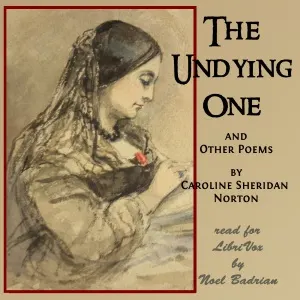
Chapters 43
-
1 01 - The Undying One - Canto 1 44:31
The Undying One Canto One.
Moonlight is o'er the dim and heaving sea. Moonlight is on the mountain's frowning brow. And by their silvery fountains merrily the maids of Castellay are dancing now. Young hearts, bright eyes, and rosy lips are there, And fairy steps and light and laughing voices Ringing like welcome music through the air. A sound at which the untroubled heart rejoices. But there are hearts o'er which that dancing measure heavily falls, and there are ears to which the voice of pleasure still vainly calls. There's not a scene on earth so full of lightness that withering care sleeps not beneath the flowers and turns their brightness to dark despair. O earth, dim earth, thou canst not be our home, or wherefore look we still for joys to come?
The fairy steps are flown, the scene is still. Nought mingles with the murmuring of the rill. Nay, hush, it is a sound, a sigh, again. It is a human voice, the voice of pain. And beautiful is she who sighs alone, now that her young and playful mates are gone. The dim moon shining on her statue face gives it a mournful and unearthly grace. And she hath bent her gentle knee to earth, and she hath raised her meek sad eyes to heaven, as if in such a breast sin could have birth, she clasps her hands and sues to be forgiven. Her prayer is over, but her anxious glance into the blue transparency of night seems as it fain would read the book of chance and fix the future hours dark or bright. A slow and heavy footstep strikes her ear.
What ails the gentle maiden? Is it fear? Lo! she hath lightly raised her from the ground and turned her small and stag-like head around. Her pale cheek paler and her lips apart, her bosom heaving o'er her beating heart. And see, those thin white hands she raises now to press the throbbing fever from her brow. In vain, in vain, for never more shall rest, find place in that young fair but erring breast. He stands before her now. And who is he into whose outspread arms confidingly she flings her fairy self? Unlike the forms that woo and win a woman's love, the storms of deep contending passion are not seen darkening the features where they once have been, nor the bright workings of a generous soul of feelings half-concealed explain the whole.
But there is something words cannot express, a gloomy, deep and quiet fixedness, a recklessness of all the blows of fate, a brow untouched by love, undimmed by hate, as if in all its stores of crime and care, earth held no suffering now for him to bear. Yes, all is passionless. The hollow cheek, those pale, thin lips shall never wreathe with smiles. Ev'n now, mid-joy, unmoved and sad, they speak, in spite of all his linders' winning wiles. Yet can we read what all the rest denies. That he hath feelings of a mortal birth in the wild sorrow of those dark, bright eyes, bent on that form, his one dear link to earth. He loves, and he is loved. Then what avail the scornful words which seek to brand with shame, or, bitterer still, the wild and fearful tale which couples guilt and horror with that name?
What boots it that the few who know him shun to speak or eat with that unworthy one? Were all their words of scorn and malice proved, it matters not. He loves, and he is loved.
Linda, my Linda. Thus the silence broke, and slow and mournfully the stranger spoke. Seat we ourselves upon this mossy bed, where the glad airs of heaven wave o'er thy head, and thou shalt hear the awful tale, which ne'er hath yet been breathed save once to mortal ear. And if, my Linda, nay, love, tremble not, thou shudderest to partake so dark a lot, go, and be happy in forgetfulness. And take, I'd bless thee if my tongue could bless. There was that sudden sinking of the tone that lingers in our memory when alone, and thrills the heart to think how deep the grief, which soothes no pity, looks for no relief. Oh! Deep beyond the feeble power of tears, such scene will dwell within our souls for years.
And it will seem but yesterday we heard the faltering pause, the calm but broken word, saw the averted head where each blue vein swelled in its agony of mental pain, and heard the grief confessed. No, not confessed. But struggling burst convulsive from the breast. Isbal, that gentle voice, half murmuring, said, As from his shoulder she upraised her head, Thou knowest I love thee. When I came to-night I had resolved Thy future, dark or bright, should still be mine. Beloved, so must it be. For I have broken a fearful vow for thee. This morning, he who calls himself my brother, oh, can he be the child of my sweet mother, pleaded once more for him, that hated friend, whose bride I was to be. I could but bend to the cold earth my faint and trembling knee, and supplicate with woman's agony that he would spare me but an hour a day.
I clasped my brother's knees. That brother said me nay. He held a poignant to my shrinking heart, and bade me breathe the vow, never in life or death from him to part, who is my husband now. Isbal we were betrothed. My lips in fear pronounced those words, but, O, My heart was here, here in the calm cold moonlight by thy side, here where the dark blue waters gently glide, here in my childhood's haunts, now even more dear than in those happy days, for thou art near. Yes, while the unheeded vow my faint lips spoke recalled the echo which thy tones awoke. Thy image rose between me and the shrine. Surely the vow before it breathed was thine. Tomorrow's sun, proud Carlos claims his wife, Tomorrow's sun shall see my span of life, Devoted unto thee.
Thy tale can make No lot I would not share for thy sweet sake. No, ere I hear it, Let love's fond vow be to have no earth, no heaven, no hope but thee. Now tell me all. Again that gentle head with dewy eye and flushing cheek is laid upon his arm, and with a thrill of pain the broken thread is thus renewed again. From the first hour I saw thee on that night, When dancing in the moonbeam's chequered light, With those young laughing ones who now are gone, By this same fountain which is murmuring on, When my deep groan burst through the music's sound, And that soft eye went glancing startled round, From that sweet hour, when pity seemed to move, I loved thee. As the wretched only love. Oft since, when in the darkness of my day, I sit and dream my wretched life away, In the deep silence of my night of tears, When memory wakes to mourn for vanished years.
Shunned, scorned, detested, friendless and alone, I've thought of thee, and stifled back my groan. I've come in daylight, And have flung me down by the bright fountain's side, Chased with dear thoughts of thee each gloomy frown, And blessed my promised bride. I've come when stormy winds have howled around Over the yielding flowers, bending their gentle heads unto the ground, And thought of thee for hours. I've come. My Linda knows that I have come, when the soft starlight told that she had left her haughty brothers home, and hearts as dead and cold as the chill waters of a moonless sea for the light dance and music's revelry. With gay and loving maids and I have watched, till one by one those soft steps have departed, and my young mournful Linda hath been snatched to the seer bosom of the brokenhearted.
Linda, there is a land, a far dark land, where on this head the red avenging hand fell with its heaviest bolts. When, watching by the bitter cross of him on Calvary, they stood who loved and did believe in him. I said, while all around grew dark and dim, Isbal! dear Isbal! shrieked the affrighted maid. For that dear Saviour's sake, for him who said he died for sinners, mock me not, I pray. O, yet, beloved, Those words of death unsay. She hung upon his bosom, and looked up into those dark wild eyes with grief and fear. Alas, poor maiden, t'was a bitter cup to drink from hands which love had made so dear. As a knell o'er the river flings its lingering tone, telling of joys forever lost and gone, as the murmuring sound of a slow deep stream, where the sullen shadows round reject each sunny beam, so o'er the maiden spirit, like a moan, falls the deep sameness of that strange calm tone.
I tell thee centuries have passed away. And that dark scene is still like yesterday, the lurid clouds rolled o'er each failing head, the godlike dying and the guilty dead. And awful signs were seen, and I was there, woman, I was, or wherefore my despair? I'll whisper thee.
Linda, my Linda, start not thus away. My brain is wielded. What love did I say? Forget the words, forget, eternal God. Is not this earth the same which then I trod? Do not the stars gleam coldly from above, Mocking the lips that dare to talk of love? I know, I feel it cannot be forgot. Yet, oh, forsake me not, forsake me not. Didst thou not bid me tell thee all? Oh, rest still on this worn and sad and guilty breast. Whatever sins the eye of heaven may see, its last faint throb alone will end its love for thee.
I stood awhile, stifling my gasping breath, fearfully gazing on that scene of death. Then, with a shuddering groan of pain, I shrouded my straining eyes and turned a cowering worm, to either side, where grimly death had clouded the image of his Maker in man's form. On one low cross, a dark and fearful brow, on which the dews of death are standing now, shows black despair. And on the other, Though the eye be dim, and quivering anguish in each stiffening limb, mercy and hope are there. Then rose the wailing sound of woman's woe, appealing unto heaven, and sinners bowed their heads and bent them low, and howled to be forgiven. And I glanced madly round. One after one they stole away, and I was left alone.
I, the Undying One, in that dim night. Oh, words can never tell my soul's affright. The sickening, thrilling, dark, and fainting fear that rose within my breast. I seemed to hear a thousand voices round. I could not pray, but fled in solitary shame away.
Linda, thou wilt not think that after this dark hour of agony, a day, a moment even, of fevered bliss could yet remain for me? But so it was. A wild and sudden hope sprung in my heart. If that my life could cope with sickness and with time, I yet might be happy through half an immortality. I sat at festal boards, and quaffed red wine, and sang wild songs of merriment and mirth, and bade young sparkling eyes around me shine, and made a guilty paradise of earth. I built me palaces, and loved to dwell amongst all which most the eager heart rejoices. Bright halls where silvery fountains rose and fell, and where were ringing light and cheerful voices. Gay gardens where the bowery trees around their leafy branches spread, and rosy flowers upon the mossy ground their honeyed perfume shed.
But yet the curse was on me, and it came, tainting my life with pains like hell's dark flame. The flowers withered, one after one, Death's cold hand gathered till all were gone, And the eyes that were sparkling with pleasure's ray Lay cold and darkling till judgment day. Lonely and weeping, a few were left Of those who were sleeping too soon bereft. But they soon were lying beneath the sod. And I, the Undying, remained with God. And the silvery fountains went murmuring on, but the voices of music and pleasure were gone. And I could not bear the banquet room, reminding me ever of my doom. When the purple goblet I tried to quaff, in my ear there rang some forgotten laugh. And when the lay I sought to pour, voices came round me which sang no more.
Yea, when I saw some lovely form, I thought how soon it must feed the worm, and shrank from the touch it left behind, as if I were not of human kind. Or that the thing I could not save were withering then in the cold dark grave. I wandered through my halls, broken-hearted. Is it my voice which calls on the departed with that stern, sad tone? Where are, beloved, in vain, your countless numbers? May you not wake again from your dark slumbers? Am I to be alone? O let but one return, one fond, one only. Raise up the heavy urn. Life is so lonely. I ask no more of heaven. The mocking echoes round my words repeating, with their dim dreary sound, forbid our meeting. I may not be forgiven. Linda, my Linda, those and those alone who have lived on when more than life was gone.
And being yet young, look to the heavy years which are to come, a future all of tears. Those only who have stood in some bright spot with those beloved ones who share their lot, and stand again in that sweet fairy scene, when those young forms are as they had not been. When gazing wildly round, some fancied word strikes on the listening spirit, and it seems as if again those gentle tones were heard, which never more can sound except in dreams. Those only who have started and awoke in anguished pain and yearned, the gladsome vision being broke, to dream again, can feel for me. It seemed a little day. In which that generation passed away, And others rose up round me, And they trod in those same streets Upon the selfsame sod.
They loved and were beloved. They ate, they laughed, And the rich grape from ancient goblets quaffed, But I remained alone, a blighted thing, Like one seer leaf amid the flowers of spring. My sick-worn heart refused to cling again to dreams that pass away and yearnings vain. Thou canst not think how strange, how horribly strange, it was to see all round me fade and change, and I remain the same. I sat within my halls of light, a thing of care and sin. The echoes gave me back the wild sad tone of every deep and solitary moan. Fearful, I gazed upon the bright walls around, and dashed the mocking mirrors to the ground, and when I wandered through the desert crowd of all my fellow-men, I could have bowed and grovelled in the dust to him who would have struck my breast to slay me where I stood.
They shrank from me as from some venomous snake watchfully coiled to spring from the dark break on the unwary. Fearful, fearful tales passed on from sire to son, linked with my name, with all the awful mystery which veils a tale of guilt. And deepens its dark shame. They shrank from me, I say, as, gaunt and wild, I wandered on through the long summer's day, and every mother snatched her cowering child with horror from my solitary way. I fled from land to land a hunted wretch. From land to land those tales pursued me still. Across the wide, bright sea there seemed to stretch a long dark cloud my fairest hopes to kill. I grew a wanderer, from Afric's coast, where gaily dwelt the yet unfettered black, to Iran, of her eager sons the boast, I went along my dim and cheerless track.
O'er the blue Mediterranean with its aisles and dancing waves and wildly pleasing song, By Lusitania's land of sun and smiles, my joyless bark in darkness sailed along. On many a soil my wandering feet have trod, and heard the voice of nations worship God, where the dim-minded heathen raised his prayer to some bright spirit dwelling in mid-air. I have stood by, and cursed the stiffened knee, which would not bow like him to deity. Where the proud Gebir still at morning hour confessed a God of glory and of power in the red sun that rolled above his head, there have I been, and burning teardrops shed. Where the mahometan through ages gone, in his dark faith hath blindly wandered on. Where the incredulous Jew, yet unforgiven, still vainly waits the crucified of heaven.
Where the meek Christian raises to the skies his clasping hands and his adoring eyes, and prays that God, the all-seeing God, will bless his heart with purity of holiness. Where rosy infancy in smiles was kneeling, with murmuring, half-imperfect word appealing unto the giver of all good. Where joy its tearful thanks returned, and blessed the day when should be tasted bliss which cannot cloy, and tears in heaven's own light be dried away. And where the frantic voice of love's despair Sends forth its thrilling sound, half wail, half prayer, In every temple and at every shrine I've stood and wished the dark worship mine, So I might see, however the beam mistaking, Some smile from heaven upon a heart that's breaking.
Twas on God's glad and holy Sabbath day. When the wide world kneels down at once to pray, When every valley, every mountain sod Sends its faint tribute to the mighty God, And the low murmurings of the voiceless airs Waft on the echo of a thousand prayers, I stood on England's fresh and fairy ground. All lay in dewy stillness far around, Save the soft chiming of the village bell, which seemed a tale of love and peace to tell. I stood among the tombs, and saw the crowd of Christians enter in. Each meek and humble head they gently bowed, and chased the thoughts of sin. I watched them one by one. They onward passed, and from my sight were gone. The welcome opening door received the last, and left me there alone.
The blood rushed thickly to my panting heart, and as I turned, me sorrowing, to depart, an inward voice seemed whispering, Sinner, go, and with those meek adorers bend thee low. I trembled, hesitated. Reached the door through which the pious crowd had ceased to pour. A sudden faintness came upon me there, and the relaxing limb refused to bear. I sank upon a stone, and laid my head above the happy and unconscious dead. And when I rose again, the doors were closed. In vain I then my fearful thoughts opposed. Some busy devil whispered at my heart, and tempted me to evil. Shall the dart of pain and anguish, thus I wildly said, fall only on my persecuted head? Shall they kneel peacefully down, and I stand here, oppressed with horrors sick and fainting fear?
Forbid it, powers of hell! A lowly cot stood near that calm and consecrated spot. I entered it. The morning sunshine threw its warm bright beams upon the flowers that grew around it and within it. T'was a place so peaceful and so bright that you might trace the tranquil feelings of the dwellers there. There was no taint of shame or crime or care. On a low, humble couch was softly laid a little slumberer. Whose rosy head was guarded by a watchdog. While I stood in hesitating, half-repentant mood, my glance still met his large, bright, watchful eye, wandering from me to that sweet sleeper nigh. Yes, even to that dumb animal I seemed a thing of crime. The murderous death-light gleamed beneath my brow, the noiseless step was mine.
I moved with conscious guilt, and his low whine responded to my sigh, whose echo fell heavily, as twere loath within that got to dwell. My inmost heart grew sick. I turned me where the smouldering embers of a fire still were. With shuddering hand I snatched a brand, whose light appeared to burn unnaturally bright. And then, with desperate step, I bore that torch unto the chapel's consecrated porch. A moment more that edifice had fired, and all within, in agony, expired. But... Dimly swelling through my feverish soul, a chorus as from heaven's bright chancel came, dashed from my maddened lips guilt's venomed bowl, and quenched in bitter tears my heart's wild flame. The peeling organ with the solemn sound of countless voices filled the air around, and As I leaned my almost bursting brow on the cold walls, the words came sad and slow to me, the exiled one, who might not share the joyfulness of their ecstatic prayer.
Sadly I watched till through the open door the crowd of worshippers began to pour. The hour was over. They had prayed to heaven, and now returned to peaceful homes forgiven, while I, one wildering glance, I gave around upon that sunny consecrated ground. The warbling birds whose little songs of joy the future and the past can near alloy, the rosy flowers, the warm and welcome breeze murmuring gently through the summer trees. All, all to me was cursed. I could not die. I stretched my yearning arms unto the sky. I pressed my straining fingers on my brow. Nothing could cool its maddening pulses now, and flung me, groaning by a tombstone there, to weep in my despair.
Long had I wept. A gentle sound of woe struck on my ear. I turned the cause to know. I saw a young fair creature silently kneeling beside a stone, a form as bright as man would wish to see or woman wish to own. And eyes whose true expression should be gladness beamed forth in momentary tears of sadness. Showing like sunshine through a summer rain, How soon t'will all be bright and clear again. I loved her. In truth, she was a light and lovely thing, Fair as the opening flower of early spring. The deep rose crimsoned in her laughing cheek, And her eyes seemed, without the tongue, to speak. Those dark blue glorious orbs. O summer skies were nothing to the heaven of her eyes. And then she had a witching art to wile all sadness from the heart.
Wild as the half-tamed gazelle, she bounded over hill and dell, breaking on you when alone with her sweet and silvery tone, dancing to her gentle lute with her light and fairy foot. To our lone meeting-place, stealing slow with gentle pace, to hide among the feathery fern. And while waiting her return, I wandered up and down for hours. She started from amid the flowers, wild and fresh and bright as they, to wing again her sportive way.
And she was good as she was fair. Every morn and every even, kneeling down in meekness there to the Holy One of heaven. While those bright and soul-fraught eyes with an angel's love seemed burning, all the radiance of blue skies with an equal light returning. The dream of guilt and misery in that young soul had never entered. Her hopes of heaven, her love of me, were all in which her heart had centred. Her longest grief, her deepest woe, when by her mother's tomb she knelt, whom she had lost too young to know, how deep such loss is sometimes felt. It was not grief, but soft regret, such as, when one bright sun hath set, after a happy day, will come, Stealing within our hearts gay home, yet leaves a hope, that hearts best prize, that even brighter ones may rise.
A tear for hours of childhood wept, a garland wove for her who slept, a prayer that the pure soul would bless her child and save from all distress. A sigh, as clasped within her own, she held my hand beside that stone. And told of many a virtue rare that shone in her who slumbered there, were all that clouded for a while the brightness of her sunny smile.
It was a mild sweet evening, such as thou and I have sometimes felt, when the soul feels the scene so much that even withered hearts must melt. We sat beside that sacred place, her mother's tomb. Her glorious head seemed brightening with immortal grace, as the impartial sunlight shed, its beams alike on the cold grave, wandering o'er the unconscious clay, and on the living eyes which gave back to those skies their borrowed ray. Isbal, beloved, twas thus my Edith spoke, and my worn heart almost to joy awoke. Beneath the thrill of that young silver tone. Isbal, before thou callest me all thine own, I would that I might know the whole Of what is gloomy in thy soul. Nay, turn not on me those dark eyes With such wild anguish and surprise, In spite of every playful while Thou knowest I never see thee smile.
And oft, when laughing by thy side, Thou thinkest that I am always gay, Tears which are hanging scarcely dried By thy fond kiss are wiped away. And deem me not a child, For though a gay and careless thing I be, Since I have loved, I feel that, O, I could bear aught, do aught for thee. What boots it to record each gentle tone of that young voice, when even the tomb is gone by which we sat and talked, that innocent voice so full of joy and hope that to rejoice seemed natural to those who caught the sound? The rosy lips are moulded underground, and she is dead, the beautiful is dead, the loving. And the loved hath passed away. And deep within her dark and narrow bed All mutely lies what was but breathing clay.
Why did I tell the wildly horrible tale? Why did I trust the voice that told me She could bear to see beyond the lifted veil A future life of hopeless misery? I told her all.
There was a long, deep pause. I dared not raise my eyes to ask the cause, but waited breathlessly to hear once more the gentle tones which I had loved of yore. Was that her voice? O God! Was that her cry? Were hers those smothering tones of agony? Thus she spoke. While on my brow the cold drops stood as they do now. It is not that I could not bear the worst of ills with thee to share. It is not that thy future fate were all too dark and desolate. Earth holds no pang, hell shows no fear, I would not try at least to bear. And if my heart too weak might be, Oh, it would then have broke for thee. No, not a pang one tear had cost, but this, to see thee, no thee lost. My parched lips strove for utterance, but no, I could but listen still with speechless woe.
I stretched my quivering arms. Away, away, she cried. And let me humbly kneel and pray for pardon, if indeed such pardon be for having dared to love a thing like Thee. I wrung the drops from off my brow. I sank before her, kneeling low, where the departed slept. I spoke to her of heaven's wrath that clouded o'er my desert path. I raised my voice and wept. I told again my heart's dark dream, the lighting of joy's fevered beam, the pain of living on, when all of fair and good and bright sank from my path like heaven's light, when the warm sun is gone. But though t'was pity shone within her eye, t'was mingled with such bitter agony my blood felt chill. Her round arms crossed upon her shrinking breast, her pale and quivering lip in fear compressed of more than mortal ill.
She stood. "'My Edith, mine,' I frantic cried. "'My Edith, mine,' the sorrowing hills replied. And the familiar sound so dear erewhile brought to her lip a wild and ghastly smile. Then gazing with one long, long look of love, she lifted up her eyes to heaven above, and turned them on me with a gush of tears. Those drops renewed my mingled hopes and fears. Edith, oh, hear me. With averted face and outspread arms she shrank from my embrace. Away, away! She bent her shuddering knee, bowed her bright head, and Edith ceased to be. She was so young, so full of life. I lingered o'er the mortal strife that shook her frame with hope. How vain! Her spirit might return again. Could she indeed be gone, the love of my heart's inmost core?
I strove against the truth. That thing of smiles with all her glad and artless wiles, She who one hour ago had been the fairy of that magic scene, She whose fond, playful eye such brilliance shed, That laughter-loving thing, could she be cold and dead? I buried her and left her there. And turned away in my despair.
And evening threw her shadows round that beautiful and blessed ground, and all the distant realms of light twinkled from out the dark blue night, so calmly pure, so far away, from all earth's sorrows and her crimes the gentle scene before me lay. So like the world of olden times, that those who gazed on it might swear nothing but peace could enter there. And yet there lay ungrown, untrod, the fresh and newly turned-up sod, which covered, oh, as fair a form as ever fed the noxious worm. There, but an hour ago, yea, less, The agony and bitterness of human feelings wrought so high, we can but writhe a while and die, troubled the peace around, and sent wild shrieks into the firmament. How strange the earth, our earth, should share so little in our crime or care.
The billows of the treacherous Maine Gape for the wreck, and close again with dancing smiles, as if the deep had whelmed, not with eternal sleep, many and many a warm young heart, which swelled to meet and bled to part. The battle-plain, its verdant breast, will show in bright and sunny rest, although its name is now a word, through sobs and moans and wailing heard, and many mourned for from afar, There died the writhing death of war. Yea, even the stream by whose cool side lay those who thirsted for its tide, yearning for some young hand of yore, want in bright hours with smiles to pour the mantling wine for him whose blood is mixing with the glassy flood. Even that pure fountain gushes by with all its former brilliancy.
Nor bears with it one tint to show how crimson it began to flow, and thus an echo takes the tone of agony, and when tis gone air, earth, and sea forget the sound, and all is still and silent round. And thus upon each cherished grave the sunbeams smile, the branches wave. And all our tears for those who now are not sink in the flowery turf and are forgot.
And I returned again and yet again to that remembered scene of joy and pain. And even while sitting by the early tomb of her who had deserved a better doom, her laughing voice rang in my ear. Her fairy step seemed coming near, until I raised my heavy eyes. Then on the lone and desert spot I bowed, and hid my groaning head, and wept aloud.
The stranger paused, and Linda gently wept for him who lived in pain, for her who slept, and clung to him. As if she feared that fate would strike him there and leave her desolate. He spoke, and deaf her ear to all below, save the deep magic of that voice of woe.
-
2 02 - The Undying One - Canto 2 50:39
The Undying One. Canto II.
Years passed away in grief. And I forswore, for her dear sake, whose heart could feel no more, the sweetness and the witchery of love, which round my spirit such deep charm had wove. And the dim twilight and the noonday sky, the fountain's music, the rich brilliancy of nature in her summer, all became, to me, a joyless world, an empty name. And the heart's beating. And the flushed, fond thought of human sympathy no longer brought the glow of joy to this o'erwearied breast, where hope, like some tired pilgrim, sank to rest. The forms of beauty which my pathway crossed seemed but dim visions of my loved and lost, floating before me to arouse in vain deep yearnings for what might not come again.
Tears without aim or end, and lonely sighs, to which earth's echoes only gave replies. And I departed, once again to be, roaming the desert earth and trackless sea, amongst men, but not with them, still alone mid-crowds, unnamed, unnoticed, and unknown. I wandered on. And the loud shout went forth of liberty from all the peopled world, like a dark watchword breathing south and north, where'er the green turf grew or billow curled. And when I heard it, something human stirred within my miserable breast, and lo, with the wild struggling of a captive bird, my strong soul burst its heavy chain of woe. I rose and battled with the great and brave, Dared the dark fight upon the stormy wave, From the swarth climes where sunshine loves to rest, To the green islands of the chilly west.
Where'er a voice was raised in freedom's name, There, sure and swift, my eager footsteps came, And bright dreams fired my soul, How sweet will be to me the hour of burning victory. When the oppressor ceaseth to oppress, And this sad name the tortured nations bless, When tyranny beneath my sword shall bend, And the freed earth shall turn, and own me for her friend.
Where Rome's proud eagle, which is now a name, spread forth its wings of glory to the sky, and young warm hearts that dreamt of deathless fame woke from that dream to gaze around and die. Where the pale crescent gleamed athwart the cloud of men arrayed to perish in their pride. And the harsh note of war rang wild and loud to urge the course of that impetuous tide, where Spain's dark banner o'er the castle walls heavily floats upon the mournful breeze, and firmly sad the measured footstep falls of him who dreams of home in scenes like these. Where steeped in bitter tears and guiltless blood, The lily flag of France droops sadly down, Where England's lion o'er the heaving flood, Boastfully flutters in its proud renown, Even where her sister-island dimly rears, Though all the freshness from its hue be gone, Her verdant standard from a land of tears, While there are winds in heaven to waft it on.
Neath these, and many more than these, my arm hath wielded desperately the avenging steel, and half exulting in the awful charm which hung upon my life, forgot to feel. I fought and conquered, and when all was done, how fared misfortunes persecuted son! The dim days passed away and left me alone. The tyrant and the slave alike were gone. The indignant eyes that flashed their wrath afar, The sword that glittered through the cloudy war, The swelling courage of the manly breast, The iron hand whose strength the weaker pressed, The shouting voices in the deadly fray, The jest and song that made even camps seem gay. The sound, the forms, the feelings which had made, Those scenes in which my feet so long had strayed, Where and what are they now?
A bitter dream, lit by a meteor-like delusive gleam. Freedom! Thou art indeed a dream, A bright and beautiful, a vision of pure light, Poured on our earth-clad spirits from above. Where all are equals, and where all is love. But yet no less a dream. Where is the land, which for the ploughshare hath exchanged the brand, and been at peace for ever? Is there not a war with all things in our changeful lot? A war with heaven, a war with our own souls, where stormily the sea of passion rolls? Wrecking each better feeling which doth strain for liberty, And wrings our hearts to pain. The war of fallen spirits with their sin, The terrible war which rageth deep within. Lo, they're the cause of all the strife below, Which makes God's world a wilderness of woe.
Ye dream, and dream, and dream from day to day. And bleed, and fight, and struggle, and decay, And with high-sounding mockeries beguile Natures that sink and sicken all the while. Whither are the old kings and conquerors gone? Where are the empires lost, the empires won? Look, from the classic lands whose fallen pride Is fain to summon strangers to their side. Where, with weak wail, they called themselves oppressed, Who, if unchained, would still be slaves at best, To far across the dim and lonely sea, Where the thrice-conquered Stiles herself the free. How many generations now are past Since the first war-cry rose, and when will be the last? Yet is there freedom in a distant clime, Where freedom dwelleth to the end of time, And peace and joy and ignorance of fear and happiness.
But, O, not here, not here, Not in this world of darkness and of graves, Where the strong govern and the weak are slaves. Thou, whose full heart would dream of liberty, Go out beneath the solitary sky, In its blue depth of midnight, Stand and gaze, while the stars pour on thee their gentle rays, And image, if thou canst, unto thy soul A little part of the most wondrous whole, Of all that lies beyond. There no dark strife Destroys the creatures of the God of life. There no ambition to be made more great turns the pure love of brothers into hate. Each hath his place assigned him like the stars up in the silent sky where nothing wars. "'Twas on a battle-plain, here in thine own sweet land of sunshine, that I paused to mark the heaps of slaughtered heroes now o'erthrown.
Whose helpless corpses lay all stripped and stark. T'was in the time when Moorish blood first mixed with haughty Spains, and on her spotless name the dint and brand of slavery affixed, and blood was spilt to reap eternal shame. The useless struggle ended on that day, And round about Grenada's walls there lay Many and many a brave young bosom, gored by the rude spear Or deeply thrusting sword. And silence was upon that fatal field, Save when, to nature's anguish forced to yield, Some fallen soldier heaved a broken sigh For his far home, and turned him round to die. Or when the wailing voice of woman told that her long weary search was not in vain, and she had found the bosom, stiff and cold, where her soft clustering curls had once lain.
"'Twas one of these that burst upon my ear while watching on that field." The wind-harp's tone was not more mournful, nor more sweetly clear, than was the sound of that sad woman's moan. Through the dim moonlight I beheld a form, her dark brow clouded with grief's passionate storm, and on her breast an infant calmly slept, which she would pause to gaze on, and again, with bitterness renewed, she loudly wept. And called on its dead father, but in vain. My early and my only love, why silent dost thou lie, When heavy grief is in my heart, and tear-drops in mine eye? I call thee, but thou answer'st not, all lonely though I be. Wilt thou not burst the bonds of sleep, and rise to comfort me? O wake thee, wake thee from thy rest upon the tented field.
This faithful breast shall be at once thy pillow and thy shield. If thou hast doubted of its truth and constancy before, O wake thee now, and it will strive to love thee even more. If ever we have parted, and I wept thee not as now. If ever I have seen thee come, and worn a cloudy brow, If ever harsh and careless words have caused thee pain and woe, Then sleep in silent sleep, and I will bow my head and go. But if, through all the vanished years, whose shadowy joys are gone, Through all the changing scenes of life, I thought of thee alone. If I have mourned for thee when afar, and worshipped thee when near, then wake thee up, my early love, this weary heart to cheer. Awake, thy baby boy is here, upon whose soft cheek lie no tears of grief save those which fall from his sad mother's eye.
How lingering didst thou gaze on him when we were forced to part! Rise up, for he is here again, and press him to thy heart. In vain, in vain, I dream of thee and joyous life in vain. Thou nevermore shalt rise in strength from off the bloody plain. Thou nevermore shalt clasp thy boy, nor hold me to thy breast. Thou hast left us lonely on the earth, and thou art gone to rest. Awake thee, my forsaken boy, awake, my babe, and weep. Art thou less wretched that thy brow no trace of woe can keep? O, would through life that thou mightst taste no cup but that of joy, and I, as now, might weep for both, my boy. My orphan boy. She paused and raised her dark wild eyes, Where bright in the blue heavens broke the dawning light.
But what to her was day or sunshine now, All vainly beaming on that pallid brow? She only felt that never more with him, In the deep cloudless noon or moonlight dim. Her weary feet might wonder, that his voice should never bid her beating heart rejoice, that where there had been sunniness and bliss, silence and shadows and deep loneliness must be her portion, that all days to come would rise upon a widow's heart and home. She only felt, while weeping on that spot, that bright and waking world, Contained him not. She rose as if to go, yet once again turned back in tears to gaze upon the slain, and raised her voice of wail, whose tone might ne'er awake an echo in that slumbering ear. We shall meet no more on the sunny hill where the lonely wildflower springs and dies.
We shall meet no more by the murmuring rill, where the blue cool waters idly rise. The sunshine and flowers all bright remain in their lonely beauty as of yore. But to me, t'will never be bright again. We shall meet no more. We shall meet no more. We shall meet no more in the lighted halls, amid happy faces and gay young hearts. I may listen in vain as each footstep falls. I may watch in vain as each form departs. There are laughing voices, but thy young tone, its cheerful greeting hath ceased to pour. Thy form from the dancing train is gone. We shall meet no more. We shall meet no more.
Such was the scene where first I saw and loved Zarifa. She was beautiful, but not by that alone my withered heart was moved. But that long daze, unwept though unforgot, arose before me freshly to oppress and wring my secret soul to bitterness. Her sorrow was as mine, and every word she uttered in her agony did seem as if a spirit voice I dimly heard speaking of Edith in a weary dream. And so it was our tearful hearts did cling and twine together even in sorrowing, and we became as one. Her orphan boy lisp the word Father. As his dark eyes gazed, with their expressive glance of timid joy, into my face half pleased and half amazed, and we did dwell together, calmly fond, with our own love, and not a wish beyond.
Well, we were happy, and I vainly thought that happiness so calm might last. But no, suns rose and set, And rose, years came and passed, and brought with them my lot, the lot of woe. And the boy grew in beauty and in strength, rousing my soul to love him more and more, till I gazed on that graceful form at length with a proud worship, and while musing o'er the happy future, half forgot that fate had doomed me ever to be desolate. That all I loved had but a life as frail as the young flower that woos the summer gale, and that the hour must come when they would flee to that far land of peace where was no place for me. And even before that hour upon my home dark shadows fell from weary day to day, and where there had been sunniness was gloom.
And the boy's mother changed and pined away. In her unquiet eye, from year to year, rose the expression of a restless fear, and lines, which time had yet forborne to trace, were writ by care upon her fading face. There would she sit and steal a fearful glance, or fix those Moorish eyes as in a trance upon my form, And love dwelt still within that pure fond heart Which suffered for no sin. And she would strive my sorrow to beguile, And start and wipe away her tears and smile, If gazing in her waking dream she caught my eye And read therein the master thought. But never through those years did word or sign Ask for the secret which was wholly mine. She faded silently as doth the rose, which but in death reveals the secret smart, and faintly smiling to the last bestows a balmy perfume from its withering heart.
How often, when I gazed on her, there came the earnest wish that trembled through my frame, to rise, to clasp her to my swelling breast, to falter forth my tail and be at rest. When others, whom the laws of heaven had tied, wandered through this world's sunshine side by side, each beaming face bright as their brows above, with perfect confidence and mutual love. When I have seen some young heart's feeling rise, And glisten forth from glad and loving eyes, Or heard the murmured words fond lips have spoken, Of faith unchanged and firm, and vows unbroken. How I have strained my clasped and quivering hands, And stretched them to the heavens as if in prayer, Yearning to bow to nature's strong commands, And cloud another's life with my despair.
But when I thought of Edith, of that hour, when suddenly, and like a storm-scathed flower, she sank and perished, whose dear brightness seemed more beautiful than aught my heart had dreamed, I shrank within myself, and silently met the sad glances of her anxious eye.
O sympathy! How little do they know! Who to a fellow-heart confide their woe? Who raise their tearful gaze to see again, Reflected back those drops of summer rain? How weighs the lid, which dares not show its tear, But weeps in silence agony and fear? And dying for a glance, must yet disown The sacred balm of hearts and writhe alone. To stifle grief till none but God can see, Longing the while to say, Come, weep with me. Weep, for the flowers have faded from my path, The rays of light have left my darkened sky. Weep, for thy tear is all the wanderer hath, Whose lone despair would bid him groan and die. Thus. Thus to shrink from every outstretched hand, To strive in secret and alone to stand. Or, when obliged to mingle with the crowd, Curb the pained lip which quiveringly obeys, Gapes wide with sudden laughter, vainly loud, Or rise a faint slow smile to meet their gaze.
This, this is Hell. The soul which dares not show the barbed sorrow which is rankling there, gives way at length beneath its weight of woe, withers unseen and darkens to despair.
One eve at springtides close we took our way, when Eve's last beams in softened glory fell, lighting her faded form with saddened ray, and the sweet spot Where we so loved to dwell. Faintly and droopingly she sat her down By the blue waters of the Guadalquivir. With darkness on her brow, but yet no frown Like the deep shadow on that silent river. She sat her down, I say, with face upturned To the dim sky which daylight was forsaking. And in her eyes a light unearthly burned, the light which spirits give those whose chains are breaking. And as she gazed, her low and tremulous voice in murmuring sweetness did address the earth with mournful rapture which makes none rejoice, and gladness which to sorrow doth give birth.
The Spring. I love the spring, for it hath flowers, and gaily plumaged birds and sapphire skies, and sleeping sunshine and soft cooling showers, and shadowy woods where weary daylight dies, and it hath dancing waters where the sun, with an enamoured look at the light waves, doth lull himself to rest when day is done, and sinks away behind their rocky caves. I love the spring, for it hath many things, in earth and air, that mind reel of old days, voices and laughter and light murmurings, borne on the breeze that through the foliage plays, and sounds that are not words of human joy from the deep bosom of the sheltered wood, woods dimmed by distance, where, half-pleased, half-coy, The maiden chides her broken solitude.
The spring of youth, how like to nature's spring, when its light pleasures all have passed away, are the dim memories which that word can bring, ringing the heart that feels its own decay. The half-forgotten charm of many a scene, coming confusedly athwart the brain. The wandering where our former steps have been, with forms that may not wander there again. Murmurings and voices where some single tone thrills for a moment and forgets to sound. Yearnings for all that now is past and gone, and vain tears sinking in the mossy ground. Oh, this is all, and more than all, which stays to mock us with the sunshine of past years, and those spring shadows on our autumn days cast their dim gloom and turn our smiles to tears.
She paused, and on the river bent her glance. As if she loved to see the waters dance, And dash their silver sparkles on the shore, In mockery of ocean's giant roar. And a half-smile lit up that pallid brow, As casting flowers upon the silent stream, She watched the frail sweet blossoms glide and go, Like human pleasures in a blissful dream. And then, with playful force, she gently flung small shining pebbles from the river's brink, and o'er the eddying waters sadly hung, pleased and yet sorrowful to see them sink. And thus, she said, doth human love forget its idols? Some sweet blessings float away, followed by one long look of vain regret, as they are slowly hastening to decay. And some with sullen plunge do mock our sight, and suddenly go down into the tomb, startling the beating heart whose fond delight chills into tears at the unlooked-for doom.
And there remains no trace of them, save such as the soft ripple leaves upon the wave, or a forgotten flower whose dewy touch reminds us some are withering in the grave. When all is over, and she is but dust, Whose heart so long hath held thy form enshrined, When I go hence, as soon I feel I must, O, let my memory, Isbal, haunt thy mind. Not for myself, O, not for me be given, Vain thoughts of vain regret, though that were sweet. But for the sake of that all-blissful heaven, where, if thou willest it, we yet may meet. When in thy daily musings thou dost bring those scenes to mind in which I had a share, when in thy nightly watch thy heart doth ring with thoughts of me, oh, murmur forth a prayer.
A prayer for me, for thee, for all who live together, yet asunder in one home. Who their soul's gloomy secret dare not give, lest it should blacken all their years to come. Yes, Isbel, yes, to thee I owe the shade that prematurely darkens on my brow, and never had my lips a murmur made. But, but that, see, The vision haunts me now. She pointed on the river's surface, where our forms were pictured, seated side by side. I gazed on them, and hers was very fair, and mine was as thou seest it now, my bride. But hers, though fair, was fading, wan and pale, the brow whose marble met the parting day. Time o'er her form had thrown its misty veil, and all her ebon curls were streaked with grey. But mine was youthful, yes, such youth as glows in the young tree by lightning scathed and blasted, that joyless waves its black and leafless boughs, on which spring showers and summer warmth are wasted.
The lines upon my brow Were those of age, the hollow cheek might speak of time or woe, but all the rest was as in life's first stage, the tangled curls without one touch of snow. O, wherefore do I thus describe old times? Am I not here the same accursed thing, stamped with the brand of darkness for my crimes, never to die? But ever withering. Yes, yes, it is of her that I would tell. She turned, as from my lips a murmur fell, half-curse, half-grown, and with a gentle look of angel-love and pity, thus she spoke. Isbel, forgive me. If a bitter thought this first, last time hath to thy heart been brought, By her who loved thee, even in doubt and dread, Better than aught save him, the early dead.
Forgive me, for I would not pass from earth with one dark thought, Which may have had its birth unknown to thee, Nor leave thee till I've said. Chide not these tears, which weakness makes me shed, till I have said, and truth is on my tongue, how fervently my heart to thine hath clung. How I have shrunk, yet sought thy dear caress! How I have feared, but never loved thee less! How I have smiled for thee, with thee unbid, while quivering tears rose neath the swelling lead. And still kept silence when I would have spoken, for fear that sealed-up fountain should be broken. How I have, Isbal, Isbal, when I'm gone, and thou hast nothing left to smile upon, remember, tis a week, a foolish prayer, but do remember how I tried to bear that worst of human pangs, a breaking heart.
And never let thee know how deep the smart. Remember that I never sought to know the secret source of thy mysterious woe, nor asked why, midst all changing things, unmoved, thou, thou, I tremble, he did not, beloved, unmoved, thou hast remained. O Isbel, pray, for dark the fear that clouds my parting day. And though the word be vain, the time be past, remember, I have loved thee to the last. She ceased, and strove my hand in hers to keep. She wept not then. She was too weak to weep. But with a faint, fond gaze, half awe, half love, like an embodied prayer, she looked above. And I, I would have told her then that tale, the dream of which had turned her soft cheek pale, and sent her to her grave.
But she refused. Isbel, thy confidence is not abused. If thou art sinful, let me know it not. If thou hast sorrowed, let it be forgot. The past is nothing now, and I would die without one thought which may not soar on high. And she did droop and die and pass away, leaving her memory, and that youthful son, who sorrowed for a while, And then was gay, and spoke in smiles of that lamented One. Happy for him the present bore no sting, the past no agonies. The future rose bright as the colours of an angel's wing, too far from earth to darken with its woes. And he was formed to love the haunts of men, and to be fervently beloved again. Firm, but yet gentle, fearless, but not bold, gay with the young and tender to the old, scorning the heart where dark distrust was shown, because no treachery ever stained his own.
Ardent in love, but yet no ways inclined to sue wherever beauty's state enshrined. Such was my orphan care, and I became proud of Abdallah's father's blessed name. Glad were the youths in whom fond friends could spy Abdallah's graceful mien and daring eye. Fondly the aged hailed their favorite boy with faltering words of mingled praise and joy. Nor less the fair and fairy ones adored, the eloquent of tongue and swift of sword, and from the many beautiful he chose one that might share in peace his evening's clothes. There might be others fairer, But she was, so young, so meek, so feminine, applause, and pride and admiration, and the wild half-worship which we pay, earth's erring child, all the tumultuous brain and bosom stir, sank into tenderness at sight of her.
You could not gaze on her, nor wish to shield that shrinking form and gentle head from harm. No borrowed art could light or lustre yield, But every bright addition spoiled a charm.
Their bridal day, their bridal day, It is a day to be remembered, deep within the gloomy caves Where dwells the foe of bliss, and sends his fiends To tempt man on to sin. The hall was bright with many-coloured lamps. The air was peopled with soft, happy sounds. And, careless of the dewy midnight damps, young feet were twinkling in the moonlight grounds. The purple wine was mantling in the cup, and flashing its rich hue upon their brows, who bent with eager lips to quaff it up, and add their laughter to the loud carouse. The merry jest, the superstitious tale, the random question and the tart reply, rang on in murmurings, confused, till pale the moonlight waned and left the dawning sky. The light dance ceased.
By lips as sweet as thine, the word of fond farewell was slowly said. Many departed, many sank sapine. With folded arms beneath each heavy head. But still, with every lingering tardy guest, the brimming wine-cup circled as before, and still went round the oft-repeated jest, with which impatient glance the bridegroom bore. There was a traveller who chanced to be invited with this joyous company. And he was telling of the wondrous sights, the popular sports, the strange and wild delights which in far countries he had heard and seen. And once in Italy, where he had been, how in great ruined Rome he heard a strange, wild, horrible tale of one who, for a crime too deadly to relate, might never change.
But live undying to the end of time. One who had wandered sadly up and down Through every sunny land and people town With Cain's dark sign deep branded on his brow A haggard thing of guilt and want and woe. Breathings that seemed like sobs, so loud they came, and chokingly from out my trembling frame, filled up the awful pause which came at length, as if to give his words more horrid strength. And every eye turned wonderingly and wild upon my face, while shudderingly I smiled and said, It is a fearful tale indeed, but one that scarce needs daunt ye, since ye are, from the dark fiend whom heaven such fate decreed, and Rome's imperial ruins, distant far. More had I said, nor heeded their reply, but that Abdallah, Met my glance and rose, and on his face I fixed my wandering eye, which glared and glared and glared and would not close.
And o'er his eager brow there shot a gleam, as if but now remembering some dark dream. And his lips parted, but he did not speak. And his hand rose, but languidly and weak sank down again, while still weak gazing stood into each other's eyes as if for food. I tried to laugh, but hollow in my throat the gurgling murmur died, and once again that young arm rose and on the table smote, and the slow words came audibly and plain. While on all sides they fled, and left us there, guilt, fear, and anguish battling with despair. Arise, accursed, and go forth in peace. No hand shall harm thee, and no tongue insult. But neath this roof thy unblessed voice must cease, and thy dark sin must meet its dark result.
I trembled, but obeyed not. From his face my eyes withdrew and sank upon the ground, while standing rooted, helpless in my place. I uttered some half-inarticulate sound, terms that I scarce remember, all save one, uttered with agony. It was my son. And well I can recall the look even now. Of scorn angelic on his lip and brow. The cold defiance of his altered eye. The tone that bade me wander forth and die. Like the bright cherub to his home in hell. Dooming the first who sinned, the first who fell. Thy son, I thank kind heaven. Whate'er my lot, that word is false. My father thou art not. My father! Back unto thy place of crime, dark fiend, Who slew my mother ere her time. Darest thou remind me by the awful sound How a mock link to thee that angel bound?
Well, can I now explain her gentle look Of mingled terror, anguish, and rebuke? As neath thy blasting look from day to day, Sick of the joyless world, she pined away. Breathe not the words. She loved thee, true. She loved. In that her virtue not thine own is proved. She loved, because the purity within Her gentle heart was ignorance of sin. Praise be to heaven, she died. I little thought such words should to my secret soul be taught. But I would howl them to the assembled world. Praise be to heaven, she died. Nor saw thee hurled from out the haunts of men with fear and hate, like a one leper from the city's gate. Praise be to heaven, she died, nor saw thee stand with shrinking, quivering form and nerveless hand, the cowardice of guilt within thy heart, and shaking thee, all devil as thou art.
Go, the poor leper, scarred and pale and wan, and driven groaning from his fellow man. Trailing his loathsome languid limbs afar, And gazing back where all his loved ones are, The loved who love him not, O, he is free from ill or sadness When compared with thee. Though all forsake him as he helpless lies, And straining his demise, doth wonder where Are those who should watch o'er him as he dies. Cool his hot mouth, and soften his despair. Though in the dust with agony he rolls, his is the body's plague, and thine, and thine the soul's. Bitter the truth, and bitterly I spoke, when from my lip the first deep murmur broke. And then to that young heart I made appeal, that heart which seemed for all but me to feel.
Till, like a torrent, my pent words found way, and thus I raved. Happy the cottager, for he hath sons, and blue-eyed daughters made for love and mirth, and many a child whose chasing footstep runs around the precincts of his humble hearth. Born on the breeze, their light-toned laughter comes, making glad music in the parent's ear. And their bright faces light their humble homes, Brows all unshaded yet by guilt or fear. And if at length one rosy head bows low, And prayers are vain from death's dark power to save, The lessened circle meet in mingled woe To weep together o'er that gentle grave. And gazing through their misty tears, they see, like the blue opening through the stormy cloud, faces where grief was never meant to be, and eyes whose joy doth mock the sable shroud.
The one link severed from that broken chain is lost, and they must cling to what is left. Back to their many loves they turn again, and half forget of what they were bereft. But I, I had but thee, I had but thee. And thou wert precious to my weary heart. For thee I bowed the head and bent the knee. For thee I toil'd till the strong vein would start. And thou didst pay me then with many a smile, And broken words by joy-touched lips breathed forth, And many a little playful infant while, Dear to my soul, to others little worth. The lip that now hath quivered forth its curse, the shuddering hand that bade my form obey, the trembling limbs that shrink as if from worse than death could threaten to his human prey.
All, all have clung to me with each fond sign. The tottering feeble step hath sought my aid, And oft have gently nestled close to mine The clustering curls of that indignant head. I am but human, though the tale be true, Which curses me with life while life may last. And the long future which doth mock my view, But makes me cling more closely to the past, Leave me not, leave me not, whate'er I be, Thou surely shouldst not judge me, not forsake, If not by ties of nature bound to thee, Sure there be other ties that man may not break. Leave me not, leave me not, I am not changed, Though thou but now hast heard my tale of sin. I still can love thee, boy, as when we ranged, hand linked in hand, those pleasant bowers within.
I know that other men will gaze and scoff, as the lone desolate One doth journey on. I know that human things will cast me off. But thou forsake me not, my son, my son. He shook. The deep sob labored in his breast, then sprang to me with a convulsive cry, and as my head sank on that place of rest, mingled with mine hot tears of agony. And she, his fairy bride, she did not shrink, but clung to me as if she wished to prove, when sorrow's cup is brimming to the brink, how weak is woman's fear to woman's love. O, naught of self is in their gentle hearts. The things we tempt and trample when they fall, Danger and death, the dread that sin imparts, Sadden but shake not, they will love through all. And we returned, we three, unto our home, The home that had been ours in peace so long.
And sunshine seemed upon her heart to come, as that young bride poured forth her evening song. The morning dawned, and glad I wandered out where the young flowers hung clustering about, and a rich wreath I wove for her who slept, where nature's pearly drops still freshly wept. The dark blue morning brightened into day, but none came forth. Oh, where, my heart, were they? I sought them in the little shady grove, where their young lips first learned to breathe of love. I sought them by the fountain's playful stream, where they were wont of happiness to dream. I called them out to breathe the open day. But none came forth. Oh, where, my heart, were they? That heart beat thick. I entered where the couch, bedecked with flowers, had wooed their fond approach.
I gazed around. No sign of life was there. My voice, unanswered, died upon the air. And yet unfaded flowers were blooming gay. But none came forth. O, where, my heart, were they? Where were they? Ay, where were they? Once again I sought them, though I felt the search was vain. Through every well-known path and sunny spot I sought those truants, but I found them not. And when at length the weary day was done, I sat me down. And knew I was alone. Oh, had a sob, a sound, but broke my sleep, Had I but been allowed to rise and weep, Convulsively to strain them ere they went To my chilled breast to give my anguish vent, Methought I could have borne it. But to rise and glad me in the fresh and waking skies To greet the sun with joyfulness.
To wait, expecting them, and yet be desolate. To twine those flowers, and see them fade away, Frail as the hopes that sickened with the day. To groan and listen, and to groan again, While echo only answered to my pain. To start from feverish dreams, and breathe unheard loud words of welcome to that visioned pair, to listen in my sleep some singing bird, and wake and find it was not Zara there. To stretch my eager arms those forms to bind, and with redoubled bitterness to find the shadowy vision gone I loved to trace. And darkness, where had beamed each youthful face. This was my lot, and this I learnt to bear, and cursed the human links which bound me still to care.
-
3 03 - The Undying One - Canto 3 - Part 1 45:52
The Undying One. Canto III. Part I. There is a sound the autumn wind doth make, Howling and moaning, listlessly and low. Methinks that to a heart that ought to break, All the earth's voices seemed to murmur so. The visions that crossed our path in light, The things that we lost in the dim, dark night, The faces for which we vainly yearn, The voices whose tones will not return, That low, sad, wailing breathe doth bring, Born on its swift and rushing wing. Have ye sat alone when that wind was loud, and the moon shone dim from the wintry cloud, when the fire was quenched on your lonely hearth, and the voices were still, which spoke of mirth? If such an evening thou but one, it hath been yours to spend alone.
Never, though years may roll along, cheered by the merry dance and song, Though you marked not that bleak wind's sound before, When louder perchance it used to roar, Never shall sound of that wintry gale Be aught to you but a voice of wail. So, O, the careless heart and I, The storms of the world go sweeping by. But, O, when once we have learned to weep, Well doth sorrow his stern watch keep. Let one of your airy joys decay, let one of our blossoms fade away, and all the griefs that others share seem ours as well as theirs to bear. And the sound of wail, like that rushing wind, shall bring all our own deep woe to mind.
I went through the world, but I paused not now at the gladsome heart and the joyous brow. I went through the world, and I stayed to mark where the heart was sore and the spirit dark, and the grief of others, though sad to see, was fraught with a demon's joy to me. I saw the inconstant lover come to take farewell of her he loved in better days, and coldly careless watched the heart-strings break which beat so fondly at his words of praise. She was a faded, painted, gilt-bowed thing, seeking to mock the hues of early spring, when misery and years had done their worst to wither her away. The big tears burst from out her flashing eyes, which turned on him. With agony, reproach, and fear, while dim, each object swam in her uncertain sight, and nature's glories took the hue of night.
There was, in spite of all her passion's storm, a wild revolting beauty in her form, a beauty as of sin when first she comes to tempt us from our calm and pleasant homes. Her voice with the appealing tone it took, her soft clear voice belied her fearless look, and woman's tenderness seemed still to dwell in that full bosom's agonizing swell. And he stood there, the worshipped one of years, sick of her fondness, angry at her tears, choking the loathing words which rose within the heart whose passion tempted her to sin, while with a strange sad smile lost hours she mourns, and prays and weeps, and weeps and prays by turns. A moment yet he paused and sighed. A sigh of deep, deep bitterness, and on his eye love's gentle shadow rested for a space, and faded feelings brightened o'er his face.
T'was but a moment, and he turned in wrath to quench the sunshine on her lonely path, and his lip curled as on that altered cheek his cold glance rested. While all, faint and weak, with tearful, sad, imploring gaze, she stood, watching with trembling heart his changeful mood. Her thin lips parted with a ghastly smile. She strove to please, yet felt she failed the while. And thus his words burst forth. And dost thou dare reproach me with the burden of thy care? Accuse thy self-willed heart. Where passion reigned, some other hand the lily might have stained. For thou didst listen when none else approved, Proud in thy strength, and eager to be loved. Rose of the morning, how thy leaves are gone!
How art thou faded since the sunrise shone? Think not my presence was the cause of all. O no, thy folly would have made thee fall. Alike thy woe, alike the cause of blame, Another tempter, but thine act the same. And tell me not of all I said or swore. Poor wretch, art thou as in the days of yore? Thing of the wanton heart and faded brow, Whate'er I said or did, I loathe thee now. The frozen tears sank back beneath the lid, whose long black lashes half their sadness hid, and with a calm and steadfast look, which spoke unutterable scorn, her spirit woke. And thou art he, for whom my young heart gave all hope of pardon on this side the grave. For whom I still have struggled on for years, Through days of bitterness and nights of tears.
True, I am changed since that bright summer's day, When first from home love lured my steps to stray. And true it is that art hath sought to hide The work of woe which all my words belied. But for whose sake have I, with watchful care, Though sick at heart endeavoured to be fair? For whom, when daylight broke along the skies, have I with fear surveyed my weeping eyes? For whom, with trembling fingers, sought to dress each woe-worn feature with mock loveliness, chased the pale sickness from my darkened brow, and strove to listen, calm as I do now? For whom, if not for thee? O! Had I been pure as the stainless lily, Were each scene of guilt and passion blotted from that book Where weepingly and sad the angels look?
Did I stand here, the calm approved wife, Bound to thee by the chain that binds for life? Could I have loved thee more? The dream is past. I, who forsook, am lonely at the last. One hour ago the thought that we must part, and part for ever, would have broke my heart. But now I cast thee from me, go and seek to pale the roses on a fresher cheek. Why lingerest thou? Dost fear, when thou art gone, my woman's heart will wake and live alone? Fear not. The specious tongue whose well-fained tail Hath lured the dove to leave her native veil May use its art some other to beguile, And the approving world will only smile. But she who sins and suffers for that sin, Who throws the dangerous die, and doth not win, Loves once and loves no more.
He glided by, and she turned from him. with a shuddering sigh.
I saw the widower mournful stand, gazing out on the sea and the land, o'er the yellow corn and the waving trees, and the blue stream rippling in the breeze. O beautiful seem the earth and sky! Why doth he heave that bitter sigh? Vain are the sunshine and the brightness to him. His heart is heavy, his eyes are dim. His thoughts are not with the moaning sea, though his gaze be fixed on it vacantly. His thoughts are far where the dark boughs wave o'er the silent rest of his Mary's grave. He starts and brushes away the tear, for the soft small voices are in his ear, of the bright-haired angels his Mary left to comfort her lonely and long bereft. With a gush of sorrow he turns to press his little ones close with a fond caress, and they sigh.
Oh, not because Mary sleeps, for she is forgotten, but that he weeps. Yes, she is forgotten. The patient love, the tenderness of that meek-eyed dove, The voice that rose on the evening air To bid them kneel to the God of prayer, The joyous tones that greeted them When, after a while, she came again, The precious soft of her rose-leaf cheek, The touch of her hand as white and weak She laid it low on each shining head, And blessed the sons of the early dead. All is forgotten, all passed away, like the fading close of a summer's day. Or the sound of her voice, though they scarce can tell whose voice it was that they loved so well, comes with their laughter a short sweet dream as the breeze blows over the gentle stream, rippling a moment its quiet breast and leaving it then to its sunny rest.
But he, O deep in his inmost soul, Which hath drunk to the dregs of sorrow's bowl, Her look and her smile, the lightest word Of the musical voice he so often heard, And never may hear on earth again, Though he loved it more than he loved it then, Are buried, to rise at times unbid, And force hot tears to the burning lid. The mother that bore her may learn to forget, but he will remember and weep for her yet. Oh, while the heart where her head hath lain, in its hours of joy, in its sighs of pain, while the hand which so oft had been clasped in hers, in the twilight hour when nothing stirs, beat with the deep full pulse of life, can he forget his gentle wife? Many may love him, and he, in truth, may love, but not with the love of his youth.
Ever amid his joy will come a stealing sigh for that long-loved home, and her step and her voice will go gliding by in the desolate halls of his memory.
I saw a father weeping. When the last of all his dear ones from his sight had passed, the young lamb in his solitary fold, who should have buried him, for he was old, silently she had passed away from earth, beloved by none but him who gave her birth. And now he sat with haggard look and wild by the lone tomb of his forgotten child. None remember thee, thou whose heart poured love on all around. Thy name no anguish can impart, tis a forgotten sound. Thine old companions pass me by with a cold, bright smile and a vacant eye. And none remember thee save me. None remember thee. Thou wert not beauteous as some things are, no glory beamed upon thy lot, my pale and quiet star. Like a winter bud that too soon hath burst, thy cheek was fading from the first, and none remember thee save me, none remember thee.
They could spy naught when they gazed on thee, but thy soul's deep love in thy quiet eye, it hath passed from their memory. The gifts of genius were not thine, proudly before the world to shine, and none remember thee save me. None remember thee, now thou'rt gone, or they could not choose but weep, when they think of thee, my gentle one, in thy long and lonely sleep. Fain would I murmur thy name, and tell how fondly together we used to dwell, but none remember thee save me.
I saw a husband and a guilty wife. Who once made all the sunshine of his life, Kneeling upon the threshold of her home, Where heavily her weary feet had come. A faded form, a humble brow are hers, The livery which sinful sorrow wears, While with deep agony she lifts her eyes, And prays him to forgive her ere she dies. Long days, long days swell in his broken heart, Where death had seemed less bitter than to part, When in her innocence her hushed lips spoke The faint confession of the love he woke, And the first kiss on that pure cheek impressed Made her shrink trembling from his faithful breast. And after years when her light footstep made Most precious music when in sun or shade She was the same bright, happy, loving thing.
Lo, at his feet she now lies withering. His half-stretched hand already bids her be forgiven and at peace. His kindly eye is turned on her through tears to think that she, his purely loved, should bide such agony. Already on his tongue the quivering word of comfort trembles, though as yet unheard. Already he hath bent o'er that pale face. Why starts he groaning from her wild embrace? Oh, as she clasped his knees, her full heart woke to all its tenderness. A murmur broke forth from her lip. The cherished name of one, whose image dwelt when purity was gone, secure amid the ruins of lost things, filling her soul with soft imaginings. Like a lone flower within the moss-grown halls, where echo vainly unto echo calls.
Deep wrath and agony and vain despair are painted on his brow, who hears her prayer. Breathe not her name. It is a sound of fearfulness and dread. Seest thou no trace of tears around? Yet have salt tears been shed? Thy babe who nestled at thy breast, and laughed upon thy knee, that creature of the quiet rest, thy child was too like thee. The careless fawn that lightly springs, the rosebud in the dew, the fair of nature's fairy things, like them thy daughter grew. And then she left her father's side. Not woman as a happy bride, with a cheerful smile, half sad, half meek. The flush of guilt was on her cheek, and in the desert wilds I sought, and in the haunts of men. Woman, what thou hast felt is naught to what I suffered then.
I thought that, but it may not be, I thought I could have pardoned thee, but when I dream of her, and think thy steps led on to ruin's brink, oh, she is gone, and thou art here, where ye both were of yore. To mock with late repentant tear hopes which may come no more. Hadst thou, frail wretch, been by her still to shield her gentle head from ill, to do thy mother's part? But go, I will not curse thee in my woe. Only depart. And haply, when lonely and left I die, thy pardoned form shall rise again and claim one parting sigh. He closed on her the portal of her home, where nevermore her weary feet may come, and their wrung hearts are severed till that day when God shall hear and judge the things of clay.
I saw the parasite raving stand, with a rolling eye and a bloody hand. Through his thick chill veins the curdling stream flows dark and languid. No sunny beam can wake the deep pulse of his heart to joy, since he raised his murderous hand to destroy. By day, by night, no pause is given of hope to the soul accursed by heaven. Through the riotous feast, through his own dull groans, through the musical sound of his loved one's tones, through the whispering breath of the evening air, falters the old man's dying prayer. Few were the words he spoke as he sank, and the greedy poignard his life-blood drank. Spare me, my son, I will yield thee all. O, what would the murderer give to recall One murmuring sigh to that silent tongue Which in infancy sought his ear to please, One pulse of life to the hands that clung Feebly and tremblingly round his knees?
In vain. He hath won the gold he sought, And the burning agony of thought shall haunt him still till he lays his head with a shuddering groan on his dying bed.
I saw a young head bowed in its deep woe, even unto death, and sad and faint and slow, as she sat lonely in her hall of tears, her lips addressed some shade of other years. O dear to the eyes that are weeping, was thy form my lost love. Though the heart where thine image is sleeping, its truth might not prove. I have wept and turned from thee, for fear thou shouldst trace all the love that I bore thee deep writ on my face. But, O, could we once more be meeting, as then love we met? Could I feel that fond heart of thine beating close, close to mine yet? I would cling to thee, dearest, nor fear thou shouldst guess how deeply thy welcome had power to bless. O, tis not for a day or an hour I part from thee now to weep and shake off like a flower the tears from my brow.
Tis to sit dreaming idly of days that are gone, and start up to remember that I am alone. They say that my heart hath recovered that deep, bitter blow, that the cloud which for long days hath hovered is gone from my brow, that my eyes do not weep, and my lips wear a smile. It is true, but I do not forget thee the while. O, they know not, amidst all my gladness, thy shadow is there. They feel not the deep thrill of sadness, nor the soul's lone despair. They see not the sudden quick pang, when thy name is carelessly uttered to praise or to blame. If to gaze on each long-treasured token, till bitter tears flow, and to wonder my heart is not broken by the weight of its woe. To join in the world's loud and wildering din, while a passionate feeling is choking within.
If to yearn in the arms that once bound thee, to lean down my head, with the dear ones who used to come round thee, Teardrops to shed. If to list to the voice that is like thine in vain, And feel its dim echo ring wild through my brain, If to dream there were pleasure in meeting Those who once were with thee, To murmur a sad farewell greeting, then sink on my knee. With my straining hands clasped to the heavens in prayer, And my choked bosom heaving with grief and despair. If to sit and to think of thee only, while they laugh round the hearth, and feel my full heart grow more lonely at the sound of their mirth. If this be forgetting thee, dear one and good, forget thee, forget thee, O God that I could.
I saw the child of parents poor, dreaming with pain of her cottage door, which she left for the splendour which may not cheer. Pomp hath not power to dry one tear. The palace, the sunshine, what are they to her, mid the heart's full throb and the bosom stir? The picture that rises bedimmed with tears Is an aged woman bowed down by years, Sitting alone in her evening's clothes And feebly weeping for many woes. Her thin hands are weaving the endless thread, Her faded eyes gaze where her daughter fled, O'er the moss-grown copse and the wooded hill. Oh, would that I were with my mother still! That I were with her who reared me up, and I filled to the brim her sorrow's cup. That I were with her who taught me to pray at the morning's dawn and the close of day.
That I were with her whose harshest look was half of sorrow and half rebuke. Oh, the depth of my sin I never could see, but I feel it now with the babe on my knee. The high, proud gaze of her scornful eye is quenched with the tears for days gone by, and her little one starts from its broken rest, woken by the sobs of that heaving breast. She gazes with fear on its undimmed brow. What are the thoughts that lurk below? Perchance, like her own, the day will come when its name shall be hushed in its parent home, when the hearts that cherish its lightest tone shall wish that the sound from earth were gone. Perchance it is doomed to an early grave, or a struggling death on the stormy wave. Or the fair little dimpled hand that clings, so fast in her soft hair's shining rings, may be dark with the blood of his fellow-men, and the clanking chain hang round it then.
Haply forgetting her patient care, the young, bright creature slumbering there shall forsake her as she hath forsaken them, for a heavy heart and a diadem. She clasps it strong with a burning kiss. O God, in thy mercy, spare me this.
I saw a widow by her cherished son, ere all of light and life and hope was gone. When the last dying glance was faintly raised, ere death with withering power the brightness glazed, Of those deep heavenly eyes. A glance which seemed to ask her if the world where he had dreamed such dreams of happiness with her must be forsaken in the springtide of his glee, if he indeed must die. I saw her take his hand and gaze as if her heart would break On his pale brow and languid limbs of grace, And wiped the death dew gently from his face. I saw her after, when the unconscious clay, Deaf to her wild appeals, all mutely lay, With brow upturned and parted lips, Whose hue was scarcely more pale Than hers who met my view.
She stood, And wept not in her deep despair, but pressed her lips upon his shining hair. With a long, bitter kiss, and then with grief, like hers of old who prayed and found relief, she groaned to God and watched to see Him stir. But, ah, no prophet came to raise Him up for her.
I saw the orphan go forth in dread through the pitiless world, and turn to gaze once more on the dark and narrow bed where sleep the authors of her days. Well may she weep them, for nevermore, after she turns from that cottage door, will her young heart beat to a kindly word, such as in early days she heard. Or her young eyes shine as she hastens her pace to bask in the light of a loved one's face. Her lot is cast, her hope is past. The careless, the cold, and the cruel may come to gaze on the orphan and pass her by, but a word or a sound or a look of home, for them she must bow her head and die.
I saw the dark and city-clouded spot Where by his busy patrons all forgot The young sad poet dreams of better days And gives his genius forth in darkened rays. Chill o'er his soul, gaunt poverty hath thrown Her veil of shadows as he sighs alone. And withering up the springs and streams of youth Left him to feel misfortune's bitter truth. And own with deep impassioned bitterness who would describe but must faintly feel distress. Slowly he wanders with a languid pace to the small window of his hiding-place, pressing with straining force All vainly now, his hot, weak fingers on his throbbing brow, And seeking for bright thoughts which care and pain Have driven from his dim and wilded brain. He breathes a moment that unclouded air, And gazes on the face of nature there, Longing for fresh wild flowers and verdant fields, And all the joys the open sunshine yields.
Then turning, he doth rest his heavy eye, Where his torn papers in confusion lie, And raves awhile, and seats himself again, To toil and strive for thoughts and words in vain, Till he can bid his drooping fancy feel, And barter genius for a scanty meal.
I've been where fell disease a war hath raged against young joy, where pestilence hath raged and beauty hath departed from the earth with none to weep her. I have seen the birth of the lone infant, greeted but with tears and dim forebodings and remorseful fears. When to the weary one the grave would show Less dreadful than a long, long life of woe. I've been in prisons wherein lone despair Barred from God's precious gifts the sun and air, The debtor pines whom, for a little gold, His fellow man in iron chains would hold. There have I seen the bright inquiring eye fade into dull and listless vacancy. There have I seen the meek grow stern and wild, and the strong man sit weeping like a child, till God's poor tortured creatures in their heart were fain to curse their Maker and depart.
All have I seen, and I have watched apart. The fruitless struggle of a breaking heart, bruised, crushed, and wounded by the spoiler's power, and left to wither like a trodden flower, till I have learnt with ease each thought to trace that flushed across the fair and fading face, and known the source of tears which day by day weakness hath shed, and pride hath brushed away.
It was in Arran, in the autumn time, by the broad Shannon's banks of beauty roaming. I saw a scene of mingled woe and crime. Oh, even to my seared eyes the tears seemed coming. It was a mother standing gaunt and wild, working her soul to murder her young child, who lay unconscious in its soft repose upon the breast that heaved with many woes. She stood beside the waters, but her eyes were not upon the river, nor the skies, nor on the fading things of earth. Her soul was wrapped in bitterness, and evening stole chill o'er her form, while yet with nerveless hand she sought to throw her burden from the land. Twas pitiful to see her strive in vain, rise sternly up, Then melt to love again. With horrible energy and lip compress'd, hold forth her child, then strain it to her breast convulsively, as if some gentle thought of all its helpless beauty first was brought into her bewildered mind.
The soft, faint smiles, whose charm the mother of her tears beguiles, which speak not aught of mirth or merriment, but of full confidence and deep content, and ignorance of woe. The murmured sounds, which were to her a language, rise up now, and like a torrent bursting from its bounds, swell in her heart and shoot across her brow. O, she who plans its death in her despair, Hath tended it with fond and watchful care, Hath borne it wearily for many a mile, Repaid with one fond glance or gentle smile, Hath watched through long dark nights with patient love, When some light sickness struck her nestling dove, And yearned to bear its pain when that meek eye Turned on her with appealing agony. Look on her now.
That faint and feverish start Hath wakened all the mother in her heart. That feeble cry hath thrilled her very frame. Was it for murder such a soft heart came? She will not do it. Fool, the spirit there is stronger far than love. It is despair. Mothers alone may read that mother's woe. Her heart may break, but she will strike the blow. Once more she pauses, bending o'er its face, calm and unconscious in its timid grace. Then murmurs to it by the chilly wave, ere one strong effort dooms it to the grave.
Thou of the sinless breast, which passion hath not heaved, nor dark remorse swelled with its full and agonizing curse, lo, thou art come to rest. Warm is thy guileless heart, whose slight quick pulses soon shall beat no more. Hearest thou the strong tree's rock, the loud wind's roar? I and my child must part. Deep neath the sullen sky, and the dark waters which do boil and foam, greedy to take thee to their silent home, my little one must lie. Peace to thy harmless soul. There is a heaven where thou may'st dwell in peace, where the dark howling of the waters cease, which o'er thy young head roll. There, in the blue still night, thou'lt watch where stars are gleaming from the sky, o'er the dark spot where thou wert doomed to die, and smile a cherub bright.
A plash upon the waves, a low, half-stifled sob, which seemed as though the choked breath fought against the stream, and all was silent as a dream. Then rose the shriek that might not stay, though much that soul hath braved, and ere its echo died away, her little one was saved. Sudden I plunged, and panting caught, the bright and floating hair, which on the waters lustre brought, as if twere sunshine there. I stood beside that form of wanton sin, that miserable woman in her tears, who wept as though she had not cast it in to perish with the sorrow of past years. She thanked me with a bitter thankfulness, and thus I spoke. O woman, if it is sickness and poverty and lone distress that prompted thee to do a deed like this, Take gold and wander forth, and let me be a parent to the child renounced by thee.
Greedily did she gaze upon the gold, with a wild avarice in her hollow eye, and stretched her thin damp fingers clammy cold to seize the glittering awe with ecstasy. But when I claimed the little helpless thing, for whose young life that gold had paid the worth. Close to the breast where it lay shivering, she strained it graspingly, and then burst forth. I would have slain it. Fool, tis true I would, because I saw it pine and had no food, because I could not bear its faint frail cry which told my brain such tales of agony, because its dumb petitioning glances said, Am I thy child, and canst not give me bread? Because while faint and drooping it lay within my failing arms from day to day, the tigress rose within my soul, I could have slain a man and bid it lap his blood.
My little one, my uncomplaining child, whose lengthened misery drove thy mother wild, did they believe that aught but death could part these nestling limbs from her poor tortured heart? No. Had the slimy waters gurgled o'er thy corpse, and washed the slippery reed-grown shore, leaving no trace, except in my despair, of what had once disturbed the stillness there, I could have gazed upon it and not wept, for calmly then my little one had slept. No nightly moans would then have wrung my soul, no daylight withering bid the teardrop roll. In my dark hours of misery and want the memory of thy pallid face might haunt, not, not to wring my heart with vain regret, but to remind what thou hadst suffered yet.
If from life's wretchedness I had not freed thy grateful soul, which thanked me for the deed, I lost thee, but I have thee here again, close to my heart, which now can feel no pain. Cling to me, let me feel that velvet cheek, look at me with those eyes so dove-like meek. Press thy pale lips to mine, and let me be repaid for all I have endured for thee. Part from thee, never. While this arm hath strength to hold thee to the bosom where thou liest. Praise be to God, bright days have dawned at length. I need not watch thy struggle as thou diest. Part from thee, never, no, my pale sweet flower, The wealth of worlds would bribe my heart in vain. Though t'were to give thee up for one short hour, Take back thy gold, I have my babe again.
Yet give me food, and I will clasp thy knees, and night and day will kneel for thee to heaven. Else will a lingering death of slow disease or famine gaunt be all that thou hast given. And when I die, then, then be kind. She ceased. Her parted lips were tinged with crimson gore, her faint hand half And only half released the unconscious form she had been weeping o'er. Worn nature could not bear the sudden strife. I looked upon her, but there was no life.
That little outcast grew a fairy girl, a beautiful and most beloved one. There was a charm in every separate curl, whose rings of jet hung glistening in the sun, which warmed her marble brow. There was a grace peculiar to herself, even from the first. Shadows and thoughtfulness you seemed to trace upon that brow, and then a sudden burst of sunniness and laughter sparkled out, and spread their rays of joyfulness about. Like the wild music of her native land, which wakes to joy beneath the minstrel's hand, yet at its close gives forth a lingering tone, sad as if in mourning that its mirth is gone, and leaves that note to dwell within your heart, when all the sounds of joyfulness depart. So in her heart's full chords there seemed to be a strange and wild but lovely melody, half grief, half gladness, but the sadness still hanging like shadows on a summer rill.
And when her soul from its deep silence woke, and from her lips sweet note of answer broke, Memory in vain would seek the smile that played with her slow words like one beam in the shade. Her sorrow hung upon your heart for years, and all her sweet smiles darkened into tears. I loved her as a father loves his child, for she was dutiful and fond and mild, as children should be. And she ripened on, like a young rosebud opening to the sun, till the full light of womanhood was shed like a soft glory round about her head. In all my wanderings, through good and ill, in storm and sunshine, she was with me still. Not like a cold, sad shadow forced to glide, weary, unloved, unnoticed by my side, but with her whole heart's worship ever near, to love, to smile, to comfort, and to cheer.
Her gentle soul would fear to hurt a worm, yet danger found her unappalled and firm. Her lip might blanch, but her unaltered eye said, I am ready for thy sake to die. She stood by me and feared not in that place when the scared remnant of my wretched race gave England's Richard gifts to let them be all unmolested in their misery. And while their jewels sparkled on his hand, his traitor lips gave forth the dark command, which midst a drunken nation's loud carouse sent unexpected death from house to house. Bade strong arms strike, when none their force withstood, and woman's wail bequenched in woman's blood. She stood by me, and feared not, when again a bloody death cut short a life of pain. When, with red glaring eyes and desperate force, Brother laid Brother low, a prostrate course, Rather than yield their bodies to those In word, in act, and in religion, foes.
She gazed and fainted not, while all around They lay like slaughtered cattle on the ground. With the wide gash in each extended throat, calling for vengeance to the God who smote on Israel's side ere Israel fell away, and in her guilt was made the strangers pray.
And after that we dwelt in many lands, and wandered through the desert's burning sands, where, strange to say, young Miriam sighed to be. Where nature lay stretched out so silently beneath the glorious sun, and here and there the fountains bubbled up as fresh and fair as if the earth were filled with them, and none in their last agonizing thirst sank down, with eyes turned sadly to far distant dreams of unseen gushing waters and cool streams.
-
4 04 - The Undying One - Canto 3 - Part 2 47:55
The Undying One. Canto III. Part II.
There is a little island all alone in the blue Mediterranean, And we went where never yet a human foot had gone. And dwelt there, and young Miriam was content. There was a natural fountain, where no ray of light or warmth had ever found its way, thick clustered o'er with flowers, and there she made a bower of deep retirement and shade. And proud she was, when, rosy with the glow of triumph and exertion, she could show her place of green leaves, and watch my eyes for the expected glance of pleased surprise. Oh, she was beautiful, if ever earth to aught of breathing loveliness gave birth. One evening, One sweet evening, as we stood, silently gazing on the silent flood, a sudden thought rose swelling in my heart.
Ought, my sweet Miriam, thus to dwell apart from humankind? So good, so pure, so bright, so formed to be a fervent heart's delight. Was she to waste the power and will to bless in ministering to my loneliness? And then a moment's glance took in her life. I saw my Miriam a blessed wife. I saw her with fair children round her knee. I heard their voices in that home of glee, and turned to gaze on her. If ever yet, turning with shadowy hope and vain regret, and consciousness of secret guilt or woe, thine eyes have rested on the open brow of sinless childhood, Thou hast known what I felt when my glance met Miriam's cloudless eye. O thought, thou mould where misery is cast, thou joiner of the present with the past, eternal torturer!
Wherefore can we not through all our life be careless of our lot as in our early years? No cares to come through their vain shadows o'er her bosom's home. No bitter sorrow, with its vain recall, poisoned her hope. The present hour was all. I gazed on her, and as a slow smile broke of meek affection round her rosy mouth, I thought the simple words my heart would choke. Would Miriam weep to leave the sunny South? Silent she stood, then in a tone scarce heard, faltered forth. Father? Oh, it rung that word, and snatching her with haste unto my breast, where in her childhood's hour of sunny rest, calmly her innocent head had often slept, with a strange sense of misery I wept.
O weary days, O weary days, Of flattery and empty praise, When in the tainted haunts of men My Miriam was brought again. With vacant gaze and gentle sigh She turned her from them mournfully, As if she rather felt than saw That they were near. They scarce could draw A word of answer from her tongue, Where once such merry music rung. Save when the island was their theme, and then, as waking from a dream, her soft eye lighted for a while, and round her mouth a playful smile stole for a moment, and then fled, as if the hope within were dead. Where'er I gazed, where'er I went, Her earnest look was on me bent, stealthily, as she wished to trace her term of exile on my face. And many sought her hand in vain, with pleading voice and look of pain.
Weepingly she would turn away when I besought her to be gay, and resolutely firm withstood the noble and the great of blood. Though they wooed humbly as they woo, who scarcely hope for what they sue. O glad was Miriam, when at last I deemed our term of absence past. And as her light foot quickly sprang from out our bark, t'was thus she sang. The world, the sunny world, I love to roam untired, Till evening throws sweet shadows through the pleasant grove, And bees are murmuring on the rose. I love to see the changeful flowers Lie blushing in the glowing day, Bend down their heads to scape the showers, Then shake the chilly drops away. The world, the sunny world, O bright and beautiful indeed thou art, The brilliant day, the dark blue night, Bring joy, but not to every heart.
No, till, like flowers, those hearts can fling, Grief's drops from off their folded leaves, T'will only smile in hope's bright spring, And darken when the spirit grieves. She was returned, but yet she grew not glad. Her cheek wore not the freshness which it had. The withering of the world, like the wild storm over a tender blossom, left her form with traces of the havoc that had been, even in the sunny calm and placid scene. Her brow was darkened with a gentle cloud. Her step was slower. And her laugh less loud. And oft her sweet voice faltered, though she said nothing in which deep meaning could be read. I watched her gestures when she saw me not, and once, oh, will that evening be forgot, I stole upon her when she little thought aught but the moaning wind her whispers caught.
She sat within her bower. Where the sun lingered as loath to think his task was done, and languidly she raised her heavy gaze to meet the splendour of his parting rays. O'er the smooth cheek which rested on her hand, down the rich curls by evening breezes fanned, upon the full red lip and rounded arm, The swan-like neck, so snowy yet so warm, Each charm'd the rosy light was wandering o'er, Brightening what seemed all beautiful before. I paused a moment, gazing yet unseen, Beneath the sleeping shadows dark and green, and thought, How strange that one so formed to bless Should better love to live in loneliness! Pure but not passionless was that soft brow So warmly gilded by the sunset now, And in her glistening eye there shone a tear Like those we shed when dreaming for some dear but lost illusion.
Which returns awhile our nights to brighten with remembered smile, And yet we feel is lost, though sleep, strong sleep, Chains the swollen lid that fain would wake and weep. I sat me down beside her, Round the zone that clasped her slender waist my arm was thrown, And the bright ringlets of her shining hair, my fond hand parted on her forehead fair. And thus I spoke, as with a smile and sigh she murmured forth a welcome timidly. Again within the desert and at rest, say, does my Miriam find herself more blest than when gay throngs in fond devotion hung upon the sportive accents of her tongue? Is all which made the city seem so gay, the song, the dance, all dreamlike passed away? The sighs, the vows, the worshipping forgot.
And art thou happier in this lonely spot? Is there no form, all vision-like enshrined, deep mid the treasures of thy guileless mind? And deaf to every pure and faithful sigh, Say, would my desert rosebud lonely die? High neath the arm which carelessly caressed, Rose the quick beatings of that gentle breast, And the slight pulses of her fair young hand, Which lay so stirlessly within my own, Trembled and stopped and trembled as I scanned the flushing cheek. On which my glance was thrown. She loves, said I, while selfish, bitter grief swelled in my soul. She loves, and I must live alone again, more wretched for the brief, bright sunshine which her presence used to give. And then, with saddened tones, which, though I strove to make them playful, tremulously came.
I murmured, Yes, he lives, whom thou canst love. His name, dear Miriam, whisper me his name. There was a pause, and audibly she drew her heaving breath, and faint and fainter grew the hand that lay in mine, and o'er her brow. Flushed shadows chased each other to and fro, Till, like a scorched-up flower, with languid grace, That young head drooped, but sought no resting place.
Dreams passed across my soul, dreams of old days, Of forms which in the quiet grave lay sleeping, Of eyes which death had stripped of all their rays, And weary life had quenched with bitter weeping. Dreams of the days when, human still, my heart refused to feel immortal, and kept clinging to transient joys, which came and did depart, as fresh flowers wither, which young hands are flinging. Dreams of the days I loved and was beloved. When some young heart for me its size was giving, And fond lips murmured forth the vow That proved its truth in death, its tenderness when living, And dreaming thus I sighed. Answering, there came a deep, low, tremulous sob Which thrilled my frame. A moment that young form shrunk back abashed.
At its own feelings, and all vainly dashed the tear aside which speedily returned, to quench the cheek where fleeting blushes burned. A moment while I sought her fears to stay, the timid girl in silence shrank away. A moment from my grasp her hand withdrew, a moment hid her features from my view. Then rising, sank with tears upon my breast, Her struggles and her love at once confessed.
Years, sorrow, death, the hopes that leave me lone, All I have suffered and must suffer on. The love of other bright things which may pass in half-eclipse beyond the darkened glass through which my tearful soul hath learnt to gaze. The fond delusions of all future days. All that this world can bring hath not the power to blot from memory that delicious hour. She who I thought would leave me desolate For whom I brooded o'er a future fate, She who had wandered through each sunny land, Yet found no heart that could her love command, She lay within my arms, my own, my own, Unsought, unwooed, but, oh, too surely one. She was not one of many words and vows and breathings of her love and eager shows of warm affection.
In her quiet eye, which gazed on all she worshipped silently, there dwelt deep confidence in what she loved, and nothing more, till some slight action proved my ceaseless thought of her. Then her heart woke. And fervent feeling like a sunrise broke o'er her illuminated face. Her love for me was pure and deep, and hidden as the fount which floweth neath our footsteps gushingly, and of whose wanderings none may take account. And like those waters, when the fountain burst to light and sunshine, which lay dark at first, quietly deep, It still kept flowing on, not the less pure for being looked upon.
And then she loved all things, and all loved her. Each sound that mingleth in the busy stir of nature was to her young bosom rife with the intelligence of human life. Edith, my playful Edith, when her heart tenderly woke to do its woman's part, Filled with a sentiment so strong and new, each childish passion from her mind withdrew, and looking round upon the world beheld her isbal only. By deep sorrow quelled, Zarifa's was a melancholy love. The plashing waters, the blue sky above, the echoes speaking from the distant hill. The murmurs indistinct which sweetly filled the evening air, all had for her a tone of mournful music, and I stood alone, the one thing that could bid her heart rejoice with the deep comfort of a human voice.
Not so young Miriam. Love within her breast had been a welcome and familiar guest even from her childhood. I was linked with all the sunny things that to her lot might fall. The past, the present, and the future were replete with joys in which I had my share. Nothing had been, or ever could be, felt, singly, with the heart where such love dwelt. Her birds, her trees, her favorite walks, her flowers, she knew them not as hers. They were all ours. And thus she loved in her imaginings, our earth, and all its dumb and living things, oft whispering in her momentary glee, it was the world I dwelt in, part of me. And, bound by a sweet charm she might not break, she looked upon that world and loved it for my sake.
How shall I tell it? Linda, a dark pain is in my heart and in my burning brain. Where is she? Where is Miriam? Who art thou? Oh, wipe the death-you from her pallid brow. I dare not touch her. See how still she lies, closing in weakness her averted eyes. Gaspingly struggling for her gentle breath, And stretching out her quivering limbs in death, Will no one save her? Fooled, the shadow there Is the creation of thine own despair. No love, no agony, is in her heart. In sin, in suffering, she hath now no part. She is gone from thee. Sooner doomed to go than nature meant, but thou didst will it so.
O Linda, the remembrance of that day, when sad Zarifa's spirit passed away, haunted me ever with the power that thou, who hast not sinned or suffered, canst not know. My joys were turned to miseries and wrought my heart into delirium. I thought that as she wept, so Miriam would weep, and start and murmur in her troubled sleep. That as she doubted, Miriam too would find a dark suspicion steel across her mind. That as she faded, Miriam too would fade, and lose the smile that round her full lips played. That as she perished, Miriam too would die, And chide me with her last reproachful sigh. Often when gazing on her open brow, And the pure crimson of her soft cheeks glow, Sudden a dark unhappy change would seem To fall upon her features like a dream.
In vain my merry voice, with laughing tone, Bade the dim shadow from my heart be gone. Pale, pale and sorrowful, she seemed to rise, death on her cheek and darkness in her eyes. The roundness of her form was gone, and care had blanched the tresses of her glossy hair. Won and reproachful, mournfully and mild, her thin lips moved, and with an effort smiled. And when, with writhing agony, I woke from the delusion, and the dark spell broke, and Miriam stood there, smiling brilliantly, shuddering, I said, and yet these things must be, must be, that young confiding heart must shrink from my caress. The joyous eyes which drink light from the sunshine that doth play within must grovel downcast with the sense of sin.
Or startled into consciousness will gaze bewilderingly upon the sunset rays, and meeting mine with sorrow wild and deep, heart and eyes sinking turn again to weep. Yes, these things must be. If, when years have passed, each leaving her more fading than the last, she turns to the companion of her track, and while her wondering thoughts roam sadly back, seeks in her soul the reason why his form laughs at the slow decay or ruffling storm that hath wrecked better things. While on her sight, with the deep horrible glare, and certain light of hell to a lost soul, the slow truth breaks. Till as one wounded in his sleep awakes to writhe and shriek and perish silently, her heart is roused to comprehend and die, to die.
And wherefore should she not depart, ere doubt hath agonized the trusting heart? Wherefore not pass away from earth, ere yet its mossy bosom with her tears is wet? It was a summer's morning, when the first glance of that dreadful, haunting vision burst upon my mind. I doomed her then to die. For then I pictured to my heart and eye a world where Miriam was not. Often after, amid the joyous ringing of her laughter, in sunshine and in shade those thoughts returned, maddened my brain and in my bosom burned. O God, how bitter were those idle hours, when softly bending o'er her fragrant flowers she formed her innocent plans, and playfully spoke of the future which was not to be. How bitter were her smiles, her perfect love, her deep reliance, which no frowns could move on the affections of my murderous heart.
Where the thought brooded, When shall she depart? As Jephthah gazed upon her smiling face, who bounded forth to claim his first embrace, and felt with breathless and bewildered pause her early death foredoomed, her love the cause. As Jephthah struggled with the vow that still bound his pained soul against his own free will, And heard her fond and meekly worded prayer To climb the well-known hills and wander there, Weeping to think that in her virgin pride The beautiful must perish no man's bride, And that her name must die away from earth, And that her voice must leave the halls of mirth, And they be not less mirthful. So to me it was to gaze on Miriam silently. Miriam, who loved me, who, if I had said, Lo, thou must perish, bow thy gentle head, would have repressed each faint life-longing sigh, bared her white bosom, and knelt down to die without a murmur.
So when she upraised her quiet eyes, and on my features gazed, asking me to come forth and roam with her around her favorite haunts, the maddening stir of agony and vain resolve would rend my bosom, and to earth my proud head bend. It seemed to me as if that gentle prayer she breathed to bid farewell to all her share of life and sunshine, to behold again the high bright happy hills and outstretched plain, and then come back and die. I left that aisle, and Miriam followed with a tearful smile, glad to be with me. Sorrowful to go from the dear scene of joy and transient woe, as Eve to Eden, towards that land of rest she gazed, then turned and wept upon my breast. To Italy's sweet shores we bent our course, and for a while my grief and my remorse and all my fearful thoughts forsook me.
When we mingled in the busy haunts of men. But, oh, the hour was fixed, though long delayed, Like the poor felon's doom which some reprieve hath stayed. One night a dream disturbed my frenzied soul. Methought to Miriam I confessed the whole of what thou knowest, And watched her young glad face. That on her brow her feelings I might trace. Methought that, as I gazed, the flushing red Once more upon her cheek and bosom spread, As when she told her love, and then, and then, How strongly does that vision rise again! Each hue of life by gradual shades withdrew, Till even her dark blue eyes seemed fading too. Paler and paler, whiter and more white, gazing upon me in the ghastly light, her features grew till all at length did seem like moving marble in that sickly dream, except the faded eyes.
They faintly kept the hue of life, and looked on me and wept. And still she spoke not, but stood weeping there. Till I was maddened with mine own despair, and woke. She lay beside me, who was soon to perish by my hand. The pale, clear moon o'er her fair form a marble whiteness threw, and wild within my heart the madness grew. I rushed from out that chamber, and I stood by the dim waters of the moonlit flood. And in that hour of frantic misery, I thought my vision told how she would die, pining and weeping. I returned again, and gazed upon her with a sickening pain. Her fair soft arms were flung above her head, and the deep rose of sleep her cheek was tinging. The tear Which all who follow me must shed, slept neath the lashes which those orbs were fringing.
And there she lay, so still, so statue-like. I staggered to her. I lifted up my desperate arm to strike. Linda, I slew her. Once, only once. She faintly strove to rise. Once, only once, she called upon my name. And o'er the dark blue heaven of those eyes, Death, with its midnight shadows, slowly came. That tone's despairing echo died away. The last faint quivering pulsation ceased to thrill that form of beauty. As it lay from all the storms and cares of life released, and I sat by the dead. Fast o'er my soul a dream of memory's treasured relics stole, and the day rose before me, and the hour when Miriam sat within her own sweet bower, the red rich sunset lighting on her cheek. Afraid to trust herself to move or speak, Conscious and shrinking, while I strove to trace Her bosom's secret on her guileless face.
I turned to press her to my burning heart, I that had slain her. Wherefore did I start? Cold, pure, and pale. That glowing cheek was laid, and motionless each marble limb was lying. Closed were those eyes which tears of passion shed, and hushed the voice that called on me in dying. Gone, gone, that frozen bosom nevermore pressed to mine own in rapture shall be beating. Gone, gone, her love, her struggles, all was o'er. Life, weary life, would bring for us no meeting.
They bore her from me, they laid her low, with all her beauty in the cheerless tomb, and dragged me forth, all weak with pain and woe, heedless of death, to meet a murderer's doom. The wheel, the torturing wheel, was placed to tear each quivering limb and wring forth drops of pain, and they did mock me in my mute despair and point to it and frown, but all in vain. The hour at length arrived. A bright sweet day rose o'er the world of torture and of crime. And human bloodhounds and wild birds of prey waited with eagerness their feasting time. And as I gazed, a wild hope sprang within my feverish breast. Perchanced this dreadful death and my past sufferings might efface my sin, and I might now resign my weary breath.
And as the blessed thought flashed o'er my mind, I gazed around and smiled. To die, to die, O little thought those wolves of human kind, What rapture in that word may sometimes lie. They stripped my unresisting limbs and bound. And the huge ponderous engine gave a sound, like a dull heavy echo of the moans, the exhausted cries, the deep and sullen groans of all its many victims. Through each vein thrilled the strange sense of swift and certain pain, and each strong muscle from the blood-stained rack, conscious of suffering, quiveringly shrank back. But I rejoiced. I say I did rejoice. And when from the loud multitude a voice cried, Death, I wildly echoed it, and said, Death, death, O lay me soon among the dead.
And they did gaze on me with fiendish stare, half curiosity and half the glare of bloody appetite, while to and fro, nearer and nearer, wheeled the carrion crow as seeking where to strike. A pause, and hark, the signal sound, when sudden as a dream the heavens grew dark on all around. And the loud blast came sweeping in its wrath, scattering wild desolation o'er its path. And the hoarse thunder struggled on its way, and livid lightning mocked the darkened day with its faint hellish lights. They fled, that crowd, with fearful shrieks and cries and murmurs loud, and left me bound. The awful thunder crashed above my head, and in my upturned eyes the gleams of forked fire brightly flashed, then died along the dark and threatening skies.
And the wild howling of the fearful wind maddened my ringing brain, while swiftly driven the torrent showers fell all thick and blind, till mingling seemed the earth and angry heaven. A flash. A sound, a shock, and I was free. Prostrate beside me lay the shivered wheel in broken fragments. I groaned heavily, and for a while I ceased to breathe or feel.
I arose again to know that death was not yet granted. That the feverish hope of yielding up in torture my cursed breath was quenched for ever. And the boundless scope of weary life burst on my soul again, like the dim distance of the heaving main on some lost mariner's faint failing eyes, who, fondly dreaming of his native shore, while in his throat the gurgling waters rise, fancies he breathes That welcome air once more, and far across the bleak lone billows sees its cool blue rivers and its shady trees. Till when, upraised a moment by the wave, he views the watery waste, and sickening draws one long-lost gasping sigh for a green grave. Here helplessly he sinks in ocean's yawning jaws. Night fell around.
The quiet dews were weeping silently on the dark and mournful earth, and sorrow pale its sleepless watch was keeping, and slumber weighed the closing lid of mirth, while the full round-orbed moon looked calmly down. From her thin cloud as from a light-wreathed crown. And I went out beneath her silver beams, and through my wilded brain there passed dark dreams of Miriam and of misery and death, and of that tomb and what lay hid beneath. And I did lay my head upon that grave, weepingly calling on her gentle name, And to the winds my grieving spirit gave in words which half without my knowledge came.
Thou art gone with all thy loveliness to the silence of the tomb, where the voice of friends can never bless, nor the cool sweet breezes come. Deep, deep beneath the flowers bright, beneath the dark blue sky, which may not send its joyous light to gladden those who die. This world to thee was not a world of woe. My bird of beauty, wherefore didst thou go? Thou art gone, and gone forever, thou, in whom my life was bound. The seal of death is on thy brow, and in thy breast a wound. Who could have slain thee, thou who wert so helpless and so fair? When strong arms rose to do thee hurt, why was not Isbal there? Didst thou not call upon him in thy woe, my bird of beauty? Wherefore didst thou go? Thou art gone.
Oh, fain my heart would rest and dream, but thou art gone. The head that lay upon my breast is hid beneath that stone, and art thou there? And wilt thou ne'er rise up from that dark place, and, shaking back thy glossy hair, laugh gladly in my face? This world to thee was not a world of woe. I loved thee. Wherefore, wherefore didst thou go? Return, return! O, if the rack If nature's deathlike strife, born silently, could bring thee back once more to light and life, even if those lips that used to wreathe smiles that a glory shed, ne'er parted but in scorn to breathe dark curses on my head. O, I could bear it all, nor think it woe, my bird of beauty, wherefore didst thou go?
Once more, once more, oh, yet once more, if I could see thee stand, a breathing creature as before, I smote thee with this hand. If that dear voice, oh, must these groans, this agony be vain? Will no one lift the ponderous stones and let thee rise again? Thou wert not want in life to work me woe. My bird of beauty, wherefore didst thou go?
And then I reasoned, wherefore should the sod hold all of her which hath not gone to God? I have the power again that form to see, I have the wish once more with her to be. And wherefore should we fear to look upon what from our sight some few short hours is gone? Wherefore the thrill our senses which comes o'er At sight of what shall breathe and feel no more. O Miriam, can there be indeed a place Where I must dread to look upon thy face? And then I knelt, and desperately did tear The earth from off that form so young and fair. And dashed aside the sods which heavily pressed on the bosom which had beat for me. At length twas over. At the break of day the scattered fragments round me lay, and we once more were seated side by side, the half immortal and his victim bride.
What the grave yet had had no power to change, her long bright locks These fingers did arrange as she had worn them in her life's short spring. And the sweet flowers which lay half-withering upon the turf, I wreathed with pains and care, and braided them among her glossy hair. And the rich glow of light burst on mine eyes, and the bright morning with her dark blue skies beamed on the pale and faded form. That lay cold and unconscious in the waking day. And forms drew round me in a busy crowd, But though I saw them come, I heeded not, But called on Miriam with upbraidings loud, And clung to that beloved and fatal spot. And rude hands dragged me thence, I know not how or where they fettered me.
But when I woke from that night's dream, with cooler pulse and brow, chains hung around me which might not be broke. And in a damp deep dungeon I was flung, with scarce a gleam of heaven's sweet light to cheer, and silence round save when my irons rung or the stern keeper's foot was drawing near. And many a weary day and sleepless night I sat unmoved within that wretched cell, dreaming confusedly of that last sight, the altered form of her I loved so well. Miriam, my Miriam. Such the first faint word which burst my trembling lip with deep low sighs, unconscious that the frowning keeper heard, and gazed with half contempt and half surprise. And then I raved, and with a shaking hand traced that dear name upon the dewy clay, and strove with feeble limbs to rise and stand, greeting the visioned form that might not stay.
And they did call me mad. O, such his madness, who, having lost what he half feared to love, Deep from his prison dungeon's gloomy sadness sent forth his spirit by her side to rove, and dreamt of love and Italy's sweet skies and Leonora's proud impassioned eyes, and from his world of misery gazed afar on his own dream as on a lovely star.
And from the earth I imaged forth a form, and called it Miriam, and would smile to see how calmly amid all my passion's storm its steadfast rayless eyes still gazed on me. And I did love it, with a love beyond all that I felt before except for her, and called to it till feverishly fond I thought the clay began to speak and stir.
One day I slept, I had not slept for long, long weary days and nights, and in my ear rang the sweet notes of Miriam's gentle song, which even in that lone rest I smiled to hear. The world, the sunny world, I love to roam untired till evening throws sweet shadows in the pleasant grove. And bees are murmuring on the rose. I love to see the changeful flowers Lie blushing in the glowing day, Bend down their heads to scape the showers, Then shake the chilly drops away.
I woke and saw my keeper by me stand, And curiously he gazed with wondering eyes On the form moulded by my frantic hand. And sternly bade me from my bed arise. O well, my heart foreboded from his brow, Methinks I see the dark stern glances now With which he heard my tale, for I did kneel And swear each secret feeling to reveal, So he would leave my precious Miriam there To comfort Isbal in his lone despair. He heard, and o'er that dark and sullen brow a smile even darker passed, and he did throw that image rudely on the echoing ground, and spurned in scorn the broken fragments round, and called me madman, and the threatened scourge shook o'er my fettered limbs his words to urge. He left me. Madness did not come till then.
In spite of all I suffered, till that hour I had distinguished all like other men, nor sunk beneath misfortune's blasting power. But then I felt a circling in my brain, a laugh convulsive in my choking breast, a starting in each heavy temple vein, a weight which all my shivering limbs oppressed. Through my bewildered brain the warm blood rushed, from my distended mouth in torrents gushed, and with a low sick sob I sank in pain, trusting no more to wake or breathe again.
Days, months, and years rolled on, and I had been a prisoner a century, had seen change after change among the keepers. Heard the shrieks of new-made captives, which oft stirred my heart again to madness, and the groans of those whom death released, the low faint moans of the exhausted, and I yet remained to my dark dungeon and existence chained. But wherefore should I struggle thus to show the dull monotony of endless woe? Suffice it. That it was amongst a race, then yet unborn, that I beheld thy face, thy angel-face, for whom even I would crave a few years' respite from the welcome grave.
He ceased, and with a tearless deep despair turned to the sad One who sat by him there, and neither spoke. But o'er his wasted frame a shaking as of strong convulsion came, And taking her faint hand between his own, Quivering he pressed it with a heavy groan, And looked into her face as if to read his fate therein, And bowed his grief-worn head upon his arms a while, Then started up to live or drink the dregs of sorrow's cup. And she rose, too, who had been sitting by, gazing upon those dark curls vacantly. And once or twice half bending, as she would have pressed her lips on them, though stained with blood. She rose, and when he murmured forth his fears, Is it too horrible? must I depart? Looked up, and with an agony of tears spread forth her arms, and clasped him to her heart.
-
5 05 - The Undying One - Canto 4 37:33
The Undying One, Canto 4. Tis done. The night has passed away. And, basking in the sunny day, the laughing fountain's waters bear no record of each burning tear. The silent echoes give no sound of shriek or moan, and nothing round can tell what breaking hearts have been so lately in that quiet scene. But ere the evening falls again, many a step o'er mountain glen shall hurry far and wide to seek Her of the pallid brow and cheek. Proud is the eye of the bridegroom-lord, He hath girt him round with a trusty sword, And the horse that hath borne him to battle for years Gladly his angry summon hears. His red nostrils snuffing the morning air, nothing he heeds their heavy care, but waits till his high curving neck shall be freed to bound o'er the hills with an arrow's speed.
He is gone, full swiftly he dashes by, and many a bright and beautiful eye follows the rider's form, and dreams of pleasant walks by the dancing streams, of moonlight whisperings in the grove. Of looks of ardour and vows of love fill those young hearts, and they wonder why visions so happy should make them sigh. And more they wonder that any one of the numberless forms their eyes have known should have stolen a heart which Carlos wooed by the fount and the lone wood's solitude.
O Love! Real love, intoxicating dream, of beauty and of happiness, how vain are our aspirings after thee, which seem to bring thee near us. Doubt and causeless pain, and jealousies, and most unconstant sighs for something fairer than this world supplies. And fondness, which doth end in faint disgust, and airy hopes that crumble down to dust, these are not love, though these too oft impart a false excitement to the swelling heart. To look upon the Fairy One, who stands before you with her young hair's shining bands and rosy lips half-parted, And to muse not on the features which you now peruse, Not on the blushing bride, but look beyond Unto the aged wife, nor feel less fond. To feel that while thy arm can strike them dead, No breathing soul shall harm that gentle head.
To know that none with fierce and sudden strife Shall tear thee from her save with loss of life. To keep thee but to one, and let that one be to thy home what warmth is to the sun. To gaze and find no change when time hath made youth's dazzling beauty darken into shade, but fondly, firmly cling to her, nor fear the fading touch of each declining year. This is true love. When it hath found a rest in the deep home of manhood's faithful breast. To worship silently at some heart's shrine, and feel, but paint not all its fire in thine. To pray for that heart's hopes when thine are gone, nor let its after-coldness chill thine own. To hold that one with every fault more dear Than all who whisper fondness in thine ear.
To joy thee in his joy, and silently meet the upbraiding of his angry eye. To bear unshrinking all the blows of fate, save that which leaves thy sorrow desolate. Nor deem that woe which thou canst feel is stillborn with him and for him through every ill to smile on him, nor weep save when apart. God and only God looks into thy heart. To keep unchanged thy calm, pure, quiet love, if he inconstant doth a new one prove to love all round him as a part of him. Even her he worships. Though thine eye be dim with weeping for thyself, To pray that not one cloud may darken o'er their earthly lot, With the affection of true hearts to see His happiness which doth not hang on thee. O, this is woman's love, its joy, its pain, And this it hath been felt, and felt in vain.
They are dancing again by the misty veil, Of the starlit sky and the moonlight pale. Laughing and murmuring voices rise With their gladsome tones to the peaceful skies, And no one voice hath a sadder tone For the sake of her whose form is gone. Though her step was light in the dance, And her brow fairer than any which gleam there now. Yet after the dance is done, and faint each languid limb on the turf is thrown, their gathering voices strive to paint the stranger heart that Linda won. And still, as his wasted form, pale brow, and mournful looks to their thoughts appear, with his deep sad voice they wonder how he hath pleaded his tale in Linda's ear. And some dream wildly of wizard bower, which hath tempted those fair young feet to stray, and some of the sweet and charmed power which lies in the moonlight's holy ray.
And some who love, oh, they fondly feel in the hopeful heart of the promised bride, that her soul may be bound in the woe or weal of the stranger by the fountain's side. And none be able to know or tell how such a love in her young heart grew, till the charm have bound their souls as well, and the flame burn bright in their bosoms too.
They travel fast, the bridegroom lord, with his prancing steed and his trusty sword. And the brother tyrant by his side, with marble brow and heart of pride. But vainly they follow o'er Vale and Hill, through the tufted heath or the cool clear rill. That mournful pair are far before, where the bleak sands lie and the billows roar. Far from the smiling land of her birth, her early home on the boundless earth. Hath Linda with tears resolved to go, for her mother's son is her deadly foe. Stern as he was when she watched each look, and obeyed ere he spoke, O how shall he brook that her heart hath swerved, and her vows are naught for the sake of the love which a stranger brought? O, far may her white foot seek and reach A home on Erin's shingled beach, Where Miriam dwelt, in their blessed land Of the free warm heart and the open hand, Where no hypocrite sneer their wrath disguises, But the sword springs out as the heart-blood rises.
There hath she chosen her home to be. And their bark bounds over the foaming sea. Silently watching by Isbal's side, sadly she looks on the curling tide, and, gloomily as it roams o'er all, his eye is a guide where hers shall fall. Sudden a light shot o'er that eye, and a quivering through him came. And Linda, though she knows not why, clings trembling to his frame. Hurriedly he spoke as the deep flush broke o'er his face. There is a vessel, would it were a wreck, I know it by the flag, And on that deck are forms my soul can trace. Though yet I see them not, I know that could we meet A bitter woe were thine, their power beneath. Though yet I hear them not, I feel each voice would tear the polished steel from out its idle sheath.
Curse on the sails, whose lagging speed doth leave us in our hour of need. Is there no wind in heaven? They come, oh! Linda, cling to me, come closer yet. More strength will be to love and vengeance given.
Vain wrath. Young Linda gazes on the sight, which thus has conjured up a desperate fight. And in the distance she doth spy a sail, with its flag fluttering gently on the gale. White, calm, and peaceful, strange in truth it seems, that such a sight hath power to wake such dreams. Yet doth she shudder, as with vehement force he clasps her round and views the vessel's course. It nears, it nears, and through the signal-glass the distant forms of crew and captain pass. Tis they, tis they, her brother's haughty form, proudly erect, defies the coming storm. And seated near him in his mantle clad, with brow almost as haughty but more sad, is he who wooed her heart when love was yet a dream, which those who wake strive vainly to forget.
She sees them, but all unconscious they, who track them thus on their distant way. They hail the vessel, then turn to gaze upon the sunset's parting rays, and veering in their course they sever, careless if they should part for ever. But Isbel hath fixed his straining sight on the gleamy look of her canvas white. And with impatient glance on high Chides the full sails that hide the sky, And yearns till the distant land be won For spirit's wings to bear him on. Bounds the light ship on her foamy track With her crimson pennant floating back, Onward impelled by the steady gales That are firmly pressing the swelling sails. On she goes, and the waves are dashing under her stern and under her prow.
Oh, pleasant the sound of the waters splashing to those who the heat of the desert know. On she goes, and the light is breaking in a narrow streak o'er the distant sea, and the shouts confused of the crew are waking, the silent air with an echo free. On she goes, and the moon hath risen, the holy moon that her veil doth shroud, and like a mournful face from prison she looketh out of her watery cloud. Graceful as the earth's most gentle daughters, that good ship sails through the gleaming spray, like a beautiful dream on the darkened waters, till she anchors in Killala Bay.
Aaron. Be hushed, my lyre. O, thou, with ardent mind and eager brow, With heart and harp together strung, The hero's soul, the poet's tongue, Who shall attempt the corded shell Which thou hast breathed upon so well? Or who shall seek that land to praise, Nor seem to echo back thy lays? That land, the land that bore thee, Never shall aught thy name from Aaron sever, Nor dream of Aaron's beauty be, That doth not also breathe of thee. And if perchance in after years Some other harp shall wake our tears, Or with a burst of glorious song Bear our rapt souls in dreams along, The songs they sing, the lays they pour, Shall bring us back thy genius more. O yes, by all that others feel, when from thy lips the low words steal, by many an unregarded sigh the winds have caught in passing by, by wild far dreams of light divine that come not save to souls like thine.
By the heart's swelling thou hast wrought, by the deep melody of thought, by tear and song and ardour won, The harp of Aaron is thine own. A storm is in the sky, a storm on earth, and terror pale hath hushed the voice of mirth, and strong determination gleams forth now from the deep lines of many a careless brow. A storm is on the sea, a storm in heaven, and wildly on the vessel's course is driven. Forth rushes lightning from the lurid skies, And ere the pilot's lips can pray, he dies. Aghast they stand, the blackened course lies there, Sickening their helpless hearts with deep despair, While Isbel waves his vainly lifted hand, And shouts in deafened ears his proud command. Each to his post, myself will take the helm, Though lightning dart and billows overwhelm, Why dream ye thus?
Is death so dreadful then To shrinking things that boast the names of men? Will ye be daunted that one soul hath gone, Ere he had time to say, I go alone? Struggle for life, for soon the yawning tide, Which howls and dashes o'er the good ship's side, Shall come to claim its prey, each to his post, And strain and labour, or the ship is lost. Alarm and shame and wonder fill their hearts, And then his fiery speech some warmth imparts. All hands aboard with silent strength obey, and the strained vessel ploughs her labored way. A bark, a bark comes tossing o'er the wave, on the dark face of heaven more darkly seen. Right on the vessel's course, while even the brave shudder for breath, what doth the helmsman mean?
Onward she comes, by raging wave and wind, helplessly driven with a meteor's speed. Almost she touches. Is the helmsman blind, that of such danger he doth take no heed? Well doth he know that ship. Whose eye hath watched all the long day, and now doth glaring stand, his only fear that heaven perchance hath snatched his deep revenge from out his desperate hand. She comes, a shock, a hollow whiffling sound, a wail that o'er the troubled waters went of many howling voices, a harsh sound of the keel grating o'er that bark's descent, and all was over. Oh, in those few words, how much of agony and hope and fear and yearning after life and treasured hordes of young hearts' feelings cease and disappear.
All, all was over. What we may not know. But looking back in our own breasts we feel much perished with the separate all of those who sank beneath the vessel's grating keel. And with them perished Linda's brother stern, and the young bridegroom in his hour of youth. And Linda feels her brain and bosom burn. Oh, it had maddened her to know the truth, the murderous truth. That he she loved, for whom and for whose love she broke her plighted troth, with strong and ruthless hand prepared the doom which sickens her to dream upon for both. But as it was, she gazed into his face, and round upon the black and empty space. And then, with shudderings cold, she bowed her head. And gazed upon the waters.
Have the dead power to rise? She sees a single form, all impotently struggling with the storm, and tossing high his arm as if to crave a rescue from his comrade's watery grave. Oh, save him, save him! Swift a rope is thrown, and on the deck with exhausted groan the half-drowned wretch is laid. With greedy glare doth Ithbal watch him for a moment there, and then with faded glance draws calmly back, and seems to watch the vessel's furrowed track. Meanwhile full many a rough but hearty grasp greets the lone stranger. But his hand the clasp returns not, and their words of welcome seem spoken to one who hears not, but doth dream. Wistfully gazing up into their eyes, as though he understood them not, a while all motionless he stands, then to the skies, then on the sea, with a most bitter smile, and thus he spoke.
But whom he loved, or why? Is in his book who suffered them to die. It was a pleasant dream, possessing thee, albeit thy stay was very short on earth, and still my hopes and heart are blessing thee, thou of the glad bright eyes and voice of mirth. It was a pleasant dream, but thou art gone, by many a billow covered from my sight. Thou'd come no more to cheer me when alone. Thy lips are mute, thine eyes no more are bright. O, thou in whom my life was all bound up, what is that life without thee? Long ere now I deemed that I had drained pale sorrow's cup. Alas! I had not seen death on thy brow.
Oft, when with boding fears I've sat to watch for thy dear coming, with dim weary gaze, or wandered out thine eyes first glance to catch, fancy hath painted them with fading rays. I've dreamed of danger and of death, and when thine answering look hath met my anxious eye, when I have clasped thee to my heart again, That heart's full joy hath strained to agony. But it hath come at last the long dark day, the cheerless absence which hath no return, and what is left to me, where lies thy clay? There, there, beloved, doth my beacon burn. Wildly he gazed upon the green deep wave, as if he sought a spot to be his grave. Then turning him where Isbel stood aside, My curse upon thee, helmsman! loud he cried.
He leapt, the waters closed and murmured o'er, the heart that beat to suffer felt no more. And Isbel started, and young Linda wept. And the heavens brightened, and the loud winds slept. The cold pale moon began once more to shine, and the tall vessel sped athwart the brine.
Tis deep blue midnight. Many a star is twinkling in the heavens afar. The autumn winds are blowing keen, the straight and steady masts between. And motionless the vessel lies, as she were traced upon the skies. Within that anchored ship are some fond simple hearts who dream of home, and murmuring in their sleep they hear far distant voices whispering near. Within that anchored ship are many whose careless dreams, if they have any, bring back some lightly uttered jest to brighten o'er their lonely rest. Within that anchored ship are none who sleep not, save the watch, and one who may not rest, who dares not dream. And he, whence glows that sudden beam that shot along his pallid brow? Again, again, tis brighter now.
Awake, awake, tis danger, death. The flames are round, above, beneath, Fire on the lonely waste of sea, Fire where no human help can be. Wild, breathless, and aghast, The crew crowd the scorched deck. A busy few, with the rude instinct that doth make Man struggle for existence's sake, Lower the boats. One after one, those frail light barks Are landward gone. Ere Isbel from his vision trance is roused. What meets his hurried glance? Half burnt, half drowned, around him dying are wretches on the waters lying. He gazes on all with shivering start. Tis the curse, tis the curse of that broken heart. He hails the last boat. O, not for my life do I ask you to brave the element's strife, but for her who is dearer than life.
In vain. A hoarse voice answers him again. When thou wert helmsman, the ship went down, and the heavens looked out with an angry frown. How know we who or what thou art? A man in form, but a fiend in heart. Thou didst not shudder, nor quail, nor shrink, when we heard the waves their death-sob drink. Though brave men held their breath to see their fellows die so suddenly, the wrath of heaven is on thy head, and a cry is come up from the early dead. It hath wrought us on this awful sign, and we will not perish for thee or thine. It was over now, and alone they stood in that fiery ship on the glowing flood. With a woman's love and a woman's fear she clung to that bosom, now doubly dear, and she looked up into his deathlike face from the eager casp of his firm embrace.
With a strange wild smile which seemed to say, Let us die together, he turned away. And he gazed far out on the lonely sea, where the billows are raging desperately. He gazed far out to the utmost verge, but the sickening sound of the booming surge, and the dashing waves with their ceaseless strife coursing each other like things of life, and a howl through the lighted firmament as the boat and the boat's crew downward went. Sounds of sorrow and sights of fear were all which struck on his eye and ear. He looked around him, the fiery blaze mocking the pale moon's quiet rays, the red flames licking the topmast high as if climbing to reach the cool clear sky, and the waters which came with the hissing plash on the side of the burning ship to dash.
The fire-tinged sails and the lonely deck, which must soon be a black and helpless wreck. The perishing fragments of all which lay so proudly bright at the close of day. And the memory of that grating sound, when the keel passed over the wretches drowned. These, and the thoughts such scenes impart, were all that struck on his eye and heart. All, was it all? Was there no pale form shining amid the element storm, with her lip compressed and her dark eye proud, while the flames rose high and the blast blew loud, feeling that now no earthly power could sever their hearts for one short hour, and careless of death because she knew that where he sank she must perish too. He looked on her, and his heart grew sick, and his filmy glance was dull and thick.
As wildly earnest he gazed once more from the rolling sea to the distant shore. A wild light shot o'er his gloomy brow. O heaven, dear Linda is with us now. Amid these scenes of fear and dread, thy Isbel still secure might tread. The floating wave would bear him on to live, but he would live alone. O, by the love thou bearest me still, though to me thou owest all earthly ill, by the hours and days and years of bliss which made thy dreams ere life sank to this, by the hope that hath been and that still may be, plunge into the waves, beloved, with me. Wildly she gazes and shrouds her eyes from the dark confusion of sea and skies. Oh, woman's heart, to die by his side, less fearful seems than to stem that tide.
Those roaring, raging, horrible waves which are rolling o'er her shipmates' graves.
Onward, onward, and Isbel draws his laboured breath with a gasping pause. The curse is light on his soul that night, For a heart is beating against his breast, Where his lonely thoughts are found sweet rest, And a calm delight. Onward, onward, she faints not yet, Though her cheek be cold and her long hair wet, And Isbell yearns. As her fond eye turns to search for hope in his eager face, For land and a mossy resting-place where nothing burns. Onward, onward for weary miles, through the lone chill waters where nothing smiles, And the light hath shrunk, and the waves hath drunk The last dull, cheerless, ruddy gleam, and nought remains But an awful dream of the good ship sunk. Onward, onward, in darkness now, and the dew is standing on Isbal's brow, and his soul is wrung as the arms which clung confidingly droop in their beauty there, on the nervous strength of his shoulder bare where her long hair hung.
Onward, onward, he hears once more murmurs and sounds from the blessed shore. He heedeth not. His long dark lot, but strains that form in a long embrace, and tenderly kisses her cold pale face, and his toil is forgot. Thou t saved, my Linda, see the land is won, the pleasant land where we may live alone, the deep firm land where we may stand and gaze upon the ocean in its stormiest days. Linda, my beautiful, O blessed be, that day of well-remembered agony, which stamped the brand of darkness on my brow, since I have lived, beloved, to save thee now. He hath lifted her, and laid her down, and taken her soft hand in his own, and wrung the brine from out her hair, and raised its weight from her bosom fair.
Its cold, damp weight, that her breath may come, free from its pure and lovely home. He hath pressed his cheek close, close to hers, to feel when the first pulsation stirs, and now he watches with patient love till that fainting form begin to move. Long may he watch. O, nevermore, by the rolling sea or the pleasant shore, Shall her mournful voice, with its gentle sigh, whisper soft words of melody. Never, O, nevermore, her form, with faithful step, Through sun and storm, shall follow him from land to land, Or like his guardian spirit stand. Long may he watch for that head to rise, for the gentle glance of those waking eyes, cold and pale as she lieth now, with her weary limbs and her faded brow.
So must she lie for evermore. She hath passed her trials and reached the shore. Ah, who shall tell their agonized despair, who after watching nights of ceaseless prayer, and days of toil and hours of bitter tears, and agony that does the work of years, stand by the bed of death with whirling brain, and feel they toiled and loved and prayed in vain? Sadly and fearfully they shrink from those whose looks confirm the story of their woes, and seek with visionary words to buoy their spirits up with prophecies of joy. Even while their blanched lips quiver in their dread, the faint tongue murmurs, No, they are not dead. And yet we feel they are. So Isbel stood by the deep, rolling, and eternal flood, and so he sought some comfort to impart with a fond falsehood to his conscious heart, and still repeated, Lo, she breathes, she stirs, when his own breath had waved a tress of hers.
The oft-repeated echo died away of those vain words, and as the ocean spray with its light snow-shower drenches her again, his lips give forth uncertain sounds of pain.
In his wrung heart he seeks to guess when perished so much of loveliness, and in fancy's dream her arms again cling as they clung around him then. Which of the mountain waves that rose bade her meek eyes for ever close? Was it her corpse that he bore for miles, when he gladly dreamed of her grateful smiles? Or did her white feet touch the shore, ere her spirit departed for evermore? With a straining force his deep thoughts dwell on each murmur that rose mid the ocean's swell. Was it when feebly her young arms sank, that the dashing waters her spirit drank, and her breath passed out on the billows high, with a faint and an unremembered sigh? But no, for long after he spoke to cheer, and her sweet voice answered in his ear.
Was it when darkness fell around, and the red ship sank with a gurgling sound? That her angel soul to its haven passed On the unseen wings of the midnight blast. Did she yearn for the far land hopelessly As her stiff limbs shrank from the foaming sea? Or did she yield up to death With a weary moan and a gasping breath? Vainly he searches his tortured brain For a farewell word or a sigh of pain. Silently, as he bore her on, her soul from its gentle frame hath gone, and never on earth shall his heart discover the moment her love and her life were over. Only this much shall the lost one know. Where she hath departed, he may not go.
With sternly folded arms and indrawn breath he stands and gazes on that form of death. The deep, the sickening certainty is there, the doom eternal of his long despair. O'er the dim wave he flung his desperate arm, forgetful in his anguish of the charm that bound his life. With effort wild and vain, he plunges headlong in the treacherous main, while the lone sea, with melancholy sound, returns him groaning to the mossy ground. Again he leaps the tide-washed bank, which late he deemed a shelter from the storms of fate. The dashing waters yield and then divide, but still he sinks not in the whelming tide. Proudly he stemmed the billows, when his arms bore the faint burden of his linda's charms.
Proudly he gazed upon the waters high, whose strength contained no power to bid him die. But now he curses with a bitter voice the ocean which doth triumph and rejoice, as the green billows heaving in the day greedily roar around that lifeless clay. Hark the wild howl that echoes through the land, as his foot spurns the smooth and glittering sand, that wave its floating weight on shore hath thrown, and the Undying One is left alone.
-
6 06 - On the Purple and White Carnation - A Fable 5:09
On the Purple and White Carnation, a Fable. Twas a bright May morn, And each opening flower Lace sunning itself in Flora's bower. Young love, who was fluttering round, He spied the blossoms so gay in their painted pride, and he gazed on the point of a feathered dot, for mischief had filled the boy-god's heart, and laughed as his bowstring of silk he drew, and away that arrow at random flew. Onward it sped like a ray of light, and fell on a flower of virgin white, which glanced all snowy and pure at the sun, and wept. When his glorious course was run. Two little drops on its pale leaves lay, Pure as pearls, but with diamond ray, Like the tear on beauty's lid of snow Which waits but compassion to bid it flow.
It rested, that dart, and its pointed tip Sank deep where the bees were wont to sip. And the sickening flower gazed with grief on the purple stains which dimmed each leaf, and the crystal drops on its leaves that stood blushed with sorrow and shame till they turned to blood.
It chanced that Flora, wandering by, beheld her flower at droop and die. And Love laughed in scorn at the Flower Queen's woe, as she vainly shook its leaves of snow. Fled from her lip was the smile of light. O, who hath worked thee this fell despite? Thou who didst harm, alas, to none, and joyedst all day in the beams of the sun. "'Twas Love," said the Flower, and a scented sigh loaded the gale.
Twas love, and the dewdrops that blushed on the wound sank slow and sad to the pitying ground.
Twas love, said Flora, accursed be the power that could blight the bloom of so fair a flower. With whispers and smiles he wins beauty's ears, but he leaves her nothing save grief and tears. Ye gods, shall he bend with such tyranny still, the weak and the strong to his wanton will? No, the hearts that he joins may rude discord sever. Accursed be his power for ever and ever. She spoke and wept, and the echo again repeated the curse, but all in vain. The tyrant laughed as he fluttered away, spreading his rainbow wings to the day, and settling at random his feathered darts to spoil sweet flowers or break fond hearts. He fled, and the queen, o'er her flower in vain, poured the evening dew and the April rain.
The purple spots on her heart still were. And she said, as she wept her fruitless care, The blight and the stain may be washed away, But what love hath ruined must sink in decay. And she sent it on earth to dwell below, In the autumn fog and the winter snow. And even, tis said, on summer eves, O'er that sad lost flower she wails and grieves, And the drops that by mortals as dew are seen are the tears of the mourning flower queen. And when men are gazing with fond delight on its varied leaves and cold and bright, and praise the velvet tints and say, then never was flower more pure and gay. That flower, it says, as it droops its head, Alas for the day when by love I bled. When my feathery flowers were pure and white, and my leaves had no earthly stain or blight, when no chilling blasts around me blew, and in Flora's garden of light I grew.
Oh, the blight and the stain may be washed away, but what love hath ruined must sink in decay.
-
7 07 - The Careless Word 3:39
The Careless Word A word is ringing through my brain. It was not meant to give me pain. It had no tone to bid it stay. When other things had passed away. It had no meaning more than all, which in an idle hour fall. It was when first the sound I heard, a lightly uttered, careless word. That word, oh, it doth haunt me now, in scenes of joy, in scenes of woe, by night, by day, in sun or shade. With the half-smile that gently played, reproachfully, and gave the sound, eternal power through life to wound. There is no voice I ever heard so deeply fixed as that one word. When in the laughing crowd some tone, like those whose joyous sound is gone, strikes on my ear, I shrink. For then the careless word comes back again.
When all alone I sit and gaze upon the cheerful home fire blaze, Lo, freshly as when first was heard, returns that lightly uttered word. When dreams bring back the days of old, with all that wishes could not hold. And from my feverish couch I start to press a shadow to my heart, Amid its beating echoes clear that little word I seem to hear. In vain I say, while it is heard, why weep? T'was but a foolish word. It comes, and with it come the tears. The hopes, the joys of former years, forgotten smiles, forgotten looks, thick as dead leaves on autumn brooks, and all as joyless, though they were the brightest thing life's spring could share. Oh, would to God I ne'er had heard that lightly uttered, careless word.
It was the first, the only one, of those, which lips forever gone, breathed in their love, which had for me rebuke of harshness at my glee. And if those lips were here to say, Beloved, let it pass away. Ah, then, perchance, but I have heard the last dear tone, the careless word. O ye who meeting sigh to part, whose words are treasures to some heart, deal gently, ere the dark days come, when earth hath but for one a home, lest musing o'er the past like me, they feel their hearts wrung bitterly, and heeding not what else they heard, dwell weeping on a careless word.
-
8 08 - They Loved one another 2:36
They loved one another.
They loved one another, young Edward and his wife, and in their cottage home they dwelt apart from sin and strife. Each evening Edward weary came from a day of honest toil, and Mary made the fire blaze and smiled a cheerful smile. Oh, what was wealth or pomp to them, the gaudy glittering show of jewels blazing on the breast, where heaves a heart of woe? The merry laugh, the placid sleep were theirs, they hated sloth. And all the little that they had belonged alike to both, for they loved one another. They loved one another, but one of them is gone, and by that vainly cheerful hearth poor Edward sits alone. He gazes round on all which used to make his heart rejoice, and he misses Mary's gentle smile, he misses Mary's voice.
There are many in this chilly world who would not care to part, though they dwell together in one home and ought to have one heart. And yet they live, while never more those happy ones may meet, and the echo from their home is gone of Mary's busy feet, and they loved one another. They loved one another, but she hath passed away, And taken with her all the light, the sunshine of his day. And Edward makes no loud lament, nor idly sits and mourns, but quietly goes forth at morn, and quietly returns. The cottage now is still and dark. No welcome bids him home. He passes it and wanders on to sit by Mary's tomb. O weep, my friends, for very sad and bitter it must be to yearn for some familiar face we never more may see when we loved one another.
-
9 09 - My Heart is like a withered Nut 1:47
My heart is like a withered nut.
My heart is like a withered nut, rattling within its hollow shell. You cannot ope my breast and put anything fresh within it to dwell. The hopes and dreams that filled it, when life's spring of glory met my view, are gone, and ne'er, with joy or pain, that shrunken heart shall swell anew. My heart is like a withered nut. Once it was soft to every touch, but now tis stern and closely shut. I would not have to plead with such. Each light-toned voice once cleared my brow, Each gentle breeze once shook the tree Where hung the sunlit fruit, Which now lies cold and stiff and sad like me.
My heart is like a withered nut. It once was comely to the view, But since misfortune's blast hath cut, It hath a dark and mournful hue. The freshness of its verdant youth, naught to that fruit can now restore. And, my poor heart, I feel in truth, nor sun nor smile shall light it more.
-
10 10 - My Childhood’s Home 1:38
My Childhood's Home I have tasted each varied pleasure, And drunk of the cup of delight. I have danced to the gayest measure In the halls of dazzling light. I have dwelt in a blaze of splendour, and stood in the courts of kings. I have snatched at each toy that could render more rapid the flight of time's wings. But vainly I've sought for joy or peace in that life of light and shade. And I turn with a sigh to my own dear home, the home where my childhood played. When jewels are sparkling round me, and dazzling with their rays, I weep for the ties that bound me in life's first early days. I sigh for one of the sunny hours ere day was turned to night, For one of my nosegays of fresh wild flowers instead of those jewels bright.
I weep when I gaze on the scentless buds, which never can bloom or fade. And I turn with a sigh to those gay green fields, the home where my childhood played.
-
11 11 - Escape from the Snares of Love 2:12
Escape from the snares of love.
Young love has chains of metal rare, Heavy as gold, yet light as air. It chanced he caught a heart one day, Which struggled hard, as loath to stay. Prudence, poor thing, was lingering near, She whispered in the captive's ear, Cease, little flutterer, bear thy chain, And soon thou shalt be free again. No, I assert my right to fly, The chain shall break, and love shall die. What? I remain a willing slave? No, freedom, freedom or the grave. Meanwhile, love slumbered by his prize, his languid limbs and closing eyes, prudence beheld. She spoke again. Oh, yet a moment bear thy chain. Unheeded prayer, the struggling heart strove still the slender lynx to part, while timid prudence gazed and sighed, weary of strife and loth to chide.
One moment more the lynx had broke, but slumbering love alarmed awoke, with iron rivets bound the chain and turned secure to sleep again. Let hearts which now in bondage weep, Repose till wearied love shall sleep. O struggle not, lest he should wake. Slip off the chain, it will not break.
-
12 12 - Ifs 2:03
Ifs O, if the winds could whisper what they hear When murmuring round at sunset through the grove. If words were written on the streamlet clear, so often spoken fearlessly above, If tell-tale stars descending from on high Could image forth the thoughts of all that gaze Entranced upon that deep cerulean sky, And count how few think only of their rays. If the lulled, heaving ocean could disclose all that had passed upon her golden sand when the moon-lighted waves triumphant rose and dashed their spray upon the echoing strand. If dews could tell how many tears have mixed with the bright gem-like drops that nature weeps. If night could say how many eyes are fixed On her dark shadows while creation sleeps.
If echo, rising from her magic throne, Repeated with her melody of voice Each timid sigh, each whispered word and tone Which made the hearer's listening heart rejoice. If nature could, unchecked, repeat aloud All she hath heard and seen, must hear and see, where would the whispering, vowing, sighing crowd of lovers and their blushing partners be?
-
13 13 - As when from Dreams awaking 2:19
As when from dreams are waking.
As when from dreams awaking the dim forms float away, whose visioned smiles were making our darkness bright as day. We vainly strive while weeping from their shining spirit track, where they fled while we were sleeping, to call those dear ones back. Like the stars, some power divides them from a world of want and pain. They are there, but daylight hides them, and we look for them in vain. For a while we dwell with sadness on the beauty of that dream, then turn and hail with gladness the light of morning's beam. So, when memory's power is ringing our lonely hearts to tears, dim forms around us bringing that brightened former years, fond looks and low words spoken which those dreamy days could boast, Rise till the spell be broken, we forget that they are lost.
But when the hour of darkness rolls like heavy night away, and peace is stealing o'er our souls like the dawn of summer day, the dim sweet forms that used to bless seem stealing from us too. We loved them, but joy's sunniness hath hid them from our view. O could day beam eternally, and memory's power cease? This world a world of light would be, our hearts were worlds of peace. But dreams of joy return with night and dwell upon the past, and every grief that clouds our light reminds us of the last.
-
14 14 - Old Friends 2:05
OLD FRIENDS How are they waned and faded from our hearts, The old companions of our early days? Of all the many loved, Which name imparts, regret when blamed, or rapture at its praise? What are their several fates by heaven decreed, they of the jocund heart and careless brow? Alas! we scarcely know and scarcely heed where in this world of sighs they wonder now. See how, with cold faint smile and courtly nod, they pass, whom wealth and revelry divide, who walk together to the house of God, read from one book, and rested side by side. No look of recognition lights the eye, which laughingly hath met that fellow-face. With careless hands they greet and wander by, Who parted once with tears and long embrace?
O childhood, blessed time of hope and love, When all we knew was nature's simple law. How may we yearn again that time to prove, When we looked round and loved whate'er we saw? Now dark suspicion wakes and love departs. And cold distrusts its well-feigned smile displays, and they are waned and faded from our hearts, the old companions of our early days.
-
15 15 - The Bride 4:23
The Bride She is standing by her loved one's side, A young and a fair and a gentle bride. But mournfulness hath crossed her face, Like shadows in a sunny place. And wistfully her eye doth strain across the blue and distant main. My home, my home, I would, I were, again in joyous gladness there. My home, my home, I would, I heard the singing voice, like some small bird, of him, our mother's youngest child, with light soft step and features mild. I would I saw that dear one now, with the proud eye and noble brow, whose very errors were more loved than all our reason most approved. And she, my fairy sister, she, who was the soul of childish glee, who loved me so, oh, let me hear once more those tones familiar, dear, which haunt my rest.
And I will smile, even as I used to do erewhile. I know that some have fallen asleep. I know that some have learnt to weep. But my heart never feels the same as when those light steps round me came. And sadness waves my heavy eye beneath this cheerless stranger sky. Though fewer now might round me come, it is my home, my own old home.
She is back again in her sunny home, and thick and fast the beatings come of that young heart, as round she sees the same sweet flowers, the same old trees. But they, the living flowers she loved, are they the same? Are they unmoved? No, time, which withers leaf and stem, hath thrown his withering change o'er them. Where there was mirth is silence now, where there was joy a darkened brow, the bounding step hath given place to the slow-stealing mournful pace. The proud bright eye is now less proud, by time and thought and sickness bowed. And the light-singing voice no more its joyful carols echoes o'er, but whispers, fearful some gay tone may wake the thought of pleasures gone. It is her home, but all in vain some lingering things unchanged remain.
The present wakes no smile, the past hath tears to bid its memory last. She knew that some were gone. But, oh, she knew not, youth can never know, How furrowed o'er with silent thought Are brows which grief and time have taught. The murmurings of some shadowy word, Which was a name, which now unheard, May wander through the clear cold sky, Or wake the echoes for reply. The lingering pause in some bright spot To dream of those who now are not. The gaze that vainly seeks to trace Lost feelings beaming on a face Where time and sorrow, guilt and care Have passed and left their withering there. These are her joys, and she doth roam Around her dear but desert home, peopling the vacant seats. Till tears arise, and blot the dim sweet vision from her eyes.
-
16 16 - The Pilgrim of Life 3:13
The Pilgrim of Life Pilgrim who toilest up life's weary steep To reach the summit still with pleasure crowned Born but to sigh and smile, to sin and weep. Dost mark the busy multitudes around? Dost mourn with those who tread with fainting feet, And blighted, worn-out heart, the selfsame road? Dost laugh with those who think their travels sweet, And deem existence no unwelcome load? Ah, no, unconscious of their joy or woe, Quick hurrying onward still, or gazing back, With feeble lustre round their planet glow A few beloved, connected with thy track. Dear links of life, for whom to toil is bliss. Circlet of stars in young hope's diadem. Gay lightsome hearts who know no joy but this. To be together is enough for them.
Thou pausest on the way. One light is set. No power of love relooms the torch of life. What e'er it was, tis lost, and vain regret pursues the rosy babe or faithful wife. Tis past, tis gone, the brightness of those eyes can cheer no more thy melancholy home. But grief may not endure, new joys arise, the past is not. But thou hast years to come, new joys arise. Eager thou pressest on, hope's brilliant mockery deceiving still. And now thou weepest o'er delusions gone, now hail'st with transport days devoid of ill. Yet ever as thou goest on thy way, however bright may be the present hour, Clings to thy mind with brightest, purest ray, the joy thou couldst not hold, the faded flower, still dearest seems the past, and as each light, extinguished, leaves thee lone, through memory's tears, more dim the future rises to thy sight, more bright the visions of thine early years.
Pilgrim of Life. Why slackenest thou thy speed? Why is that brow of eager hope o'ercast? A pause, a struggle, and the hour decreed mingles for aye, the present with the past.
-
17 17 - The Captive Pirate 4:00
THE CAPTIVE PIRATE The captive pirate sat alone, Musing over triumphs gone, Gazing on the clear blue sky From his dungeon window high. Dreamingly he sat and thought of battles he had seen and fought, and fancy o'er him through her spell. He deemed he had not bid farewell to the friends who loved him best. O'er the white wave's snowy crest seems he now once more to sail, borne by the triumphant gale. Cheerily the light-bark bounds. In his ears the music sounds of hoarsely mingling waves and voices, and his inmost soul rejoices. He gives the signal of command, he waves, he drops the lifted hand. It was a sound of clashing steel. Why starts he thus? What doth he feel? The Clanking Of his iron chain hath made him prisoner again.
He groans as memory round him brings the shades of half-forgotten things. His friends, his faithful friends, a sigh bursts from that bosom swelling high. His bark, his gallant bark, a tear darkens the eye that knew not fear. And another meaner name must lead his men to death or fame, and another form must stand captain of his mourning band on the deck he trods so well, while his bark o'er ocean's swell is sailing far, far out at sea, where he nevermore may be. Oh, to be away once more from the dark and loathsome shore. O again the sound to hear of his ship's crew's hearty cheer! Souls who by his side have stood, careless of their ebbing blood, wiped the death dew from their brow, and feebly smiled their truth to show.
Little does the pirate deem freedom now were but a dream. Little does the chieftain think that his lost companions drink strugglingly by the salt sea wave. Once their home, and now their grave. And the bark from which they part, while his sad and heavy heart yearns to tread her gallant deck, helpless lies a heaving wreck. And little will they deem who roam hereafter in their floating home, while their sunlit sail is spread, that it gleams above the dead. That the faithless wave rolls on, calmly, as they were not gone, while its depths warm hearts doth cover, whose beatings were untimely over. And little will they deem who stand safe upon the sea-girt land, that to the stranger all it gave was a prison and a grave.
That the ruined fortress towers numbered his despairing hours, and beneath their careless tread sleeps the broken-hearted dead.
-
18 18 - The Future 9:39
The Future I was a laughing child, and gaily dwelt where murmuring brooks and dark blue rivers rolled. And shadowy trees outspread their silent arms to welcome all the weary to their rest. And there an antique castle raised its head, where dwelt a fair and fairy girl. Perchance two summers she had seen beyond my years. And all she said or did was said and done with such a light and airy sportiveness That oft I envied her, for I was poor and lowly, and to me her fate did seem fraught with a certainty of happiness. Years passed, and she was wed against her will to one who sought her for the gold she brought, and they did vex and wound her gentle spirit, till madness took the place of misery. And oft I heard her low, soft, gentle song, Breathing of its early times with mournful sound, Till I could weep to hear, and thought how sad The envied future of her life had proved.
And then I grew a fond and thoughtful girl, Loving and deeming I was loved again. But he that won my easy heart, Full soon turned to another. She might be more fair, but could not love him better. And I wept day after day, till weary grew my spirit, With fancying how happy she must be, whom he had chosen. Yet she was not so, for he she wedded, loved her for a time, And then he changed, even as he did to me. Though something later, and he sought another to please his fancy far away from home. And he was kind, oh yes, he still was kind. It vexed her more, for though she knew his love had faded like the primrose after spring, yet there was nothing which she might complain had caused to grieve her.
He was gentle still. She would have given all the store she had, that he would but be angry for an hour, that she might come and soothe his wounded spirit, and lay her weeping head upon his bosom, and say how freely she forgave her wrongs. But still with calm, cold kindness he pursued, kindness, the mockery of departed love, his way, and then she died. The broken-hearted, and I thanked Heaven who gave me not her lot, though I had wished it. Again I was a wife, a happy wife, and he I loved was still unchangeable and kind and true, and loved me from his soul. But I was childless, and my lonely heart yearned for an image of my heart's beloved. A something which should be my future now, that I had so much of my life gone by.
Something to look to after I should go, and all except my memory be past. There was a child, a little rosy thing, with sunny eyes and curled and shining hair, that used to play among the daisy flowers, looking as innocent and fair as they. And sail its little boat upon the stream, gazing with dark blue eyes in the blue waters, and singing in its merriment of heart all the bright day. And when the sun was setting, it came unbid to its glad mother's side to lisp with holy look its evening prayer. And kneeling on the green and flowery ground, At the sweet cottage door, he fixed his eyes for some short moments on her tranquil face, as if she was his guiding star to God. And then, with young, meek, innocent brow upraised, spoke the slow words with lips that longed to smile, but dared not.
Oh, I loved that child with all a mother's fondest love. And as he grew more and more beautiful from day to day, the half involuntary sigh I gave spoke but too plain the wish that he were mine, my child, my own. And in my solitude often I clasped my hands and thought of him, and looked with mournful and reproachful gaze to heaven, which had denied me such a one. Years passed. The child became a rebel boy, The boy a wild, untamed, and passionate youth, The youth a man, but such a man, So fierce, so wild, so headlong, and so haughty, too, So cruel in avenging any wrongs, So merciless when he had half avenged them. At length his hour had come. A deed of blood, of murder, was upon his guilty soul.
He stood in that same spot by his sweet home, The same blue river flowing by his feet, Whose stream might never wash his guilt away, The same green hills and mossy sloping banks Where the bright sun was smiling as of yore. With pallid cheek and dark and sullen brow, the beautiful and lost, you might have deemed that Satan, newly banished, stood and gazed on the bright scenery of an infant world. For, fallen as he was, his Maker's hand had stamped him beauteous, and he was so still. And his eyes turned from off his early home with something like a shudder, and they lighted on his poor broken-hearted mother's grave. And there was something in them of old times, ere sin had darkened o'er their tranquil blue in that most mournful look that made me weep.
For I had gazed on him with fear and anguish till now. And weep for her, my favorite said, for she was good, I murdered her, I killed many that harmed me not. And still he spoke in a low, listless voice, and forms came round who dragged him from us. I remember not what followed then, but on another day there was a crowd collected. And a cart slowly approached to give to shameful death its burden. And there was a prayer and silence, silence like that of death, and then a murmur. And all was over, and I groaned and turned to where his poor old father had been sitting, And there he sat, still with his feeble limbs and palsied head and dim and watery eyes, gazing up at the place where was his son.
And with a shuddering touch I sought to rouse him, but could not, for the poor old man was dead. And then I flung myself upon the ground, and mingled salt tears with the evening dew, and thanked my God that he was not my son, and that I was a childless, lonely wife.
Tomorrow I will tell thee all that now remains to tell, but I am old and feeble, and cannot speak for tears. She rose and went, but she returned no more. The morrow came, but not to her. The tale of life was finished, not by her lips, for she had ceased to breathe. But by this silent warning joined to hers, how little we may count upon the future, or reckon what the future may bring forth.
-
19 19 - I was not false to thee 1:49
I was not false to thee.
I was not false to thee, and yet my cheek alone looked pale. My weary eye was dim and wet. My strength began to fail. Thou wert the same, thy looks were gay, thy step was light and free, and yet with truth my heart can say, I was not false to thee.
I was not false to thee, yet now thou hast a cheerful eye. With flushing cheek and drooping brow I wonder mournfully. I hate to meet the gaze of men, I weep where none can see. Why do I only suffer when I was not false to thee?
I was not false to thee, yet, oh, how scornfully they smile, who see me droop, who guess my woe, yet caught thee all the while. Tis strange, but when long years are past, thou wilt remember me, whilst I can feel until the last, I was not false to thee.
-
20 20 - The Greek Girl’s Lament for her Lover 2:05
The Greek girl's lament for her lover.
Imrah, thy form is vanished from the proud and patriot band. Imrah, thy voice is silent, M'nongst the voices of the land. And bravely hast thou fallen, In joy didst thou depart, Their chains shall never bind thee, Young hero of my heart. But with thee the dream is over, That bound my soul so long. And the words of fame and glory have vanished from my song. My heart, which bounded proudly, is as sad as sad can be. I thought it beat for freedom, but I feel it beat for Thee. I thought the victory's triumph would have made my soul rejoice, but that was when I listened to the music of Thy voice. The dreams of fame and conquest, of my country being free, what love were they to Zoe, but most blessed dreams of thee.
It is past. Thy voice may never speak of triumph or of love, and the bright hope that was burning hath flown with thee above. This earth contains no dwelling, no land of rest for me. When Hellas was my country, I dwelt in it with thee.
-
21 21 - Oh! Life is like the Summer Rill 1:58
O life is like the summer rill, O life is like the summer rill, Where weary daylight dies. We long for morn to rise again, and blush along the skies. For dull and dark that stream appears, whose waters in the day, all glad in conscious sunniness, went dancing on their way. But when the glorious sun hath woke, and looked upon the earth, and over hill and dale there floats the sounds of human mirth, We sigh to see day hath not brought its perfect light to all, for with the sunshine on those waves the silent shadows fall.
O like that changeful summer rill, our years go gliding by, now bright with joy, now dark with tears, before youth's eager eye. And thus we vainly pant for all the rich and golden glow, Which young hope, like an early sun, upon its course can throw. Soon o'er our half-illumined hearts the stealing shadows come, And every thought that woke in light receives its share of gloom. And we weep while joys and sorrows both are fading from our view. To find, wherever sunbeams fall, the shadow cometh too.
-
22 22 - When poor in all but Hope and Love 1:57
When poor in all but hope and love.
When, poor in all but hope and love, I clasp thee to my faithful heart. For wealth and fame I vowed to rove, That we might meet, no more to part. Years have gone by, long weary years of toil To win thee comfort now, of ardent hopes, of sickening fears, And wealth is mine, but where art thou? Fame's dazzling dreams, for thy dear sake, rose brighter than before to me. I clung to all I deemed could make my burning heart more worthy thee. Years have gone by, the laurel droops in mockery o'er my joyless brow. A conquered world before me stoops, and fame is mine. But where art thou? In life's first hours, despised and lone, I wandered through the busy crowd. But now that life's best hopes are gone, They greet with pride and murmurs loud.
O for thy voice, thy happy voice, To breathe its laughing welcome now! Wealth, fame, and all that should rejoice To me are vain. For where art thou?
-
23 23 - We have been Friends together 1:39
We have been friends together.
We have been friends together, In sunshine and in shade, Since first beneath the chestnut trees In infancy we played. But coldness dwells within thy heart, a cloud is on thy brow. We have been friends together. Shall a light word part us now?
We have been gay together. We have laughed at little jests, for the fount of hope was gushing, warm and joyous in our breasts. But laughter now hath fled thy lip, And sullen glooms thy brow. We have been gay together. Shall a light word part us now?
We have been sad together. We have wept with bitter tears. O'er the grass-grown graves Where slumbered the hopes of early years. The voices which are silent there would bid thee clear thy brow. We have been sad together. O, what shall part us now?
-
24 24 - The Boatswain’s Song 2:34
The Bosun's Song So we cheered to keep our hearts up, Lord Nugent. A cheer to keep our hearts up, a cup to drown our tears. And we'll talk of those who perished, our mates in former years. The Betsy was a vessel, as tight as ship could be, and we cheered to keep our hearts up as she tossed upon the sea. Through one dark day we struggled to stem the firming tide. Night came, the straining vessel, all helplessly did ride. The storm was raging loudly, the angry heavens did frown. A cheer to keep your hearts up. The Betsy she went down. The morning broke which many might never see again, and thick and blind and heavy came down the drenching rain. We got the smallest boat out, Jack, Tom, and I, and gave a cheer to keep our hearts up as we toiled against the wave.
Three days we struggled onward without a sight of land. And we grew so faint and failing we could scarcely bear a hand. It's a bitter thing to battle with the ocean for your foe. We cheered to keep our hearts up, but the cheer was hoarse and low. Then we thought with sinking spirits of the shore we'd never see. Tom wept and thought of Mary. Jack talked of home with me. Each brawny arm grew fainter, the boat was thinly stored. A cheer to keep your hearts up, poor Jack went overboard. At last somehow we landed where the cliff was steep and high. We'd told Jack's poor old mother we were too much men to cry. They'd ha liked to see me, bosun, the Betsy's gallant crew. Come, a cheer to keep our hearts up, we shall all of us die too.
-
25 25 - Recollections 3:26
Recollections Do you remember all the sunny places Where in bright days long past we played together? Do you remember all the old home faces that gathered round the hearth in wintry weather? Do you remember all the happy meetings in summer evenings round the open door? Kind looks, kind hearts, kind words and tender greetings, and clasping hands whose pulses beat no more. Do you remember them?
Do you remember all the merry laughter, the voices round the swing in our old garden, the dog that when we ran still followed after, the teasing frolic sure of speedy pardon? We were but children then, young happy creatures, and hardly knew how much we had to lose. But now the dreamlike memory of those features. Comes back and bids my darkened spirit muse. Do you remember them?
Do you remember when we first departed From all the old companions who were round us? How very soon again we grew light-hearted And talked with smiles of all the links which bound us. And after, when our footsteps were returning, with unfelt weariness o'er hill and plain, how our young hearts kept boiling up and burning to think how soon we'd be at home again. Do you remember this? Do you remember how the dreams of glory kept fading from us like a fairy treasure? How we thought less of being famed in history, and more of those to whom our fame gave pleasure. Do you remember, in far countries weeping, when a light breeze, a flower, hath brought to mind old happy thoughts, which till that hour were sleeping, and made us yearn for those we left behind?
Do you remember this? Do you remember when no sound woke gladly, but desolate echoes through our home were ringing? How for a while we talked, then paused full sadly, because our voices bitter thoughts were bringing. Ah, me, those days, those days, my friend, my brother, sit down and let us talk of all our woe. For we have nothing left but one another. Yet where they went, old playmate, we shall go. Let us remember this.
-
26 26 - Description of a lost Friend: from the Morning Post 5:38
Description of a Lost Friend from the Morning Post Lost near the change in the city, I saw there a girl that seemed pretty.
A short, cross-looking violet, with a visage as red as scarlet, his nose and chin of a hue approaching nearly to blue, with legs just the length and no more that will trot him from door to door, and a most capacious paunch fed with many a venison haunch. Whoever will bring the same to a tailor's of the name of Paterson, Watson, and Co., shall receive a guinea or so. And that all may understand and bring him safe to hand, I subjoin as well as I can a character of the man. He's a grumpy sort of a fellow, till liquor has made him mellow. The sort of man who never wishes your guests to be clever when he's asked to come and dine, but only wants his wine. He is but a stupid arse, even when he's filled his glass, and emptied it too a dozen times with some civil cousin.
I don't remember his saying aught that meant more than braying. We met and we talked together of politics and the weather. Of the taxes and the king, and that silly sort of thing. But he never would give an opinion as to the sort of dominion he should like to live under, if we, to think of such things, were free. He said it was all speculation, more harm than good to the nation. He wouldn't abuse the commons, nor admire a pretty woman's ankle that tripped through the park when it wasn't light or dark. Laugh at him, he turned sour. Talk gravely, his brow would lower. Sometimes he wished to grow fat. I'm sure it was needless that, when he was overfed or out of spirits, he said. Sometimes he wished to be thin, when he poured fresh spirits in.
But he never, when we were alone, said anything new of his own. The merrier you were, the more he grumbled and fumed and swore. The happier you were, the less he cared for your happiness. We never agreed for a day except when one was away. And meeting too often of late, it was my peculiar fate to say something bitter and bad about wives being not to be had when a bachelor got a red nose and his short legs were shrunk in his hose. It was witty, but cost me my friend, for being too late to amend, he took it amiss that I, the defects of his form should spy. Perchance he had borne a few jeers on the purple hue of his ears, but to say that his legs were small, oh, his heart's blood was turned to gall.
So leaving his bottle he swore that he never would enter my door. And I chuckled within my own heart, snapped my fingers, and saw him depart. But, alas, now I've lost him, I find there was no one so much to my mind. I have now got a good-tempered fellow, but he tells me my face is grown yellow. I've got a new friend that is clever, but he's brewing his good things forever. Another, who talks at a rate That is frightful of church and of state And never will give in a jot Though you reason and bawl till you're hot. Another, but why should I bring Of friends as of onions a string To my dinners, except that I feel No number can make a Joe steal. When they're lively, I think it a bore, When they're silent, I miss him the more.
I miss him when I would recall some fact of my youth to them all. Not one of my friends seems to care if I once had a head of black hair. Not one of them seems to believe how the pretty girls once used to grieve when they missed me amongst them. Oh, no, I can have no friend equal to Joe. I miss his round, red, surly face. I miss his short legs from their place. I miss him. I'm growing quite sad. I think my old port is turned bad. I miss him and draw this conclusion, though others may think it delusion, that with all their worst faults at their back, and I'm sure poor Joe Steel had a pack, though they never can alter or mend, there's no friend like a very old friend.
-
27 27 - Recollections of a faded Beauty 12:49
Recollections of a Faded Beauty Ah, I remember when I was a girl, How my hair naturally used to curl, And how my aunt four yards of net would pucker, And called the odious thing Diana's tucker. I hated it, because although, you see, it did for her, it didn't do for me. Popkin said I should wear a low corsage, but this, I know, was merely badinage. I recollect the gaieties of old, ices when hot, and punch when we were cold. Race balls and country balls, and balls where you for seven shillings got dance and supper too. Oh, I remember all the routes and plays, but words are idle, as Lord Byron says, and so am I, and therefore can spare time to put my recollections into rhyme. I recollect the man who did declare, when I was at the fair, myself was fair.
I had it in my album for three years, and often looked and shed delicious tears. I didn't fall in love, however, then, because I never saw that man again. And I remember Popkins, ah, too well. And all who once in love with Chloe fell. They called me Chloe, for they said my grace was nymph-like. As was also half my face. My mouth was wide, but then I had a smile Which might a demon of its tears beguile. As Captain Popkins said, or rather swore, He liked me, ah, my Popkins, all the more. He couldn't bear a little mouth, For when it laughed, t'was like a long slit in a pen. Or buttonhole stretched on too big a button, or little cut for gravy in boiled mutton. Popkins was clever. But I must proceed more regularly that my friends may read.
I didn't marry, for I couldn't get a man I liked. I haven't got one yet. But I had handsome lovers by the score. Alas, alas! I always sighed for more. First came young Minton of the Ninth Hazars. His eyes were bright and twinkling as the stars. There was, indeed, a little, little cast, but he assured me that it would not last, and only came when he, one cold bivouac, gazed on the foe and could not turn it back. The chill was so intense. Poor Minton. I, Really did think he certainly would die. He gave me of himself a little print. The painter did not see or heed the squint. Squint it was not, but one eye sought the other with tenderness, as twere a young twin brother. He gave it, and he sighed.
Oh, often after, the memory of that sigh hath chilled my laughter. I'm sure I might have married him, but then I never did enough encourage men, and somehow he made love to Anna Budge. I never owed the ugly minx a grudge, though, God knows, she was cross and plain enough. The things he used to say to her, such stuff. Then came young Frederick Mortimer de Vaux, a cruel, faithless wretch that worked me woe. But such a man, so tall, so straight, he took a lady's heart away at every look. Such a hooked nose, such loads of curly hair, such a pale, wild, intense Byronic air, and his whole soul, as he himself has said, wandering about among the mighty dead. He had read books, and rather liked to show it, and always spoke like an inspired poet.
Last time we met, my heart prophetic drew a mournful omen from his wild adieu. I wrote it down when he had closed the door. All I remembered, would it had been more. Allah, who, shall I ever behold thee again? Sweet cause of my transport, dear cause of my pain. Alhamdu il-illah! What place can be fair? My rose of the desert, if thou art not there. Yet I go, for stern duty compels me to do so, From the world where my heart is, like far-banished Crusoe. Girls' gardens invite me, but fate says depart. Bismillah, farewell, young Heidi of my heart. Was it not beautiful? It was a me. Who would have thought such lips could traitors be? Who could have thought who saw his bright eye burn? He spoke, intending never to return.
Then Mr. Humley asked aunt's leave to wed, and winked, and asked if love was in my head or heart, and then proceeding things to settle, Helping my aunt a while to lift the kettle, said, You shall have a cosy home, my dear, and fifty pounds to buy you clothes a year. And we must get your aunt or some kind fairy to teach you how to churn and mind the dairy. A cosy home? Why did one ever hear of such a man? And to call me my dear? Me? I was Frederick Mortifer's heart's haidi, young Minton's star of hope and gladness, me. But I refused him, though my aunt did say, that it was an advantage thrown away. He an advantage? That she'd make me rue it, make me a nun. I'd like to see her do it. Down, down, rebellious heart, I am a nun.
At least the same as if I had been one. I do repent I thought myself too comely. I do repent I am not Mrs. Humley. Then cold and cautious came young Archie Campbell. Full many a sunset walk and pleasant ramble I took with him. But I grew weary soon, because, instead of turning from the moon to gaze on me, he bade me look with him, and wondered when her light would grow more dim, and the world fade away. I should have tired before our honeymoon had half expired. Oh, loved when first I met thee, and forever! Thou, from whom cold caprice hath made me sever, Where art thou, Popkins? Captain Popkins, O, dear recollection and delicious woe, Most generous, most genteel, O thou, alas, Of the best class and better than thy class, Where art thou?
Ah, it matters not to me, By Chloe's side thou nevermore shalt be. How sweetly didst thou sing those evening bells, Still the dear echo in my bosom swells. How gaily didst thou dance, how clearly whistle, How neatly fold each elegant epistle. How thin thy pumps were, and how bright thy boot. T'was that brought Warren's blacking in repute. How nameless was thy majesty of form, making each man look like a wriggling worm that dared beside thy shoulders broad expanse to venture his lank shape. By what sweet chance did all that would have been defects in others, whom yet you deemed your fellow-men and brothers, turn to perfection when beheld in you, though short yet graceful, fat but active too? He wrote, adored, proposed, but some cursed power bade me nip off his young hope's budding flower.
I did not even answer that sweet letter, because I thought, perhaps, I'd get a better. O Chloe, tear thy hair, and beat thy breast. How couldst thou get a better than the best? Tis over now the agony, despair, with which I beat that breast and tore that hair, when one unmeaning note of cold adieu mixed with reproach was all my silence drew. Gone and forever, I could scarce believe it. Surely he wrote, and I did not receive it. Vain hope, he went, he was my heart's one love. All other men, all other loves above. I would have married him without a penny. Each lover after him was one too many. There was a certain Irishman, indeed, who borrowed Cupid's darts to make me bleed. My aunt said he was vulgar, he was poor, and his boots creaked and dirtied her smooth floor.
She hated him, and when he went away, he wrote, I have the verses to this day. We're us through, then, my beautiful jewel. I'm quite tired out of my life. I can't fight with fortune a jewel. I cannot have you for a wife. The beauties of nature adorning no longer afford me delight. In the night, och, I wish it were morning, in the morning, I wish it were night. For your aunt, she has writ me a letter. Och, then, she's a sad, dirty rogue. Does she think other men love you better, because I've a bit of the brogue? In regard to the fighting and swearing, sure, Jewel, it's all for the best, just to drown all the grumbling and tearing. That gives my poor stomach no rest. Small work I've had late at the carvin, Less than none I can't have anyhow.
And ye wouldn't deny when he's starvin, Your Danny a bit of a row. Then good night to you, love, or good morrow. Sure, it's all just the same which I say, For the differ is small to my sorrow. When one gets neither breakfast nor tay. Now was this vulgar which was said or sung, or but the lingering of his native tongue in ears which thought it music, being such as he had known in childhood's early years? What time we suffer little and hope much, and oft turn back to gaze upon with tears. I liked him, and I liked his verses. But in some vile squabble as to where he put his walking-stick, and where the sticks were stronger for being cut on Irish ground or longer, he lost his life, and I my last real love.
For though a few still round me used to rove, whether they had not half his sense and merit, I never have loved since with any spirit.
-
28 28 - Babel 2:43
Babel Know ye, in ages past that tower, By human hands built strong and high? Arch over arch, with magic power, Rose proudly each successive hour. To reach the happy sky. It rose till human pride was crushed. Quick came the unexpected change. A moment every tone was hushed. And then again they freely gushed, but sounded wild and strange. Loud, quick, and clear, each voice was heard, calling for lime and stone and wood. All uttered words. But not one word, more than the carol of a bird, their fellows understood. Is there no Babel but that one, the storied tower of other days, where round the giant pile of stone, pausing they stood, their labour done, to listen in amaze? Fair springs the tower of hope and fame, when all our life is fairyland.
Till, scarcely knowing what to blame, our fellows cease to feel the same. We cease to understand. Then, when they coldly smile to hear the burning dreams of earlier days, the rapid fall from hope to fear, when eyes whose every glance was dear seem changing as they gaze. Then, when we feel, twere vain to speak, Of fervent hopes, aspirings high, Of thoughts for which all words are weak, Of wild, far dreams wherein we seek Knowledge of earth and sky. Of communings with nature's God, When impulse deep the soul hath moved, Of tears which sink within the sod, Where, mingling with the valley clod, Lies something we have loved. Then cometh ours, and better theirs, Of stranger tongues together brought, Than that in which we all have shares, A babel in the world of cares, of feelings, and of thought.
-
29 29 - The Mourners 2:29
The Mourners Lo, she lies, who blessed our eyes, Through many a sunny day. She may not smile, she will not rise, The life hath passed away. Yet there is a world of light beyond, where we neither die nor sleep. She is there of whom our souls were fond, then wherefore do we weep? The heart is cold, whose thoughts were told in each glance of her glad bright eye. And she lies pale, who was so bright she scarce seemed made to die. Yet we know that her soul is happy now, where the saints their calm watch keep, that angels are crowning that fair young brow. Then wherefore do we weep? Her laughing voice made all rejoice who caught the happy sound. There was gladness in her very step as it lightly touched the ground.
The echoes of voice and step are gone. There is silence still and deep. Yet we know she sings by God's bright throne. Then wherefore do we weep? The cheek's pale tinge, the lid's dark fringe, That lies like a shadow there, Were beautiful in the eyes of all, and her glossy golden hair. But though that lid may never wake From its dark and dreamless sleep, She is gone where young hearts do not break. Then wherefore do we weep? That world of light with joy is bright. This is a world of woe. Shall we grieve that her soul hath taken flight, because we dwell below? We will bury her under the mossy sod, and one long bright tress we'll keep. We have only given her back to God. Ah, wherefore do we weep?
-
30 30 - The Crooked Sixpence 1:32
The Crooked Sixpence Take then back your foolish token, since it cannot change like you. When I feel my heart is broken, shall it still proclaim you true? When you gave it, you besought me, Never from that pledge to part. If I am what then you thought me, You have spurned an honest heart. When far hence the boisterous billows Rage upon the stormy deep, And your landsmen press their pillows, Careless how we sailors sleep, Think how happy you had made him, Think how grieved he was to part. Who, though harshly you upbraid him, Loved ye with an honest heart. Farewell, Nancy, but if ever eyes you love grow gloomy, Then, oh, remember, though we sever, You still have a friend in Ben. Yes, dear girl, he'll still defend you, And some comfort twill impart Aid of any sort to lend you, Though you broke an honest heart.
-
31 31 - The Wanderer looking into other Homes 4:48
The Wanderer Looking Into Other Homes A lone wayfaring wretch I saw, who stood, wearily pausing by the wicket-gate. And from his eyes there streamed a bitter flood, Contrasting his with many a happier fate. Bleak howled the wind, the sleety shower fell fast On his bare head and scanty-covered breast, As through the village with quick step I passed To find sweet shelter in my home of rest. O, that I too could call a home my own, said the lone wanderer, as he wistfully gazed through the clear lattice on the hearth's wide stone, where cheerily the jocund fire blazed. O, that I too in such a cot might dwell, where the bright home fire blazeth clear and high, where joy alone my grateful heart might swell.
And children's children bless me when I die. Little he deemed what bitterness was there, Who murmured thus his aspirations vain. Little he deemed that one as fond as fair Lay faintly sighing on a bed of pain. And by her side, a restless vigil keeping, one who had deeply wronged that gentle heart, knelt with clasped hands, now praying and now weeping, dreading each hour to see the soul depart. They were two sisters jealous love had twained. And one had slandered her who faded lay, Because she deemed her slighted love disdained, And he they both had loved was far away. And from that hour the younger drooped and pined, Like a pale snowdrop bowing down her head. Joyless of life, to slow disease resigned, The heart within her was already dead.
Here for her sake they woo the mountain gale, if, haply, change may yet prevent her fate. But he, the wanderer, knew not of this tale, and humbly sues admittance at their gate. He enters, what hath met his eager eyes? Pale as the white-fringed drapery spread beneath, his early-loved, his sorely-slandered lies. Heaving with pain her faint and quickened breath. O'er her soft arm her long, dark, glossy hair floats in unbraided beauty, and her cheek, ah me, the deeply crimson tinge is there, that of sharp woe and early death doth speak. How beautiful, beneath her drooping eye, the glowing hectic of that cheek appears, where the long lashes like soft shadows lie, seeking in vain to prison back her tears.
She gazes, shrieks, "'Tis he at length, "'Tis he!" whom dreams and waking thoughts have brought in vain. And must she die, ere yet from sorrow free? Her head hath rested on his heart again. A few slow, bitter words of wild appeal, of earnest explanation faintly given, a pressure which his hand can scarcely feel, and her freed soul is on its way to heaven.
So wanderers in the world may pausing gaze upon some radiant form with smiles of light. And seeing but the outward beam that plays, Envy their joys, and deem that all is bright. The homes of other hearts, O, yet beware ye who with friendly guise would enter in, Lest all be false, and ye be doomed to share their guilt or woe, Their sadness or their sin.
-
32 32 - Mary 1:46
Mary Yes, we were happy once, And care my jocund heart could ne'er surprise. My treasures were, Her golden hair, Her ruby lips, Her brilliant eyes. My treasures were, alas, depart ye visions of what used to be. Cursed be the heart, the cruel heart, that stole my Mary's love from me. Dark are my joyless days, and thou, dost thou too dream, and dreaming weep? Or, careless of thy broken vow, unholy revels dost thou keep? No, Mary, no. We loved too well. Such deep oblivion cannot be. Cursed be the lips where guile could dwell To lure thy love away from me. It cannot be. Ah, haply, while with wild reproach I greet thy name, Thy ruby lip hath ceased to smile, Thy happy head is bowed with shame. Haply with haggard want oppressed, Thou weepest where no eye may see.
Cursed be the spoiler's cruel breast, But, O my Mary, heaven shield thee.
-
33 33 - The Ringlet 3:23
The Ringlet. O treasured thus by passion's slave, Dear relic of the bygone year, Say what remains of her who gave? The vain regret, the useless tear. The clasping hands, the throbbing brow, the murmurings of that shadowy world to which had answered once, O, now, why is that light quick step unheard? What in those syllables is found that such a start of woe can claim? A word is but an empty sound. Alas, it is, it was, her name. It was. Yes, she was once as gay, as full of life, as aught that lives. The breath, the life hath passed away, but not the pang her memory gives. Bright tress, thy beauty bringeth now a thousand dreams of rapture gone, her sunny eyes, her radiant brow, the low light laughter of her tone.
Gazing on Thee, again she stands before me as in days of old, with all her young head's shining bands, and all its wavy curls of gold. Till as I view Thee, silken tress, I feel within my suffering heart, tis all which now my sight can bless, all that of her will not depart. O Thou that wert life's dearest prize! That now art but a thought of pain. Why do thy tones, thy laughing eyes, rise up to wring my soul again? I roam in vain. The sun that beams is still the sun we looked upon. My hand, my lonely hand, in dreams, seeks still for thine to clasp its own. My heart resists all time, all change, and finds no other form so dear. My memory, wheresoe'er I range, clings to the spot where thou wert near.
Change, thou wert all life's scenery. To me the billowy bounding wave, the wide green earth, the far blue sky, form but the landscape of thy grave. O bitter is their boon of life, Who cannot hope, who may not die. I linger in a world of strife, Whilst thou art in the happy sky. I envy thee the peace thou hast, And but to sin the knee would bow, That he who made thee all thou wast Would make me all that thou art now.
-
34 34 - The Rebel 2:35
The Rebel With none to heed or mock the prisoner in his cell, In a dungeon lone and dark He tuned his wild farewell. The harp whose strings might never breathe again, The joyous sounds it gave to freedom's strain. With hurried chords his trembling fingers woke, And thus the brave but captive rebel spoke. Farewell, mine own dear land, That I have loved thee well, This faint but blood-red hand These iron fetters tell. And if I weep, it is not for the breeze At summer evenings whispered through the trees, Though I would die to breathe that air again, I weep to think upon my country's chain. Farewell to those I loved, whom I no more shall see, And, oh, in sorrow proved to those who once loved me.
With whom beneath the chestnuts spreading shade In happy days of infancy I played, Who never more will hear the rebel's name Without a blush, a crimson blush of shame.
O, I am young to die, forsaken thus by all, With none to hear me sigh, with none to weep my fall. How my heart yearns for joys for ever flown, my mother's hand, my sister's gentle tone, and wishes wild within my bosom swell in sorrow's broken tones to bid farewell. Land of untrodden hills, where still in happy dreams I hear the mountain rills leap forth in gushing streams. I love thee so. That fearfully I shrink from death, whose power will burst each galling link, and sigh to live, though life no more be free, lest in the grave I dream no more of thee.
-
35 35 - The Lost One 2:51
The Lost One Come to the grave, the silent grave, And dream of a light, happy voice So full of joy that those who heard her laugh would laugh again, echoing the mirth of such an innocent spirit, and pause in their own converse to look round, won by the witchery of that Gleesom tone. Come to the grave, the lone dark grave, and dream of eyes whose brilliancy was of the soul. Eyes which, with one bright flash from their dark lids, seemed at a glance to read the thoughts of others, or with a full entire tenderness the pure expression of all-perfect love, of woman's love which is for you alone, while yours is for yourself, gave in that look the promise of a life of meek affection. Come to the grave.
The mouldering grave, and dream of a fair form that glided over earth, one of its happiest creatures. To her cheek the lightest word might bring the blushing blood in pure carnation. Down her graceful neck the long rich curls of jet hung carelessly, untortured by the cunning hand of art. And on her brow Bright purity and joy twin sisters set as on a holy throne. Come yet unto the grave, the still, damp grave, and dream of a young heart that beat with life and all life's best affections, of a heart where sorrow never came, nor fear, nor sin, nor aught save innocence and perfect love. And having dreamed of such a lovely being, so gay, so bright, so pure, so fond, so meek, having thus conjured up a form of love in thine own pausing and regretful mind, a vision will be present to thy soul, a faint but faithful portraiture of one most dearly loved and now for ever lost.
-
36 36 - My Native Land, from the German of Körner 2:36
My Native Land. From the German of Koerner.
Where is the minstrel's native land? Where the flames of light and feeling glow, Where the flowers are wreathed for beauty's brow, Where the bounding heart swells strong and high, with holy hopes which may not die, there is my native land. What is that bright land's music name? Ere it bent its neck to a foreign yoke. It was called the land of the broad strong oak, the land of the free, the German land. But her sons lie slain by the stranger's hand. And she weeps sad tears of shame.
Why does the minstrel's country weep? That the hurricane's rage hath bowed the pride Of those who should stem the rising tide, That her princes quail, and that none will hear Her holy words of might and fear. Therefore my land must weep. To whom does the minstrel's country call? It calls to the silent heavenly powers with despair, as the thunder darkly lowers, for its freedom, for those who should break its chain, for the hand that never strikes in vain. To these doth my country call. For what does the minstrel's country sigh? That the bloodhound may hunt beyond the bound of the soil which brave hearts make holy ground. That the serf may cease, and our sons be free, or those who have borne them cease to be, for this does my country sigh.
And still doth the minstrel's country hope. Her hope is firm, for her cause is good, that her brave will rise and her true in blood, and that God the Avenger, our Father's God, will mark the tears that bedew her sod. Such is my country's hope.
-
37 37 - Dreams 1:36
Dreams Surely I heard a voice, Surely my name was breathed in tones familiar to my heart. I listened, and the low wind stealing came. In darkness and in silence to depart. Surely I saw a form, a proud bright form, standing beside my couch. I raised mine eyes. Twas but a dim cloud, herald of a storm, that floated through the grey and twilight skies.
Surely the brightness of the summer hour hath suddenly burst upon the circling gloom. I dream, t'was but the perfume of a flower which the breeze wafted through the silent room.
Surely a hand clasped mine with greetings fond. A name is murmured by my lips with pain. Woe for that sound! Woe for love's broken bond. I start, I wake, I am alone again.
-
38 38 - Would I were with thee! 1:58
Would I were with thee.
Would I were with thee, every day and hour, which now I spend so sadly far from thee. Would that my form possessed the magic power to follow where my heavy heart would be, whate'er thy lot, by land or sea, would I were with thee eternally.
Would I were with thee when, the world forgetting, thy weary limbs upon the turf are thrown, while bright and red the evening sun is setting, and all thy thoughts belong to heaven alone. While happy dreams thy heart employ, Would I were with thee in thy joy?
Would I were with thee, when, no longer feigning, The hurried laugh that stifles back a sigh, Thy young lip pours unheard its sweet complaining, And tears have quenched the light within thine eye? When all seems dark and sad below, Would I were with thee? In thy woe. Would I were with thee, when the day is breaking, And when the moon hath lit the lonely sea, Or when in crowds some careless note awaking Speaks to thy heart in memory of me, In joy or pain, by sea or shore, Would I were with thee evermore.
-
39 39 - The Name 1:36
The Name. What's in a name? Thy name was once the magic spell by which my thoughts were bound. And burning dreams of light and love were wakened by that sound. My heart beat quick when stranger tongues, with idle praise or blame, Awoke its deepest thrill of life to tremble at that name. Long years, long years have passed away, and altered is thy brow, And we who met so gladly once must meet as strangers now. The friends of yore come round me still, but talk no more of thee. Tis idle even to wish it now, for what art thou to me? Yet still thy name, thy blessed name, my lonely bosom fills, like an echo that hath lost itself among the distant hills, which still with melancholy note keeps faintly lingering on.
When the jocund sound that woke it first is gone, forever gone.
-
40 40 - The Faithless Knight 1:59
The Faithless Knight The lady she sat in her bower alone, And she gazed from the lattice window high, Where a white steed's hooves were ringing on. With a beating heart and a smothered sigh. Why doth she gaze through the sunset rays? Why doth she watch that white steed's track, While a quivering smile on her red lip plays? Tis her own dear knight. Will he not look back? The steed flew fast, and the rider passed, Nor paused he to gaze at the lady's bower. The smile from her lip is gone at last. There are tears on her cheek, like the dew on a flower. And plague on these foolish tears, she said, which have dimmed the view of my young love's track. For, oh, I'm sure, while I bent my head, it was then, it was then, that my knight looked back.
On flew that steed with an arrow's speed. He is gone. And the green boughs wave between, and she sighs as the sweet breeze sighs through a reed, as she watches the spot where he last has been. O, many a sun shall rise and set, and many an hour may she watch in vain, and many a tear shall that soft cheek wet, ere that steed and its rider return again.
-
41 41 - First Love 2:08
First Love. Yes, I know that you once were my lover, but that sort of thing has an end. And though love and its transports are over, you know you can still be my friend. I was young, too, and foolish, remember? Did you ever hear John Hardy sing? It was then the 15th of November, and this is the end of the spring. You complain that you are not well treated by my suddenly altering so. Can I help it? You're very conceited if you think yourself equal to Joe. Don't kneel at my feet, I implore you. Don't write on the drawings you bring. Don't ask me to say I adore you, for indeed it is now no such thing. I confess, when at Bognor we parted, I swore that I worshipped you then, that I was a maid broken-hearted, and you the most charming of men.
I confess, when I read your first letter, I blotted your name with a tear. But, oh, I was young! Knew no better. Could I tell that I'd meet Hardy here? How dull you are grown! How you worry, repeating my vows to be true. If I said so, I told you a story, for I love Hardy better than you. Yes, my fond heart has fixed on another. I sigh so whenever he's gone. I shall always love you as a brother. But my heart is John Hardy's alone.
-
42 42 - Edward 2:23
Edward Heavy is my trembling heart, mine own love, my dearest, heavy as the hearts whose love is poured in vain. All the bright day I watch till thou appearest. All the long night I dream of thee again. When the whispering summer breeze is waving o'er me lightly, When the moaning winter winds their wail of sadness make, Then, dearest, then thine image riseth brightly. I am weary of my life for Edward's sake. When in the halls of light all bright and happy faces, smiling, turn to greet a friend, and wander on, far through the distant crowd, my heart thy proud form traces, my eye is sadly fixed on thee alone. When that dear familiar voice some careless word hath spoken, when thy brow a moment bends, a cold farewell to take.
Then, dearest, then, my heart is well-nigh broken. I am weary of my life for Edward's sake.
O Edward, dark my doom, this heart will love forever, though thou wilt never share its joy or pain. Thine eye will turn to mine, and meet its glance, but never beam fondly back on hers who loves in vain. But when weary life is o'er, and in the grave I'm lying, silently a woman's heart should hide its love and break. Then, dearest, then, some voice shall tell thee, sighing, how weary was my life to me. For Edward's sake.
-
43 43 - The Arab's Farewell to his Horse 5:13
The Arab's Farewell to His Horse My beautiful, my beautiful, that standest meekly by, With thy proudly arched and glossy neck, and dark and fiery eye, Fret not to roam the desert now, with all thy winged speed. I may not mount on thee again, thou'rt sold my Arab steed. Fret not with that impatient hoof, snuff not the breezy wind. The further that thou fliest now, so far am I behind. The stranger hath thy bridal rein, thy master hath his gold. Fleet-limbed and beautiful, farewell. Thou t sold, my steed, thou t sold. Farewell, those free, untired limbs, full many a mile, must roam, to reach the chill and wintry sky, which clouds the stranger's home. Some other hand, less fond, must now thy corn and bed prepare.
The silky mane I braided once must be another's care. The morning sun shall dawn again, but nevermore with thee shall I gallop through the desert paths where we were wont to be. Evening shall darken on the earth, and o'er the sandy plain some other steed with slower step shall bear me home again. Yes, thou must go. The wild free breeze, the brilliant sun and sky, thy master's home, from all of these my exiled one must fly. Thy proud dark eye will grow less proud, thy step become less fleet, and vainly shalt thou arch thy neck, thy master's hand to meet. Only in sleep shall I behold that dark eye, glancing bright. Only in sleep shall hear again that step so firm and light. And when I raise my dreaming arm to check or cheer thy speed, then must I starting wake to feel, Thou'd sold my Arab steed.
Ah, rudely then, unseen by me, some cruel hand may chide, till foam-wreaths lie like crested waves along thy panting side, and the rich blood that is in thee swells in thy indignant pain, till careless eyes which rest on thee may count each started vein. Will they ill-use thee? If I thought... But no, it cannot be. Thou art so swift, yet easy curbed, so gentle, yet so free. And yet, if haply when thou'rt gone, my lonely heart should yearn, can the hand which cast thee from it now command thee to return? Return? Alas, my Arab steed, what shall thy master do? When thou, who wert his all of joy, hast vanished from his view, When the dim distance cheats mine eye, And through the gathering tears, thy bright form for a moment Like the false mirage appears.
Slow and unmounted will I roam, with weary foot alone, Where with fleet step and joyous bound Thou oft hast borne me on. And sitting down by that green well, I'll pause and sadly think. It was here he bowed his glossy neck, When last I saw him drink. When last I saw thee drink! Away! The fever dream is o'er, I could not live a day, And know that we should meet no more. They tempted me, my beautiful, for hunger's power is strong. They tempted me, my beautiful, but I have loved too long. Who said that I had given thee up? Who said that thou wert sold? Tis false, tis false, my Arab steed. I fling them back their gold. Thus, thus, I leap upon thy back, and scour the distant plains. Away! Who overtakes us now shall claim thee for his pains.
End of The Undying One and Other Poems by Caroline Elizabeth Sarah Norton